
Newsletter No 7/28 February 2025

Click on any ad to go to the advertisers website
To agents, manufacturers, distributors & wholesalers. Please upgrade your 1 line listing to a business listing at least. The Sourcing Directory and Newsletter is dependent on industry support and your business listing offers potential clients more information about your company, products, branches, agents etc.
The cost of a business listing for the entire year is only R1400.
To add a logo is an additional R440. carla@newsbriefs.co.za


Can Mr Price repeat last year’s success?
By The Finance Ghost
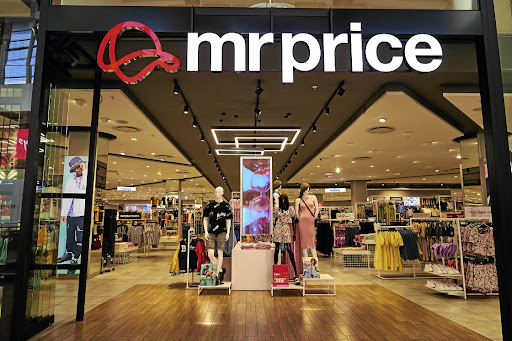
Picture: Supplied
The results were exceptional, but then the valuation got too hot. If consistently good growth resumes, the share is worth holding
At Mr Price’s capital markets day in September 2024, the investment case section described its value-focused proposition (affordable clothing, for the most part at least) and how this was positioned to outperform the sector. With the benefit of festive season trading updates behind us, it’s clear Mr Price wasn’t wrong.
The pandemic and its aftermath has been a time Mr Price really got the hammer down on acquisitions. Before that the company was focused mainly on organic launches of brands, with only a few acquisitions spanning a couple of decades. Just in the past few years, it has pulled the trigger on Yuppiechef, Power Fashion and Studio 88.
Now, acquisitions in the clothing sector have been a source of much heartache for South African investors, so a culture of dealmaking is by no means a guarantee of success for shareholders. It’s very easy to overpay for acquisitions, with the punishment being dispensed for years thereafter.
At Mr Price, perhaps the nuance is that the acquisition strategy has been focused on South Africa rather than abroad. This creates a more coherent group, albeit one that is less diversified and therefore more vulnerable to any wobbles in South Africa’s recovery story. In 2024 at least, waving the South African flag was the right strategy. If things change and the local market deteriorates relative to, say, the UK clothing market, Mr Price could end up on the wrong side of that compared to its peers.
Another element of the acquisition strategy that seems to be working is the relatively light-touch approach the company takes to businesses it has acquired. Aside from critical areas of integration and efforts to find synergies in logical places (like real estate or supply chain), it allows the acquired business to just get on with it. This is why Yuppiechef can coexist in the group alongside Mr Price’s core clothing offering.
The recent update for the 13 weeks ended December 28 shows the power of focus. Mr Price had a spectacular end to the year, with sales growth of 10.6% and a two-year compound annual growth rate of 10.3%. It gained market share for six consecutive quarters. Notably, there was an even split of in-store and online sales growth, up 10.6% and 10.5% respectively. This supports a strategy of growth in trading space, which was 4.9% higher on a weighted average basis.
In 2024 at least, waving the South African flag was the right strategy
As primarily a cash-based retailer (90.9% of sales), Mr Price saw the benefit of a South African consumer who was feeling far more confident about the world at the end of 2024. Cash sales were up 11.1% and credit sales increased only 5.7% as the company took a cautious approach.
Yuppiechef deserves an honourable mention, with double-digit sales growth and an increase in gross margin. This is evidence of Mr Price’s approach to acquisitions, in which businesses with little or no overlap with other parts of the group are allowed to focus on what they are good at.
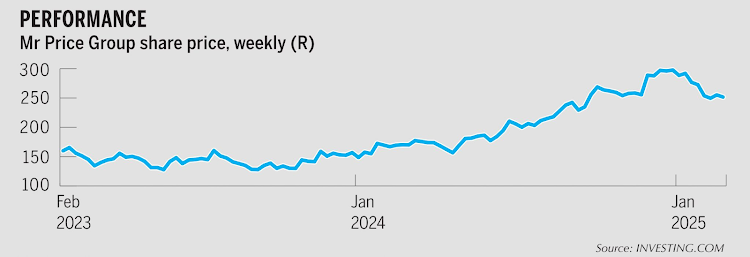
January got off to a strong start for Mr Price, with double-digit sales growth and gross profit margin moving higher as well. Against this backdrop, you would fully expect the share price to be heading to the moon. Instead, it’s down 13.5% in the year to date.
The problem is that the valuation got too hot. It happened a lot later than most expected, which was a useful lesson in market momentum, especially in South Africa, where we have a relative shortage of high-quality assets on our market.
When IM last covered Mr Price, in August 2024, the share price was at R218 and one of the co-founders had been selling shares. The combination of a spicy valuation and insider selling led to a sell recommendation, which turned out to be wrong. Market momentum took the price over the R300 mark before a sharp fall to the current levels of R255. It seems to have found some support at about R245.
In the fourth quarter of the financial year ending in March, it’s going to be a few months until we see just how well Mr Price is doing at headline earnings level.
Based on recent results, it could deliver double-digit earnings growth in the second half to add to the 7.1% growth in the first. The second half is a far greater contributor to net earnings, so we could see 10% growth (or more) in full-year earnings. Even then, it would put the current price on a forward multiple of 18.
That’s a fully baked valuation, implying a hold from here only if Mr Price can keep achieving strong growth. 

Luxury’s new face: Fashion + style
By Zodwa Kumalo-Valentine
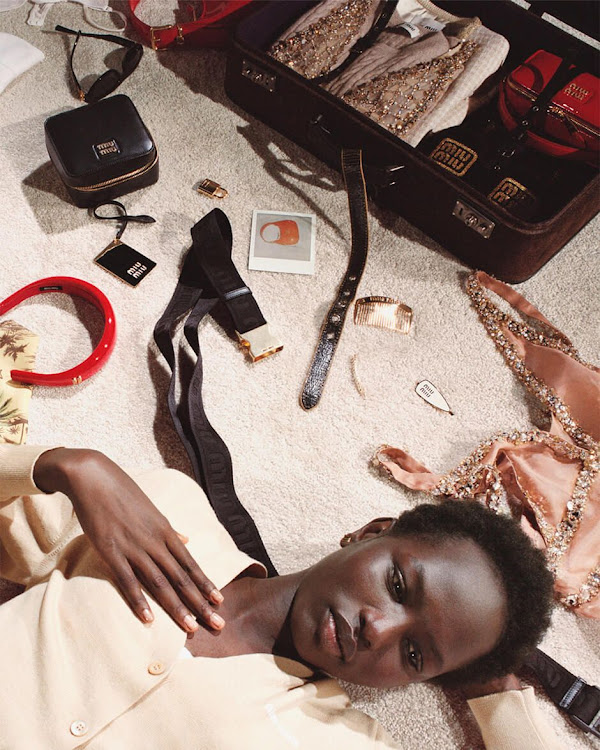
Miu Miu Image: Supplied
Bold colours, “chaotic customisation” in accessories and accoutrements, and rich textures in wardrobes that tell personal stories are fully in
The focus of luxury is shifting from excess and opulence to connection, depth, and intention. Globally, the idea of intentional indulgence is redefining what it means to live luxuriously. People seek experiences and products that tell a story, foster connection, and embrace sustainability.
In fashion and décor, quiet luxury is out and bold colours, “chaotic customisation” in accessories and accoutrements, and rich textures in wardrobes that tell personal stories are fully in.
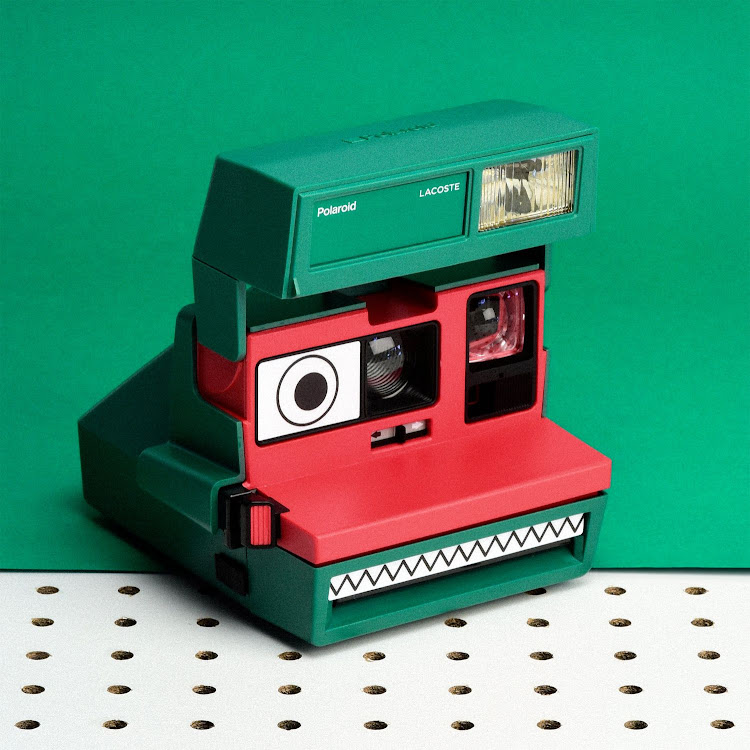
Lacoste X Polaroid Retrospekt Image: Supplied
Retro-chic revived:
Tech gadgets of the early 2000s, such as brightly coloured iPods and hot-pink Razrs, are making a comeback, driven by nostalgia and a desire for simplicity, according to Vogue Business. Brands such as Supreme, Lacoste, and Miu Miu are collaborating with retro-tech companies such as Fujifilm and Polaroid, releasing analogue cameras and tech-inspired accessories. Marni’s PVC tote bags evoke the colourful iMacs of the era, Nike’s iridescent Air Max 97s pay homage to the holographic shimmer of CD-ROMs, and the return of phone charms from luxury brands such as Prada highlights the aesthetic’s growing appeal.
While Rodney Mudzengerere’s Ifuku brand, which transitioned from Instagram to a brick-and-mortar store at 44 Stanley in Braamfontein Werf, Joburg, has been a favoured destination for vintage denim since 2021, LVMH’s quiet acquisition of cult brand Kapital, known for rejuvenating classic styles with a vintage spirit, shows the luxury market’s embrace of this growing appeal.
Locally, Ubuntu Film Co’s Reusable Memory Maker is all over Instagram, capturing your moments with 35mm film. The revival is a refreshing response to the modern digital overload.

“Black Dandy” style Image: Supplied
Decolonising fashion narratives:
The upcoming Costume Institute exhibition at New York’s Metropolitan Museum of Art, “Superfine: Tailoring Black Style”, opens 6 May, the day after the Met Gala. The show will use the “Black Dandy” to explore the ways in which cloth and style have shaped Black identities across the African diaspora in the Americas, Europe, and the Caribbean.
Celebrating the manner in which self-presentation can serve as both cultural expression and resistance, “Superfine” is part of a larger movement to decolonise fashion history. The exhibition highlights the overlooked stories embedded in dress by challenging the Eurocentric narratives that have dominated fashion institutions. 
Union-DNM collabs with South African artist Justin Dingwall
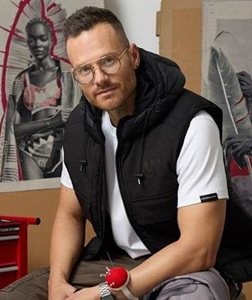
Justin Dingwall. Image supplied
Denim brand Union-DNM has introduced its latest autumn campaign, featuring South African artist and photographer Justin Dingwall.
Known for challenging identity, representation, and conventional beauty standards, Dingwall’s thought-provoking photography has earned several accolades, including the SA Taxi Foundation Art Award (2015), and the International Photography Awards (IPA, 2013).
“This partnership made sense from the start,” says Dingwall.
“Union-DNM represents everything I believe in—precision, craftsmanship, and unshakable independence. They gave me the freedom to tell my story authentically. Having my wife behind the camera to document the process made it even more special.”
For Union-DNM, this campaign is about championing voices that challenge the status quo. “We couldn’t think of a better creative partner than Justin Dingwall,” says Len Makhoba, marketing manager at Union-DNM.
“His work is bold, and unapologetically original—like our brand.
Union-DNM has built its reputation by celebrating disruptors, innovators, and pioneers who redefine their industries. The brand speaks directly to individuals who value self-expression, craftsmanship, and originality.”
This collaboration brings together two forces driven by authenticity, fearless independence, and a commitment to breaking boundaries.


China is one of the largest producers of cotton, supplying the fashion industry with over 90 million yards of the material every year.
Neckties, originally called cravats, came from Croatia and are now the most popular Father’s Day gift.
Vogue and Harper’s Bazaar, two of the most popular fashion magazines in publication today, both appeared in the 1920s – one of the most important decades for fashion

Editorial Submission:
Please remember to send me your news so that we can share it with all our readers in the weekly newsletter. Although editorial is neither guaranteed nor implied, suitable editorial for consideration may be submitted to:-
