
Newsletter No 6/21 February 2025

Click on any ad to go to the advertisers website

To agents, manufacturers, distributors & wholesalers. Please upgrade your 1 line listing to a business listing at least. The Sourcing Directory and Newsletter is dependent on industry support and your business listing offers potential clients more information about your company, products, branches, agents etc.
The cost of a business listing for the entire year is only R1400.
To add a logo is an additional R440. carla@newsbriefs.co.za


Retail trade ends 2024 on a strong note
By Nompilo Goba
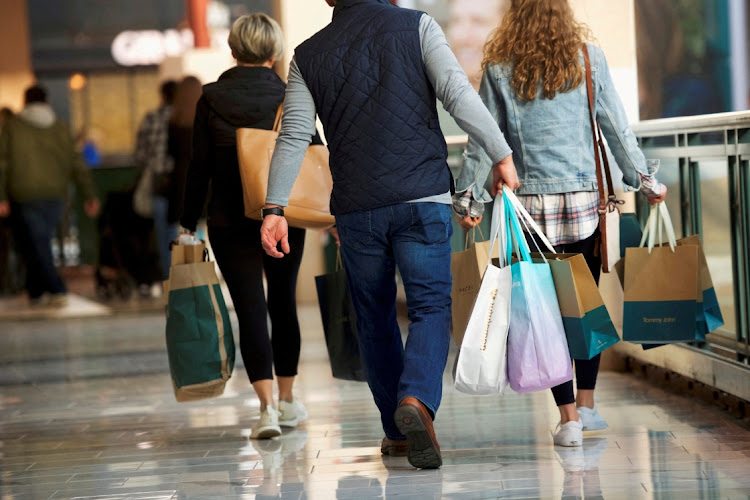
Picture: Reuters/Mark Makela
Sales up 3.1% from a year earlier in December and 2.5% for the full year, Stats SA reports
The retail trade sector ended 2024 on a positive note as sales increased 3.1% year on year in December when measured in real terms, according to Stats SA.
The biggest drivers were retailers in textiles, clothing, footwear, and leather goods, which posted a 7.8% increase, contributing 1.8 percentage points to overall growth. General dealers recorded a 2.0% increase, contributing 0.9 percentage points, Stats SA said.
However, seasonally adjusted retail trade sales eased by 0.1% a monthly basis after increases of 1.0% in November and 1.7% in October.
Full-year retail trade sales climbed 2.5% compared to 2023 with five of seven retail categories recording growth. The largest positive contributor was general dealers, which reported 4.6% growth, contributing 2 percentage points to the overall figure, said Stats SA.
On a quarterly basis retail sales rose 5.4% in the three months to end-December compared to the same period in 2023. The biggest contributors were general dealers, which reported 7.8% growth, contributing 3.3 percentage points, and retailers in textiles, clothing, footwear, and leather goods, which grew by 7.7% and contributed 1.5 percentage points.
Seasonally adjusted retail trade sales increased by 2.1% on a quarter-on-quarter basis largely driven by general dealers, which saw a 2.9% increase and contributing 1.3 percentage points to the total figure. Retailers in textiles, clothing, footwear, and leather goods reported sales growth of 4.5%, contributing 0.8 percentage points.
The manufacturing sector, however, faced continued challenges in December with production declining by 1.2% year on year.
Stats SA said the main laggards were basic iron and steel, non-ferrous metals, metal products, and machinery and motor vehicles, parts and accessories. However, food and beverages made the biggest positive contribution with growth of 5.8%.
Seasonally adjusted production declined by 2.4% from November 2024 and by 0.8% in the fourth quarter. For the full year, production fell by 0.4%, mainly due to declines in motor vehicles.
“According to the BER’s retail trade survey for the fourth quarter of 2024, the lift in sentiment “was underpinned by a significant improvement in indices tracking realised business conditions, sales volumes and profitability in the retail sector,” Investec economist Lara Hodes said. “The sector appears to have favourable expectations for the first quarter [of 2025]”.
Consumers have benefited from a lower inflationary environment as well as monetary easing, with further interest rate cuts anticipated, Hodes added.
“Indeed, take-home pay, in real terms tracked higher at R14,887 in December 2024, markedly up by 8.7% on year-ago levels”, according to BankservAfrica.” 

Old Khaki and The Street Store join forces to promote sustainable fashion
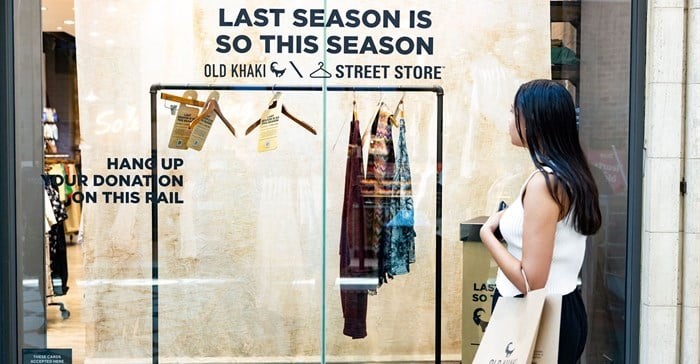
Image supplied.
Old Khaki and The Street Store have launched “Last season is so this season,” a campaign aimed at promoting sustainable fashion and encouraging people to donate preloved clothing for those in need.
The fashion industry is a significant contributor to greenhouse gas emissions, with over one billion tons generated annually.
This collaboration seeks to combat this by raising awareness of the environmental impact of discarded clothing and promoting circular economies through mindful giving.
About The Street Store
Since its inception, The Street Store has clothed over one million people worldwide through over 1,100 pop-up stores.
As an open-source movement, it enables communities globally to provide clothing for those in need, fostering dignity and environmental consciousness.
The transformative power of preloved clothing
Nival Maharaj, spokesperson for The Street Store, highlights the initiative’s impact: “Clothes you no longer wear can transform someone else’s life. A suit could become a job interview, sneakers could enable a first marathon, and a dress could make a matric dance dream come true.”
Old Khaki’s commitment to sustainable commerce
As a South African brand, Old Khaki is using its platform to support disadvantaged communities while addressing the environmental effects of fashion.
The collaboration with The Street Store invites Old Khaki customers to donate preloved clothing at selected outlets, contributing to the campaign’s goal of inspiring mindful fashion practices.
How the initiative works
Old Khaki has placed Street Store donation rails at selected stores, where customers can donate clothes until 31 March.
The collected items will be distributed at Street Stores running on 12 April in Cape Town and Johannesburg.
Old Khaki will also contribute a portion of its merchandise, and Unilever will provide toiletries for those attending the Street Stores.
Participating stores
Donations can be made at Old Khaki stores in Gauteng and Western Cape, including locations such as Clearwater, Eastgate, Fourways, Mall of Africa, Menlyn Park, Blue Route, Canal Walk, Somerset West, Table Bay, and Tygervalley.

A faux-fur winter ahead?
By Sandiso Ngubane
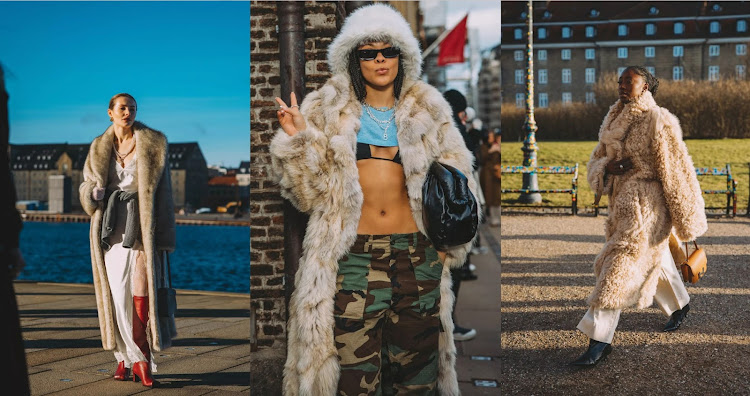
Street style at Copenhagen Fashion Fashion Week 2024 Image: Acielle / Style Du Monde
Real fur fell hugely out of favour, but the new imitation fur looks ‘eerily’ close to the real thing
The rains in Joburg are bringing with them a chill that has caused me to drag my biggest and cosiest of blankets out from the back of the closet, where all my winter stuff is.
Stepping outside makes me want to wear a coat or perhaps drag out a faux fur, which appear to be blanketing the world of fashion if street style shots from fashion month and online stores are anything to go by.
It’s all over Instagram feeds and as far back as last year November, online fashion outlets have been selling the trend largely driven by Gen Z and millennials with their affinity for vintage fashion.
Per Women’s Wear Daily: “The furry, fuzzy and fluffy fashion trend has manifested in several additional forms this winter. Wrapping shoes, skirts and bags, faux-fur clothes and accessories are the snuggly winter items fashion people can’t get enough of. Something else some people can’t get enough of is real fur, which some are buying from vintage markets and resellers.
Wearing real fur has been a bit of a taboo in fashion for a long time due to activism from the likes of Peta (People for the Ethical Treatment of Animals). Back in the 1980s, fur was not just trendy, it was a status symbol that everyone in fashion, especially, wanted to wear.
Peta played an outsize role in a cultural shift that saw animal furs falling almost completely out of favour. CNN reported that: “Calvin Klein was one of the earliest major fashion brands to go fur-free after Peta stormed its New York offices in 1994. That same year, the group ran its famous ads featuring naked supermodels, claiming they’d rather go naked than wear fur.”
It was a three-decades long campaign that debuted in 1990, “and featured rock band The Go Go’s posing nude behind a red banner. Since then, the organisation has featured Pamela Anderson, Wendy Williams, Eva Mendes, Pink and a slew of other celebrities posing in the buff for its anti-fur campaigns”, wrote Women’s Wear Daily.
Accordingly, 1990s supermodels Tyra Banks, Christie Turlington and many others have also featured, and while the campaign ended in 2020, the culture shift has continued and Peta has shifted focus to other animal-derived materials such as wool and leather, declaring the fur fight a victory.
Since 2022 brands like Moncler and Dolce & Gabbana joined others like Gucci in their fur ban. Gucci’s parent company Kering went fully fur-free in 2021, joining brands including Chanel and Versace, who had also gone fur-free.
Still, some brands have kept on producing animal furs because of what some say is the “enduring appeal” of the material, even though the sale of animal furs is banned in major markets such as California and a few other American states.
The trade is also banned in Britain, Belgium, Germany, Ireland and the Netherlands. (According to Google: The Animal Protection Act of 1962 prohibits cruelty to animals, but there are no enforcement mechanisms for fur farming.”)
This “enduring appeal” of animal fur is perhaps why the faux furs appearing on runways today look as real as ever. Reporting from Copenhagen Fashion Week recently, Vogue Scandanavia said the faux-furs appearing on the runway were “eerily” so. They further reported: “At a time when the debate surrounding vintage furs — namely, whether we should be allowed to wear them — has been reignited, the trend towards natural-looking faux fur is notable.
After all, to wear a passable fake without repercussion implies that we’re moving further towards a space in which vintage or upcycled real fur is socially acceptable. Upcycled fur also popped up on the Copenhagen runways, appearing in the Alectra Rothschild/Masculina show.”

FW18 Givenchy Image: Catwalk Pictures
The snuggly, maximalist outerwear trend is being offered up by high street brands and fast fashion outlets alike, and they come brooch-embellished, as you might see at Zara; floor-length, as you will find on ASOS, which brought up a total of 392 styles at the time of writing. They come in leopard print, as hoodies, cropped and in black, green, burgundy and every colour in-between.
As we move into an era where consumers are driving demand for sustainability and ethical fashion, faux-furs will definitely gain favour, as will vintage furs. In fact, some argue that wearing vintage furs instead of faux-furs is more sustainable considering you’re wearing something that already exists rather than creating demand for something new.
This also supports a circular economy where furs, and other materials, can be reused or repurposed instead of being discarded.
With the current wet and cold weather in Joburg, I certainly wouldn’t discard the opportunity to put a fur, faux or vintage, on my back. 

Within America, those who live in Manhattan spend the most on clothing. The average person spends $362 per month.
Kate Middleton is often pictured wearing fashionable clothing, and she has spent more than $54,000 on her wardrobe since 2012.
New York Fashion Week is attended by 232,000 people per year.

Editorial Submission:
Please remember to send me your news so that we can share it with all our readers in the weekly newsletter. Although editorial is neither guaranteed nor implied, suitable editorial for consideration may be submitted to:-
