
Newsletter No 47 / 12 December 2025

As we wrap up another year, we want to extend our thanks for your continued support.
Wishing you and your loved ones a joyful, restful and safe holiday.
We look forward to continuing our journey together in the coming year!


Click on any ad to go to the advertisers website

Pantone reveals ‘controversial’ colour of the year
By Megan van den Heever
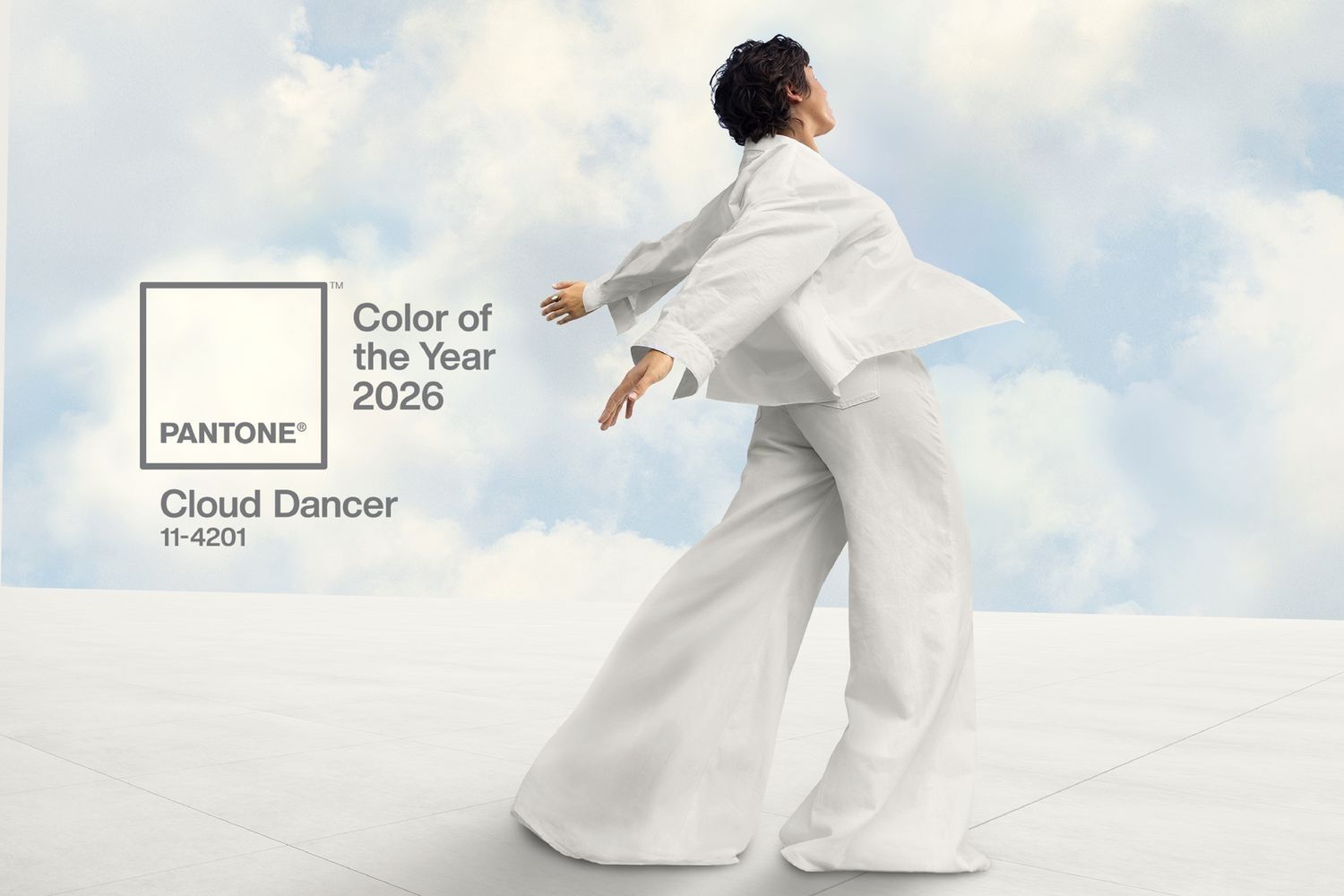
Here’s why the 2026 Pantone’s colour of year – a shade of white – has been deemed a controversial selection…
Pantone has revealed its ‘controversial’ colour of the year. Image via Pantone
Pantone’s 2026 colour of the year – a shade of white – has been hailed as a “controversial” selection.
The global color standard system company revealed that the shade Cloud Dancer was chosen as it has “a calming influence”.
The initiative, which began in 1999, is part of its vision to “engage the design community and color enthusiasts around the world in a conversation around color.”
Pantone colour of the year in white!
This week, Pantone revealed its 2026 colour of the year – Cloud Dancer, a shade of white.
This marks the first time white has been selected.
The company said the hue symbolizes “a calming influence in a society rediscovering the value of quiet reflection.”
It added that the billowy white hue “encourages true relaxation and focus, allowing the mind to wander and creativity to breathe, making room for innovation”.
The public responded to the news of the minimalist shade, with many labelling it “boring” and even “culturally insensitive”. 

Retail momentum builds as SA consumers return to discretionary spending in October
By Nompilo Goba
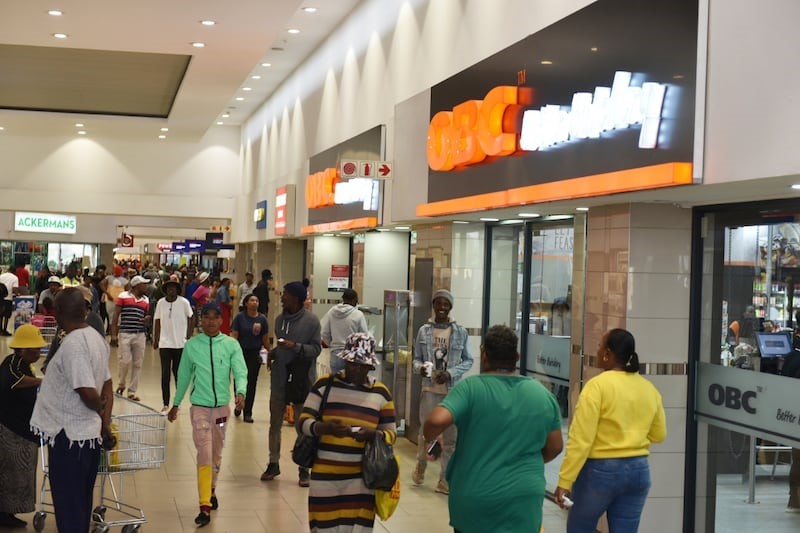
South Africa’s retail sector is rebounding as households regain spending power, driving strong growth in discretionary categories and lifting overall sales. Picture: Freddy Mavunda.
Clothing, home goods and hardware drive 2.9% sales growth as households regain spending power
The retail sector gained momentum in October as stronger spending on clothing, home goods and hardware lifted overall sales, according to Statistics SA’s latest retail sales data.
The pickup in discretionary categories shows households are finally regaining some spending power after a long period of pressure, a positive sign for retailers and the broader economy.
Statistics SA said retail trade sales rose 2.9% year on year in real terms, driven largely by categories linked to discretionary spending rather than essentials.
The textiles, clothing, footwear and leather goods category was the biggest contributor, rising 5.8% and adding a percentage point to the headline figure. Strong growth also came from “other” retailers, which increased 7.2%, and from household furniture, appliances and equipment, which jumped 13%. Hardware, paint and glass sales were up 5.8%, supported by improving sentiment among hardware retailers in the third quarter.
Only one segment moved in the opposite direction. Food, beverage and tobacco retailers in specialised stores fell 1.9%, continuing a trend of weaker performance in food-focused categories.
Month on month, seasonally adjusted retail sales rose 0.9% in October, breaking a two-month slide after declines of 0.1% in September and 1.6% in August.
Investec economist Annie Hodes said the October performance is in line with expectations and reflects the shift in consumer conditions.
She highlighted the strongest lift again came from clothing, while the catch-all “other retailers” category and household-related segments together added another percentage point to the total. She said households have benefitted from softer inflation, 150 basis points of interest rate cuts since the start of the Reserve Bank’s easing cycle, and a slight improvement in the unemployment rate.
Consumer sentiment has also improved. According to the Bureau for Economic Research’s latest consumer confidence survey, households were more positive about the economic outlook, their future finances, and the timing for purchasing durable goods.
Retail momentum has carried through the broader quarter. Sales for the three months to October were up 2.7% compared with the same period last year and up 0.1% compared with the previous three months after seasonal adjustment. Year to date, retail sales are up 3.8%, supporting expectations of stronger household consumption.
Investec expects household consumption expenditure, responsible for about two-thirds of GDP, to grow 3.1% this year, with the stronger start to the fourth quarter setting up a solid festive season performance.

Clothing and leather SMMEs Acceler8 towards growth with City-supported programme
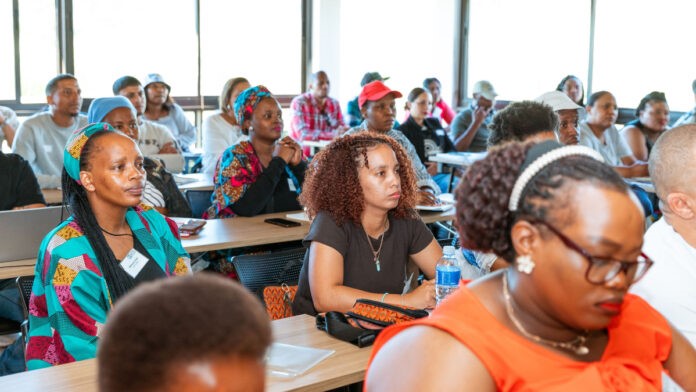
Clothing and leather SMMEs Acceler8 towards growth with City-supported programme
Cape Town-based clothing small businesses are closing 2025 on a high note through their participation in Cape Acceler8 – a 12-month capability-building journey designed to strengthen and grow emerging manufacturers across the metro.
Delivered by the Cape Clothing and Textile Cluster (CCTC), the programme is made possible through contributions from both public and private partners, including support from the City of Cape Town as a catalytic funder to the CCTC. Forty small businesses form part of the inaugural cohort.
Participants receive expert workshops on business fundamentals such as cost engineering, financial management, customer negotiations, and competitor market analysis, alongside NQF-accredited technical training to strengthen operational capability.
‘Clothing, textile, footwear and leather (CTFL) manufacturing is a legacy industry in Cape Town, which is why it is encouraging that almost half the SMMEs in Acceler8 are from the Cape Flats. Similarly, 80% of the people employed in CTFL are women, and more than 70% of the programme’s trainees are women-led. Collectively, these businesses employ more than 600 people. With Acceler8, we are helping equip them with the tools to streamline operations, build networks across the value chain – including major retailers – and grow so that they can employ more Capetonians. This is what makes the difference,’ said Alderman James Vos.
During the first month of the programme, launched in early November, participants took part in a Lean Fundamentals workshop where they unpacked concepts of customer value, learned to identify waste in their processes, and built confidence to solve problems where the work happens.
The group later embarked on a best-practice tour of South Africa’s largest clothing factory, observing a live production environment in motion – the flow of materials, rhythm of workstations, and the energy of teams who take pride in their craft.
‘The City’s support enables the cluster to bring public and private partners together around a shared mission: building a globally competitive CTFL value chain in the Western Cape. Programmes like Cape Acceler8 help emerging firms access the tools, training and exposure they need to grow. That kind of catalytic investment lays the groundwork for deeper economic participation and more resilient value chains,’ said Courtney Grant, Chief Facilitator at the Cape Clothing and Textile Cluster.
‘Supporting the development of our local CTFL industry’s smallest firms is central to our mission to not just sustain existing employers and their staff, but to help them realise continued growth and investment. In 2023, 105 million garments were made in Capetonian factories, almost a third of South Africa’s domestic output. That same year, the industry contributed R5,6 billion to Cape Town’s economy. As global pressures continue to weigh on local industries, the City will continue to support programmes such as Acceler8 that empower SMMEs with the skills to innovate and expand,’ said Alderman Vos. Cape Business News
NewsBriefs wants to share your company profile.
If you are a manufacturer or supplier to the Clothing & Textile trade please send us your company profile on a word document up to 500 words explaining what your participation is to the industry.
You can also supply one visual in jpeg or png format.
Our aim is to share one newsworthy submission per week with our readers.
Although editorial is neither guaranteed nor implied, suitable editorial for consideration may be submitted to:- carla@newsbriefs.co.za


Cool + quirky fashion history

While many seamstresses and tailors existed throughout history, the first true “fashion designer” might have been Charles Frederick Worth.. An Englishman living in Paris in the mid-1800s, he was the “first” of many fashion points: the first person to use live models in fashion shows, the first to sew branded labels in his clothes, and the first to come up with the “princess line” dress and the “walking dress.” He was the first individual to open an haute couture house in 1858. This has dubbed him the father of fashion design and paved the way for luxury designers and brands even today.

Editorial Submission:
Please remember to send me your news so that we can share it with all our readers in the weekly newsletter. Although editorial is neither guaranteed nor implied, suitable editorial for consideration may be submitted to:-
