
Newsletter No 45 / 28 November 2025


Click on any ad to go to the advertisers website

Working overtime
By Jennifer Krug and Sahil Harilal
Workwear steps out of the cubicle, tailored, twisted, and reimagined for a new era of style

Looks from Dior Men Spring 2026 Ready-to-Wear runway, Thom Browne Fall 2025 and Valentino Spring/Summer 2026. (Estrop/Arturo Holmes/Marc Piasecki/Getty Images)
Workwear got a sharp update this season, as designers redefined the office uniform with an imaginative twist. The blazer — that timeless symbol of power and polish — took centre stage, reworked through preppy prints, heritage fabrics, and unexpected accessories.
Thom Browne’s Fall 2025 collection showcased avian-inspired detailing, where intricate bird motifs met stripes, gingham, and tweed in a perfectly peculiar harmony.
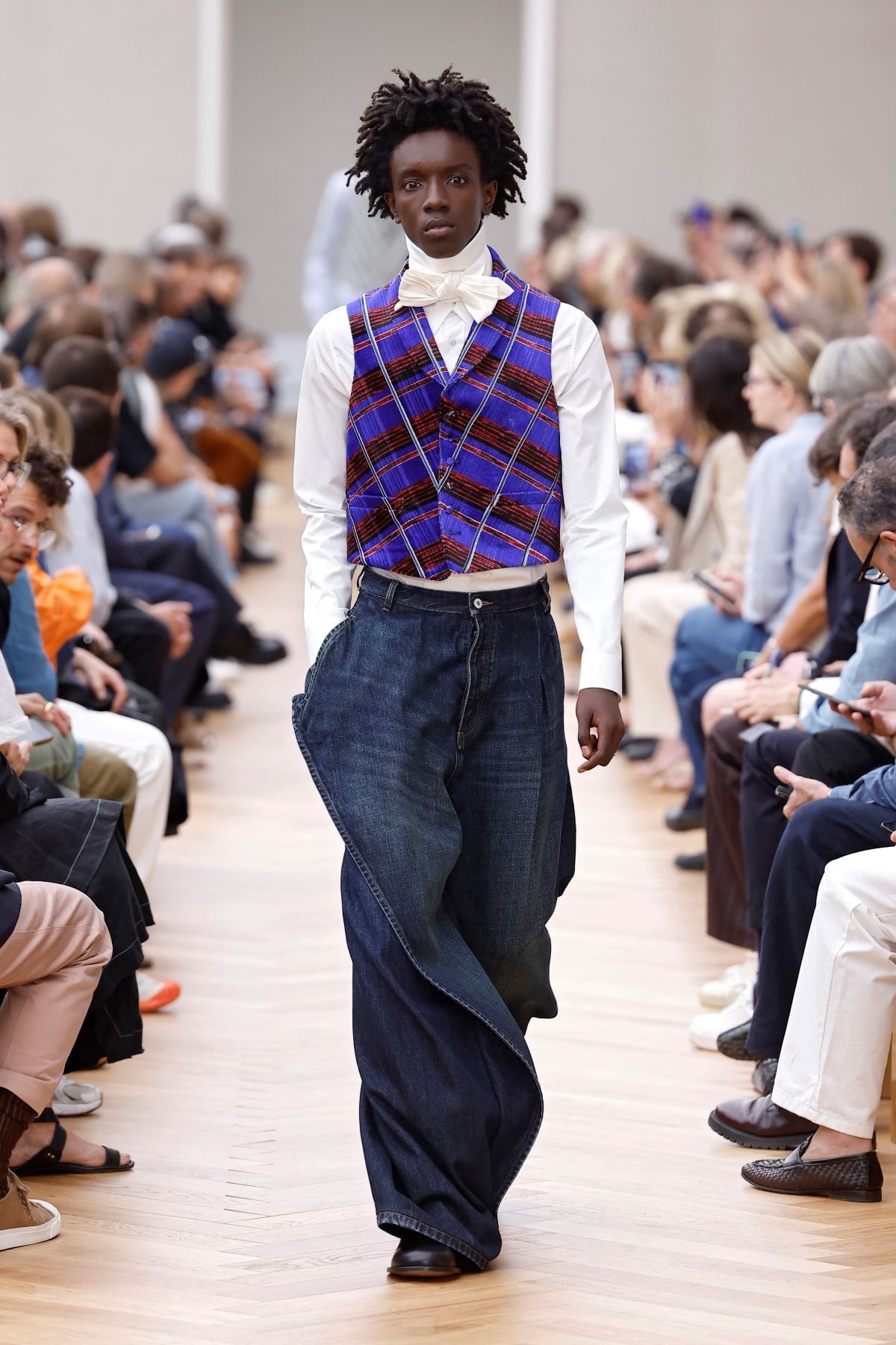
A look from Jonathan Anderson’s Dior Men Spring 2026 show. (Estrop/Getty Images)
At Christian Dior, Jonathan Anderson’s debut turned workwear into a study in contrasts. Victorian cravats paired with denim, tweed blazers cinched into hourglass shapes, and voluminous cargo shorts lent a modern irreverence to the classics. Nods to 18th- and 19th-century French menswear sealed the deal.
From the November issue of Wanted, 2025
Luxury brands are facing backlash over ‘Made in China’ claims
By Sandiso Ngubane
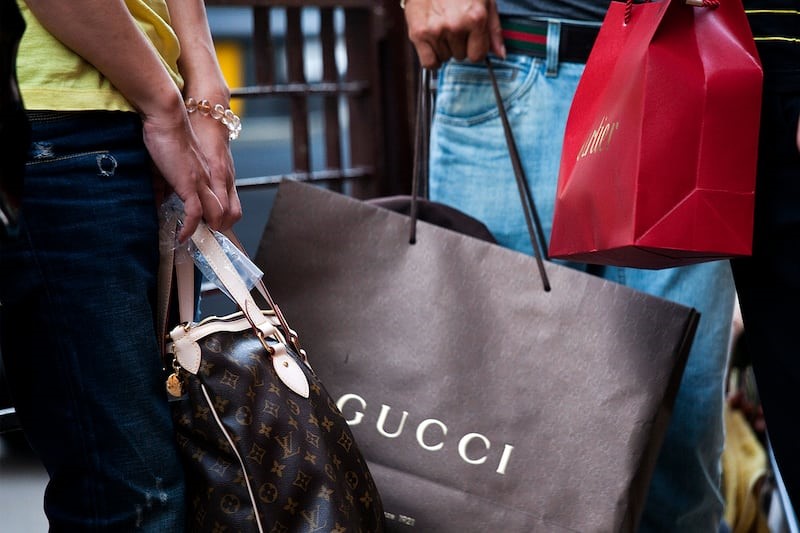
Shoppers hold bags from luxury shops Gucci, Louis Vuitton and Cartier. (Getty Images / Jerome Favre / Bloomberg )
Understanding the roots of your Birkin might save you some sleepless nights
“People obsessed with luxury are insecure,” reads a line from a blog I came across as I looked into the controversy about Chinese manufacturers claiming they are the makers of European luxury handbags many around the world shell out a fortune to own.
In case you missed it: in several viral moments, social media videos by representatives of Chinese manufacturers alleging that European brands simply slap logos on goods made in China, marking up prices and calling it “luxury”, have littered the internet recently. Spurred by Donald Trump’s trade war with China (and the rest of the world), this is a trend that began with a single TikTok video by one Wang Seng, who claimed to be speaking on behalf of a Chinese handbag manufacturer. In a video which gained more than six-million views — before it was deleted and then reposted by other accounts — Seng claimed “80% of luxury bags in the world are made in China”, Euronews reports.
Thousands more similar videos soon popped up all over the internet as Chinese manufacturers urged consumers to buy directly from them instead of spending $38,000 (R655,617) on a bag that cost $1,400 (R24,154) to make, per claims made about Hermés specifically.
But is there any truth to the claim that brands such as Hermés make their products in China? The answer is a complicated one because no single brand works the same. It becomes less complicated when we zero in on individual brands. If the brand in question is Hermés, for example, the answer is a straight-up “no”, their products are not made in China. While there are many brands who do manufacture parts of their products in China, slapping a “Made In Italy” on a bag made in China is illegal. The “Made In Italy” tag only applies to products whose entire manufacturing process, from raw material to end product, takes place in Italy.
Whatever the facts, this debacle has cast a bad light on luxury brands that are in the midst of a multipronged struggle against fast-changing perceptions about luxury. It doesn’t help that the price of luxury has exploded in the past few years, and Trump’s global war on trade is setting off alarms as economists predict a global recession unlike any we’ve seen since the Great Depression. It remains unclear if said recession can be arrested by any miracle of sensibility on the part of the Trump administration.
While it’s highly doubtful that luxury consumers are going to be swayed towards abandoning luxury as we know it, it’s plausible that many who covet these brands won’t opt for cheaper knock-offs produced in China and elsewhere in what could be a rebellion against high prices at a time where profits are falling sharply for the traditional luxury conglomerates. Not to mention the ever-increasing opposition to the current state of capitalism, which makes public discourse fertile ground for the proverbial annihilation of luxury brands and their price points.
The debate around luxury and the perception thereof also comes at a time when smaller players around the world are increasingly changing the narrative around luxury. In Africa, brands such as Maxhosa and Winston Leather are increasingly leaning on heritage-based storytelling, quality, sustainability and traditional craftsmanship rather than exorbitant price tags as a basis for luxury.
Many of them are retelling history in ways that are captivating and at least tentatively tied to popular discourse around colonialism and how it distorted the historical record to favour Europe as the centre of modern civilisation. This is not removed from the prevailing perception of European goods as superior.
But when people find out about Nigeria’s rich history of leather production that dates back to pre-colonial times, for example, it’s quite plausible that this may contribute to the fundamental shifts happening in the mainstream perception of what luxury is or ought to be. Is it about price, quality or bang for your buck? Is it fuelled by the insecure who buy into brand names due to the promise of exclusivity? Some would say all of the above, and today this is not the exclusive purview of European — or even American — luxury brands, who are largely reliant on the historical significance of their labels to set them apart.
All of that appears to be falling apart at the seams. At least for now. 
Mr Price eyes new markets as it doubles down on expansion at home
By Nompilo Zulu
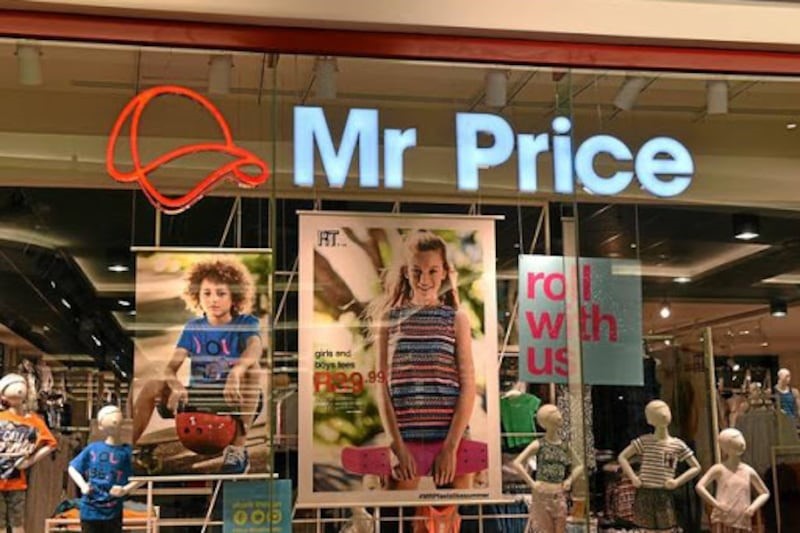
A Mr Price store in Rosebank, Johannesburg. (Freddy Mavunda)
Aggressive store expansion continues despite local economic challenges
Mr Price is quietly preparing for its next big move outside South Africa as it steps up research into new international markets even as it pushes ahead with one of the most aggressive store expansion drives in the fashion retail sector.
The retailer said it had already identified territories beyond the local market that meet its strict criteria for size, stability, ease of doing business and long-term growth potential.
While the group has not disclosed the countries, it confirmed in its interim results that it has been assessing several acquisition opportunities since 2023, using third-party research, in-country experts and site visits to test market potential.
The move forms part of the group’s two-phased strategy for 2023-25.
“Key territories outside South Africa have been identified, which include all relevant risk mitigation considerations. To date [the group has] assessed several potential acquisition opportunities that meet agreed investment principles,” it said.
Mr Price is positioning itself for growth outside a sluggish home economy, where low GDP growth, high unemployment and weak consumer confidence continue to weigh on retailers.
In his presentation, CEO Mark Blair said the group remained “committed to investing for the long term in the most attractive opportunities”, with a focus on scalability and strong returns rather than risky turnarounds.
But even as it sets its sights abroad, Mr Price is not slowing down at home. The group continues to expand aggressively in the local market and has opened 91 new stores in just six months, taking its total to 3,100, a fierce push while households remain under pressure from rising living costs, debt repayments and erratic spending patterns.
Its capital expenditure programme, forecast at R1.5bn for the year, is being funded entirely from cash reserves. A major portion of this investment is going into supply chain upgrades, including the large new Gosforth Park distribution facility due for completion in 2026.
Blair said the company’s strategy was built on being “well placed to capitalise on opportunities” as economic conditions improve.
The group has already shown its appetite for expansion through acquisitions, including Studio 88, Yuppiechef and Power Fashion in recent years. Together these contribute nearly a third of the group’s sales and form a large part of its wider portfolio across income categories.
This diversified base gives the group a stronger platform from which to explore opportunities abroad. 

Mr Price interim results 27 September 2025
Revenue for the period rose by 5.4% to R18.6 billion (R17.6 billion) with profit before finance costs and finance income ending 5.7% higher at R2.1 billion (R2.0 billion). Profit attributable to equity holders of the parent increased by 6.7% to R1.3 billion (R1.2 billion). Additionally, headline earnings per share was up 6.5% to 513c per share (481.8c per share).
Dividend declaration
Notice was hereby given that an interim gross cash dividend of 323.20 cents per share was declared for the 26 weeks ended 27 September 2025, a 6.5% increase against the prior year. As the dividend has been declared from income reserves, shareholders, unless exempt or who qualify for a reduced withholding tax rate, will receive a net dividend of 258.56 cents per share. The dividend withholding tax rate is 20%.
Company outlook
The operating environment in South Africa has continued to mirror the volatility of the global economy. GDP growth improved in Q2 2025, up 0.8% from the 0.1% reported in Q1 2025. However, these levels are not supportive of creating a sufficiently buoyant economy to enable strong business growth. There have been some areas of improvement under the government of national unity, but more significant progress is required of national structural reforms to stimulate job creation and create more sustainable levels of economic growth.
The outlook for the consumer environment is fragile in the short-term, with hopeful improvement in 2026 supported by a lower inflationary and interest rate environment. Volatility in spending patterns are likely to persist as the monthly window for consumer spending is limited by constrained disposable income levels. Increasing food inflation and divergence in discretionary spending will likely place additional drain on share of wallets.
Consumers have become increasingly value-seeking and the group’s diversified portfolio of brands remain well placed in their customer positioning. Mr Price Apparel remains the most shopped apparel retailer in South Africa (MAPS 2025) and leads the Fashion-value matrix (Borderless Access), highlighting its differentiated fashion and accessible pricing. Mr Price Apparel, Mr Price Sport and Mr Price Home reported the highest brand equity in their respective segments, a leading metric for brand health and customer affinity. Power Fashion reported the highest increase in brand equity, testament to its successful store roll-out strategy and customer acquisition performance.
The group’s investment into its brand strength and omni-channel platforms keep it closely aligned with its customers’ needs. Its ongoing merchandise execution, focusing on delivering affordable fashion trends at high volumes, supported by leading inventory management and an agile supply chain, has enabled it to deliver consistent earnings growth. Its 3-year HEPS CAGR remains well ahead of the competitor set.
The base becomes increasingly more challenging in the remainder of the financial year, due to the two-pot withdrawals and combined with improved consumer affordability (lowering inflation and interest rate cuts) which supported increased consumer expenditure ahead of the festive season in the prior year. Sales calls ahead of these key months in 2025 have accounted for these factors and the broader macroeconomic conditions. Significant improvements in the operational capacity of the Durban port have positively impacted stock-flow and inventory management ahead of the key trading months. Retail sales in the first 7 weeks of H2 were up 3.3% against a firm base of 12.3%, with momentum improving from October to November.
As has been previously communicated, considerable progress has been made in the group’s strategic research informing capital allocation decisions for future investment. This includes the evaluation of organic and acquisitive growth opportunities in existing and other high-potential markets.
Pepkor final results September 2025
Revenue for the year rose by 12% to R95.3 billion (R85.1 billion) with gross profit coming in 16.4% higher at R38 billion (R32.6 billion). Operating profit shot up 55.5% to R10.7 billion (R6.9 billion) and profit attributable to equity holders of the parent sky rocketed 172.1% to R5.6 billion (R2.1 billion). Headline earnings per share from continuing operations soared to 161c per share (140.2c per share).
Dividend declaration
The board declared a cash dividend of 52.95493 cents per ordinary share payable to shareholders on Monday, 19 January 2026. The dividend has been declared out of income reserves.
Results webcast
A webcast of the results presentation will be broadcast at 10:00 am (SAST) on Tuesday, 25 November 2025. The webcast registration link is www.corpcam.com/Pepkor25112025 and can be accessed on the Pepkor website: www.pepkor.co.za.
Company outlook
Pepkor’s FY25 results highlight the group’s strong execution of its unique business model, converting physical retail reach into a digital, transactional ecosystem across retail, financial services, telecommunications, fintech and the informal market. Record profitability in FY25 has established a solid foundation for FY26.
In the year ahead, the group will focus on integrating recent acquisitions, consolidating new retail formats and expanding its digital and omnichannel capabilities. Growth in fintech and financial services remains a strategic priority, with opportunities to enhance customer engagement and accessibility while maintaining cost discipline.
Pepkor will open 250 to 300 new stores in FY26, extending its physical presence and improving customer access. Targeted mergers and acquisitions will continue to strengthen the group’s fintech offerings and diversify its geographic footprint. Healthy stock levels are expected to support full-price sales and maintain gross profit margins.
Trading for the seven weeks ended 15 November 2025 must be viewed in the context of the group’s strong prior-year base, which benefited from the initial tranche of two-pot withdrawals. Pepkor has the highest base compared to retail peers.
For the seven-week period ended 15 November 2025, group sales increased by 5.3% from a prior-year base of 14.6%, in line with management’s plans and as anticipated. Healthy stock levels are expected to further enable full-price sales and sustain gross profit margins.

NewsBriefs wants to share your company profile.
If you are a manufacturer or supplier to the Clothing & Textile trade please send us your company profile on a word document up to 500 words explaining what your participation is to the industry.
You can also supply one visual in jpeg or png format.
Our aim is to share one newsworthy submission per week with our readers.
Although editorial is neither guaranteed nor implied, suitable editorial for consideration may be submitted to:- carla@newsbriefs.co.za

Where do our favorite wardrobe staples come from?

Have you ever wondered why denim is called “denim”? The fabric was originally a twill cotton weave called “Serge de Nîmes,” because it originated in Nîmes, France. It’s believed this version replaced the wool and silk pants of the time with pure cotton, making them the predecessor of modern “jeans.”
Levi Strauss (from the brand Levi’s) and tailor Jacob Davis invented today’s blue jeans. In 1873, they combined copper rivet reinforcements with rigid denim to create “waist overalls,” which we now know as blue jeans.

Editorial Submission:
Please remember to send me your news so that we can share it with all our readers in the weekly newsletter. Although editorial is neither guaranteed nor implied, suitable editorial for consideration may be submitted to:-
