
Newsletter No 44/15 November 2024


NewsBriefs wants to share your company profile.
If you are a manufacturer or supplier to the Clothing & Textile trade please send us your company profile on a word document up to 500 words explaining what your participation is to the industry.
You can also supply one visual in jpeg or png format.
Our aim is to share one newsworthy submission per week with our readers.
Although editorial is neither guaranteed nor implied, suitable editorial for consideration may be submitted to:- carla@newsbriefs.co.za
Click on any ad to go to the advertisers website

Influx of Cheap Imports and Fake Products Killing South Africa’s Textile and Clothing Industry
By Sakhile Mokoena
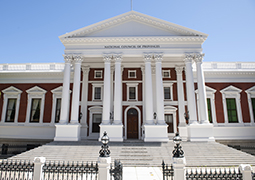
The influx of cheap imported textile and clothing products and the illegal entry of fake products are reportedly some of the contributing factors to the challenges facing South Africa’s textile and clothing industry. This emerged during a recent debate in the National Council of Provinces (NCOP) on the topic: Revitalising of the clothing and textiles industries to unlock the economic potential of the township and rural economies to create jobs, reduce inequality and empower local communities.
The mover of the topic, Mr Mpho Modise, an African National Congress delegate from the North West province, opened the debate by reminding the House about the history of the textile and clothing industry and its contribution to job creation and economic empowerment for township and rural communities. Mr Modise argued that the decline of the industry started after 1994 when the country signed international trade agreements and opened its industries for global competition.
“Immediately after 1994, South Africa was put under immense pressure to conform and align with international economic trade policies consciously managed by the International Monetary Fund, the World Bank and the World Trade Organisation. Some of these policies include trade liberalisation or rather the lifting of certain trade restrictions, which brought increased integration of the South African economy with the global economy but created new vulnerabilities by opening the South African economy to external factors with potential negative inclusive industrial development consequences,” Mr Modise explained.
Mr Modise believes that despite some successes, these international trade treaties have not delivered the desired outcome for South Africa. Instead, they have created multiple challenges for the clothing and textile industry such as the influx of cheap clothing and textile which started increasing after 1994 and intensified in the 2000s, mainly from China, Eswatini and Madagascar.
He is however hopeful that the industry could be revitalised, as the industrialisation of the textile and clothing industry features prominently on the government’s National Development Plan agenda. “We also support the textile, clothing, footwear and leather growth programme, which was implemented by the ANC government and are recently being accelerated,” said Mr Modise.
Participating in the debate, the Minister of Small Business Development, Ms Stella Ndabeni-Abrahams, agreed that the influx of cheap imports and fake products were among major challenges facing the industry. She told members of the NCOP about some of the government’s planned initiatives to revitalise the sector to unlock its potential.
“We are busy with sets of strategic actions that we all need to support if we are serious about transforming the sector and growing the economy and create jobs. Working with the Department of Trade, Industry and Competition and the South African Revenue Service, we must cut down on cheap imports, through tariffs, including on e-commerce platforms; and clampdown on fake illicit imports entering the country,” said the Minister.
According to the Minister, limiting these illicit cheap imports is critical to open the local market for small enterprises, particularly those from townships and rural areas.
The government is also working to strengthen the capacity of the state through coordination on the enforcement of regulations and bylaws to crack down on illicit business. “Working together with organisations against counterfeit goods, we will soon announce a partnership with a campaign to fight the proliferation of counterfeit goods in our country,” she said.
NCOP Permanent Delegate from Mpumalanga Ms Sonja Boshoff of the Democratic Alliance, who is also the Chairperson of Select Committee on Economic Development and Trade, accused the ANC of not prioritising the industry and failing to realise its potential to transform rural and township communities into thriving centres of economic activity.
“There is tremendous opportunity in these communities to create jobs, reduce inequality and empower individuals, Ms Boshoff said. “One of the most promising ways to achieve this is by revitalising our clothing and textile industries, which have the power to transform these communities into thriving centres of economic activity.
“However, it seems the ANC approach to the clothing and textile industry is a bit like an old jacket left forgotten at the back of the closet out of sight out of mind. While our communities are calling for opportunities and investment, the government seems content with mothballing the potential of this industry,” Ms Boshoff said.
“The creation of local business homes and incubation, and development programmes will greatly assist in reducing transportation costs and making supply chain shorter and allow producers to serve consumers directly, making products more affordable and accessible,” she continued.
“For clothing and textile industries to compete in a globalised world they must be supported by a skilled workforce – investing in training programs that equip young people and women in rural areas and townships, with the necessary skills in garment making, textile design and entrepreneurship will go a long way in growing this industry,” Ms Boshoff said.
Ms Mathapelo Siwisa, an Economic Freedom Fighters delegate from the Northern Cape, was concerned that despite many positive characteristics of the sector, it has performed poorly in South Africa and has faced numerous challenges.
“One of the challenges is growing global competition with cheap imports. The failure to have protective industrial policy has led to the killing of the local industry,” said Ms Siwisa.
She alleged that the decline in manufacturing and in South Africa’s textile and clothing industry, is because the government is focusing more on imports than exports. “Government needs to relook at its imports policies and focus on the revival of the closed-down textile and clothing factories. We need more investment on local manufacturing and minimise imports – focus on industrialisation,” the EFF member urged.

Daliwonga named Diesel South Africa brand ambassador

Image supplied
Diesel is reconnecting with the music scene by naming singer and songwriter Daliwonga Matiwane, star of the Amapiano music genre, as male ambassador for South Africa.
As part of his ambassadorship, Daliwonga will be part of branded contents and events, showcasing Diesel’s latest collections and embodying brand’s spirit of self-expression. His unique perspective will bring a fresh narrative to Diesel’s initiatives in the South African market and not only, fostering a deeper connection with fans and customers alike.
“I’m excited to team up with Diesel” said Daliwonga. “I’ve always loved how they push boundaries and include everyone. I can’t wait to share my love for music and creativity through this partnership and encourage others to be true to themselves.”
He is among the popular Amapiano stars at the moment, his distinctive music lyrics, soothing voice and dynamic presence made him one of the most interesting artists in the market.
Since the start of his career back in 2019 he has collaborated with the biggest names in the industry, finding quickly a niche for himself in the Amapiano music scene. His songs are hitting playlists on most radios, not only in South Africa but also on the entire continent.

TFG raises dividend on the back of record gross profits

TFG CEO Anthony Thunström
Highlights
TFG announced its interim financial results for the six month period ended 30 September 2024, delivering markedly strengthened gross profits in the face of tough trading conditions in all territories.
Commenting on the results, TFG CEO Anthony Thunström said, “All three territories have faced extended periods of macro-economic headwinds coupled with a high clearance-driven sales base in TFG Africa last year. However, our focus on retail fundamentals and our strategic investments have contributed to a record gross profit performance and stronger margins in all of our businesses”.
Segmental performances
TFG Africa’s revenue grew by 0,6%, driven largely by sales growth of 11,6% in cosmetics and 6,1% in homeware. The business has continued to realise benefits from its acquisition of the Tapestry businesses where growth has been supported by the introduction of credit and the benefits of leveraging off the TFG retail platform, now contributing 7,4% to sales. Through leveraging Tapestry’s vertically integrated furniture manufacture, TFG is now selling more than 50,000 sofas per annum at improved margins, as more than 80% can be locally manufactured. The South African business has also extended its beauty offering, which was previously concentrated in its Foschini business, across more of its 26 brands in South Africa. The Africa business unit reported gross profit increasing by 6,6% to a record R7,6 billion.
TFG’s London business was significantly impacted by inventory delays due to Red Sea disruptions, high inflation and elevated interest rates. The focus of TFG London’s management has been on growing the direct-to-consumer channel and the protection of gross margin, which improved by 360 basis points compared to the prior period. However, this was insufficient to offset the lower sales activity, with gross profit 3,1% lower.
TFG Australia also suffered from the impact of persistently high inflation and elevated interest rates, with consumers continuing to remain under pressure, impacting demand. Despite a 2,4% contraction in sales, management’s focus on inventory management ensured an improvement in gross margin of 120 basis points to 65,1%.
Favourable post-results trade
Thunström pointed to recent post results trade as evidence that some positive economic signs may be bringing relief to consumers and buoying demand. In the 5 weeks since the reporting period ended, TFG Africa sales growth was up 8.3% compared to -0,1% for the interim period, whilst both London and Australia business posted stronger growths.
Bash leads the field
E-commerce has continued to surge in South Africa following the Group’s investment in its Bash platform. The app has received more than 5 million downloads and has remained the number one South African fashion shopping app helping online sales to grow 47,9% in TFG Africa and now contributing 5,6% to sales.
Acquisition of White Stuff
As part of the results presentation, Thunström elaborated on the acquisition through its UK subsidiary of British fashion and lifestyle retailer, White Stuff, for £51.7m. White Stuff was founded in 1985 and specialises in unique, thoughtfully designed casual clothing and accessories for women, men and children. White Stuff has 113 stores and 46 concessions in the UK. The business also operates 6 stores and 25 concessions across Europe. The brand sells internationally via its website and has 606 wholesale stockists. White Stuff has a solid track record of financial performance and in the financial year to 30 April 2024, the business achieved revenue of £154,8m and EBITDA of £8,6m.
Outlook
The Group continues to invest in its key strategic initiatives to further strengthen its differentiated business model. Thunström said, “We will continue to focus on margin improvement, inventory management, cost control and ensure ongoing realisation benefits from key strategic projects”.
Thunström added, “The group is very well positioned and prepared for what is hopefully a more positive business cycle and our strategic investments have positioned us favourably to benefit from any uptick in the economic conditions. With close to 500 million store visits expected in our SA business this year and close to as many social media followers as all the other major apparel retailers combined, one only has to look at the inherent strength of our retail ecosystem to understand the potential for sustained growth”.
Woolworths – trading update
Group turnover and concession sales for the period increased by 6.5% and by 6.8% on a constant currency basis against the prior comparative 18-week period (the “prior period”). In South Africa, whilst discretionary spend remains relatively constrained, consumer sentiment is improving, supported by moderating inflation, the start of easing interest rates, and the prolonged suspension of loadshedding, amongst other factors. In Australia, however, the sustained effect of high interest rates and elevated living costs continue to weigh on both retail footfall and spend.
Woolworths
Woolworths Food business delivered market-leading turnover and concession sales growth of 12.1% and 7.3% on a comparable-store basis, reinforcing its strength and resilience, and the trust that customers place in Woolies brand. This was driven by positive underlying volume growth on improved availability, ongoing innovation, and it enhanced overall value proposition. Excluding Absolute Pets, which was acquired in the fourth quarter of the previous financial year, Food sales increased by 9.6%. Price inflation for the period averaged 6.2%, with trading space, excluding Absolute Pets, increasing by 2.0% on the prior period. Online sales increased by 36.9%, contributing 6.2% of Food sales, driven by Woolworths on-demand offering, Woolies Dash, which delivered sales growth of 54.4% for the period.
Fashion, Beauty and Home (“FBH”) momentum has accelerated, with turnover and concession sales increasing by 3.5% and by 2.8% on a comparable-store basis. The first 18 weeks of sales include the Fashion winter clearance, which constitutes a high proportion of the trade for the period, and resulted in a FBH price movement of 1.9%, with Fashion at a deflation of 0.3%. Beauty delivered accelerating sales momentum, growing by 20.6%, as we increasingly establish ourselves as the Beauty destination in South Africa. In line with our strategy to rationalise unproductive space, net trading space decreased by 1.8% relative to the prior period, whilst online sales increased by 36.5% and contributed 6.5% of FBH sales.
The Woolworths Financial Services book at the end of October 2024 was 3.5% below last year, year-on-year, and up 2.1% excluding legal book debt sales. The annualised impairment rate for the four months ended 31 October 2024 was 5.9%, compared to 7.5% in the prior period.
Country road group
Trading conditions in Australia and New Zealand continue to prove more challenging than anticipated, with the retail sector facing further declines in footfall (albeit that the pace of decline is easing), intense promotional activity, and the shift of spend towards value brands.
Within this context, CRG sales declined by 8.8% for the period and by 13.8% on a comparable-store basis. Notwithstanding the challenging macroeconomic backdrop, the Country Road brand remains resilient, and Trenery is delivering strong topline growth, following the repositioning and rebranding of its offering. We remain focused on improving the positioning and performance of the other brands, particularly Witchery, which are at different stages of their respective repositioning. Trading space decreased by 1.6% during the period, while online sales contributed 26.6% of total sales for the period. Notwithstanding our ongoing focus on costs, which remain well controlled, the impact of a weaker trading environment is resulting in continued negative operational leverage for this business.
Constant currency information
Constant currency information has been presented to illustrate the impact of changes in the Group’s major foreign currency, the Australian dollar. In determining the constant currency growth rate, turnover and concession sales denominated in Australian dollars for the period have been adjusted by application of the aggregated monthly average Australian dollar exchange rate for the prior period. The aggregated monthly average Australian dollar exchange rate is R11.91 for the period and R12.16 for the prior period. Foreign currency fluctuations of the Group’s rest of Africa operations are not considered material and have therefore not been applied in determining the constant currency growth rate.
Truworths – AGM results & board committee changes
Truworths advised that at the annual general meeting of the company’s shareholders (“shareholders”) held through electronic participation on Thursday, 7 November 2024 (“AGM”), all the ordinary resolutions and special resolutions, as set out in the notice of the AGM dated Friday, 27 September 2024, were approved by the requisite majority of shareholders. Ordinary resolution 7.1 regarding the appointment of Roddy Sparks to the company’s Audit Committee was withdrawn at the AGM. The required special resolutions are not required to be lodged with the Companies and Intellectual Property Commission.
Appointment of Audit Committee Chair
Following Roddy Sparks’ decision not to stand for election as a member and Chairman of the company’s Audit Committee at the AGM, shareholders were advised in terms of paragraph 3.59 of the JSE Listings Requirements that Brendan Deegan has been appointed as the Chairman of the Audit Committee.
Truworths – business update
Group retail sales for the first 18 weeks (from 1 July 2024 to 3 November 2024) of the 2025 financial period (‘the current period’) increased by 2.8% to R7.2 billion, compared to the first 18 weeks (from 3 July 2023 to 5 November 2023) of the 2024 financial period (the ‘prior period’).


Using just one bale of cotton, around 200 jeans can be made. No wonder you can find jeans everywhere!
Around 80% of the world’s women buy shoes that are far too small for their feet. Women generally like to think they have smaller feet and, therefore, choose a smaller size.
Baggy pants were first worn inside a Los Angeles prison since the inmates weren’t allowed to wear belts.

Editorial Submission:
Please remember to send me your news so that we can share it with all our readers in the weekly newsletter. Although editorial is neither guaranteed nor implied, suitable editorial for consideration may be submitted to:-
