
Newsletter No 43/8 November 2024


NewsBriefs wants to share your company profile.
If you are a manufacturer or supplier to the Clothing & Textile trade please send us your company profile on a word document up to 500 words explaining what your participation is to the industry.
You can also supply one visual in jpeg or png format.
Our aim is to share one newsworthy submission per week with our readers.
Although editorial is neither guaranteed nor implied, suitable editorial for consideration may be submitted to:- carla@newsbriefs.co.za
Click on any ad to go to the advertisers website
South Africa’s textiles imports rise 8.4% in 2024

South Africa’s textile imports have experienced a significant increase of 8.4% in the first nine months of 2024, according to the latest trade data. The surge in imports highlights a growing demand for textile products in the country, as industries seek to meet both domestic and international market requirements.
In total, South Africa imported textiles worth around USD 3.1 billion between January and September 2024. This increase is attributed to various factors, including an expansion in the local apparel sector, rising consumer demand, and a need to support local manufacturing capabilities.
The data shows that key textile imports include fabrics, garments, and home textiles. South Africa remains highly dependent on imports to meet its textile demand, with suppliers from countries like China, India, and Bangladesh playing a pivotal role in the trade dynamics. The ongoing increase in textile imports is expected to continue, supported by South Africa’s efforts to modernize its manufacturing sector and meet the growing demand for high-quality textile products.
This rise in imports underscores the significance of textiles in South Africa’s economy and highlights the ongoing challenges and opportunities for local manufacturers and international suppliers alike.

Truworths bemoans SA’s challenging trading conditions
By Jacqueline Mackenzie
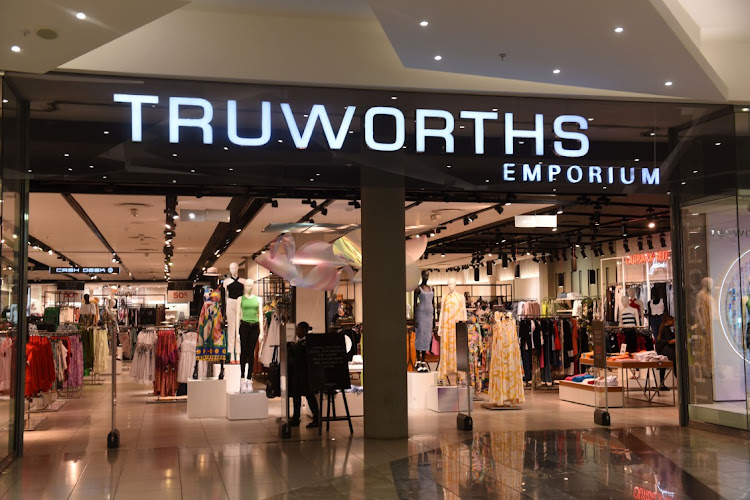
Picture: Freddy Mavunda
Prospects of higher GDP growth and lower inflation are expected to support consumer spending in the year ahead, retailer says
Retail group Truworths International has reported a 2.8% increase in sales for the first 18 weeks of its financial year, but notes that trading conditions in SA remain challenging.
Group retail sales for the period July 1 to November 3 of the 2025 financial year increased by 2.8% to R7.2bn compared with a year ago.
Truworths Africa’s sales were up 0.2% at R4.7bn, while Office UK’s sales jumped 9.7% to £106.9m, the retailer said in a statement on Thursday.
Account sales comprised 46% of group retail sales, with account and cash sales increasing by 0.4% and 4.9%, respectively, relative to the prior period.
While business and consumer sentiment in SA had improved since the formation of the government of national unity, the optimism had not yet translated into meaningful improvements in the disposable incomes of local consumers, the group said.
“The prospects of higher GDP growth, lower inflation, stabilising cost of living and lower interest rates are expected to support consumer spending in the year ahead,” it said.
However, the timing and extent of the impact remain uncertain at this stage.
Online sales showed good growth in the current period, increasing by 38% and contributing 6.4% to the segment’s total retail sales, it said.
General trading conditions in the UK remain suppressed as consumers maintain a cautious approach to spending.
Notwithstanding these conditions, Office UK has proved resilient, recording retail sales growth of 9.7% in sterling.
In rand terms, retail sales increased by 8.1% to R2.5bn.
Online sales increased by 3.2% and comprised 42.9% of total retail sales.
Trading space in the Office UK segment is expected to increase by about 10% for the 2025 financial period.
The group said in its recent annual report that competition from Shein and Temu — the online value clothing retailers based in China that sell directly to consumers in SA — together with increasing competition from online and traditional retailers were the biggest risks facing the business.
The company also said it would focus on merchandise categories where Truworths was under-represented to grow market share.
The group will release its interim results on February 27. 

Psycho Bunny, the menswear brand, launches in South Africa

Image supplied
Psycho Bunny, the menswear brand known for its vibrant designs and iconic neon bunny logo, has now entered into the South African market with the official opening of its first store in Sandton, Johannesburg.
This expansion marks a significant milestone as the brand continues its aggressive growth strategy across the globe over the past year.
Founded in New York in 2005 and re-founded in Montreal in 2016, Psycho Bunny has garnered a loyal following for its high-quality apparel, particularly its signature polo shirts.
Over the past year, the brand has opened 12 new stores — with four more global brick-and-mortar activations before the end of 2024 — bringing its total to more than 200 locations worldwide, including stores in North America, Latin America, Middle East, Japan, and now South Africa.
In 2024, Psycho Bunny launched a whole new way to express the brand by introducing The Bold Standard. Born out of their relentless commitment to consummate quality, striking design, and a thoroughly audacious, adventurous lifestyle, it’s a state of mind, an attitude, an ethos, a mantra, a rallying cry, a veritable religion, plus one thoroughly iconic Bunny logo.
In short, The Bold Standard is the very essence of the brand.
Psycho Bunny is also recognised for sourcing 80% of its products from South America, featuring Peruvian Pima cotton that ensures unrivaled comfort and quality. The brand has successfully cultivated a unique identity catering to a diverse audience.
Mens and kids apparel items include polos, tees, pants, shorts, swimwear, sweaters, hoodies, and sweatshirts, jackets, loungewear, activewear, tennis and golf apparel, and accessories.
Anna Martini, CEO of Psycho Bunny, expressed her enthusiasm for their upcoming launch into the country: “We are thrilled to introduce Psycho Bunny to South Africa, a young vibrant market that resonates with our brand’s energetic spirit. Set to open literally in the heart of local fashion Sandton, with its premium shopping environment is just the perfect location for our first store in this dynamic region. We look forward to connecting with local customers and showcasing our various collections.”
“As the local distributor of Psycho Bunny, we are super excited about the partnership with this premium brand. Having been instrumental with bringing other top labels and brands into the country, we are particularly excited to become a part of this iconic retail community”, stated Slimsuit Distributors director, Richard Epstein and added “Also having scouted several retail spaces across SA, Sandton represented a fantastic opportunity for us to launch Psycho Bunny into the market. We know you are going to love the sheer luxury of Psycho Bunny and look forward to expansion in the near future.”
Psycho Bunny Sandton City officially opened its doors to the public on Monday, 4 November 2024.
Pepkor – trading update and statement
1. Trading update
Group revenue
Continuing operations
For the year ending 30 September 2024 (“FY24”), group revenue increased by 7.8% to R85.1 billion. The prior year (“FY23”) included an additional 53rd trading week for South African-based clothing and general merchandise brands. On a comparable 52-week basis, group revenue increased by 9.2%.
Discontinued operations
As announced on 3 September 2024, the disposal of The Building Company (“TBCo”) was confirmed and implemented on 30 September 2024. This enabled the group to exit the building materials market and deliver on its objectives to streamline the portfolio of businesses, enhance return on capital and optimise shareholder returns. TBCo is therefore classified as discontinued operations in the group’s results.
2. Trading statement
Shareholders and noteholders were advised that a reasonable degree of certainty exists that the group’s headline earnings per share (“HEPS”) and earnings per share (“EPS”) for the year ended 30 September 2024, when compared to the previous corresponding period, are expected to fall within the ranges reflected in the table below.
Continuing operations
* Earnings per share (“EPS”) are expected to be between 61c per share and 65.4c per share, resulting in an increase of between 241% and 251% (2023: loss per share of 43.4c per share);
* Headline earnings per share (“HEPS”) are expected to be between 132.5c per share and 146.5c per share, resulting in a change of between -6% and 4% (2023: 140.8c per share); and
* Normalised headline earnings per share are expected to be between 132.2c per share and 145.9c per share, resulting in a change of between 5% and 15% (2023: 127.1c per share).
Total operations
* Earnings per share (“EPS”) are expected to be between 54.5c per share and 58c per share, resulting in an increase of between 254% and 264% (2023: loss per share of 35.4c per share); and
* Headline earnings per share (“HEPS”) are expected to be between 140.3c per share and 155.2c per share, resulting in a change of between -6% and 4% (2023: 149.2c per share).
Dividend consideration
Based on the group’s strong operating performance, cash generation and successful strategic execution, in addition to its healthy financial position, the board has resolved that the FY24 impairment will be disregarded in the consideration and determination of the FY24 dividend. The impairment will therefore not negatively impact any potential dividend declared for FY24.
Results announcement and webcast
Pepkor’s results for the year ended 30 September 2024 will be published on SENS on or about Tuesday, 26 November 2024.
A results presentation will be held at 11:00am (SAST) on Tuesday, 26 November 2024. The webcast registration link will be made available prior to publication of the results on the Pepkor website: www.pepkor.co.za.


Elizabeth I was a big fan of hats, and as a result, during her reign, females who did not wear them on Sundays and public holidays were fined heavily.
Up until the 17th century, men didn’t wear underwear at all.
Up until 1740, men wore high heels to ride horses. It was thought that the heels helped them ride better.
Company Profile:-
TWI International
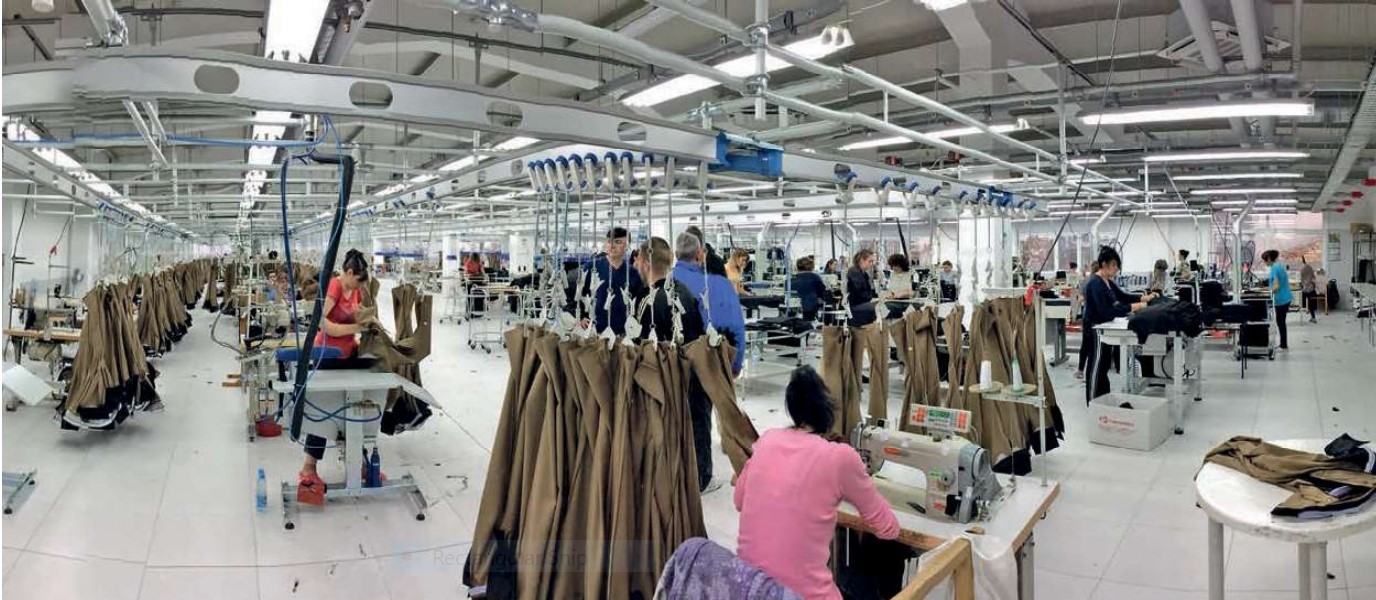
TWI, based in Cape Town have been providing productivity services to the South African clothing sector for 40 years.
Victor Chinn current CEO who has 30 years of unit production experience says they are launching Smart Track for the apparel sector.
Smart track can save up to 20% on the sewing floor and improves output by 20%. This improves quality and reduces work in process which improves throughput time .
TWI to date have had significant results on Jeans, Chinos, Polo Shirts and Workwear
For an evaluation study on your product contact Victor Chinn3@gmail.com

Editorial Submission:
Please remember to send me your news so that we can share it with all our readers in the weekly newsletter. Although editorial is neither guaranteed nor implied, suitable editorial for consideration may be submitted to:-
