
Newsletter No 42 / 7 November 2025


Click on any ad to go to the advertisers website

Sustainability and brand reputation webinar for textiles, apparel and footwear

‘Enhancing sustainability claims and brand reputation in the textile and footwear industry’, takes place on November 25, 2025
Geneva (November 5, 2025) – SGS, the world’s leading testing, inspection and certification company, is proud to host a complimentary webinar, ‘Enhancing sustainability claims and brand reputation in the textile and footwear industry’, on November 25, 2025.
Regulators have responded to public concern and consumer demand for sustainability in the textiles and footwear industry by introducing stricter requirements, placing pressure on businesses to ensure credible claims and avoid misleading advertising. While this can be challenging and requires expert knowledge, meeting these requirements also presents opportunities to build consumer trust.
This webinar explores the latest trends impacting sustainability in the industry, providing insights into the EU Product Environmental Footprint (PEF) methodology. Presenters Evelyn Ma and Frank Kempe will also provide an introduction to the SGS green marks covering preferred materials, which enable brands to gain a competitive advantage in global markets through trusted certification or verification, and present case studies to illustrate best practices and common pitfalls.
For companies looking for insights into the latest regulatory trends, this webinar leverages SGS’s experience and knowledge for a better understanding of key sustainability developments in the industry.
This webinar is ideal for professionals across the textile, apparel and footwear industries, including designers, product developers, quality assurance specialists, sustainability experts, compliance managers and marketing teams from brands, retailers and manufacturers.
Interested parties should register now for more information

When identity became style
By Sandiso Ngubane

MaXhosa Africa presented their Lo Ngu-Mbulelo collection at Paris Fashion Week in March 2025. (Supplied)
The Business of Fashion’s BoF 500 list — an index of the most influential people in the global fashion industry — has once again spotlighted SA’s creative force. Familiar names such as Laduma Ngxokolo of MaXhosa Africa and Lukhanyo Mdingi, both celebrated for fusing deep cultural roots with sophisticated design language, reaffirm the country’s standing as a vital node in global fashion. Their inclusion, alongside the likes of Sindiso Khumalo, Thebe Magugu and the addition of Mmuso Maxwell in the 2025 list, invites us to revisit the lineage that made such recognition possible.
As South African designers earn their place in the global conversation it’s worth revisiting how the foundations of post-apartheid fashion built the visual language of self-definition that shaped today’s global narrative.
Before South African designers walked Paris runways or stocked Net-a-Porter, the country’s fashion identity was already under construction, often through acts of defiance and imagination. What we now call “South African fashion” was born in the wake of apartheid’s collapse, in various moments of self-reclamation that have also been evident in music and other aspects of South African culture and creativity.
These designers are part of a lineage of creatives who have sought to articulate a post-apartheid vernacular rooted in an ever-evolving narrative that speaks to who we are and who we are becoming.
Stoned Cherrie, founded by Nkhensani Nkosi in 2000, became one of the first brands to articulate this new consciousness. It challenged post-apartheid amnesia by mining the visual archives of Black South African life, reprinting Drum magazine covers, referencing Sophiatown style and embedding apartheid-era iconography into everyday wear. The result was fashion as testimony—a bold statement that beauty and memory could coexist. Stoned Cherrie’s aesthetic shifted the narrative from exoticised “African print” to intellectual engagement with heritage. It turned clothing into text: a medium of storytelling and cultural authorship.
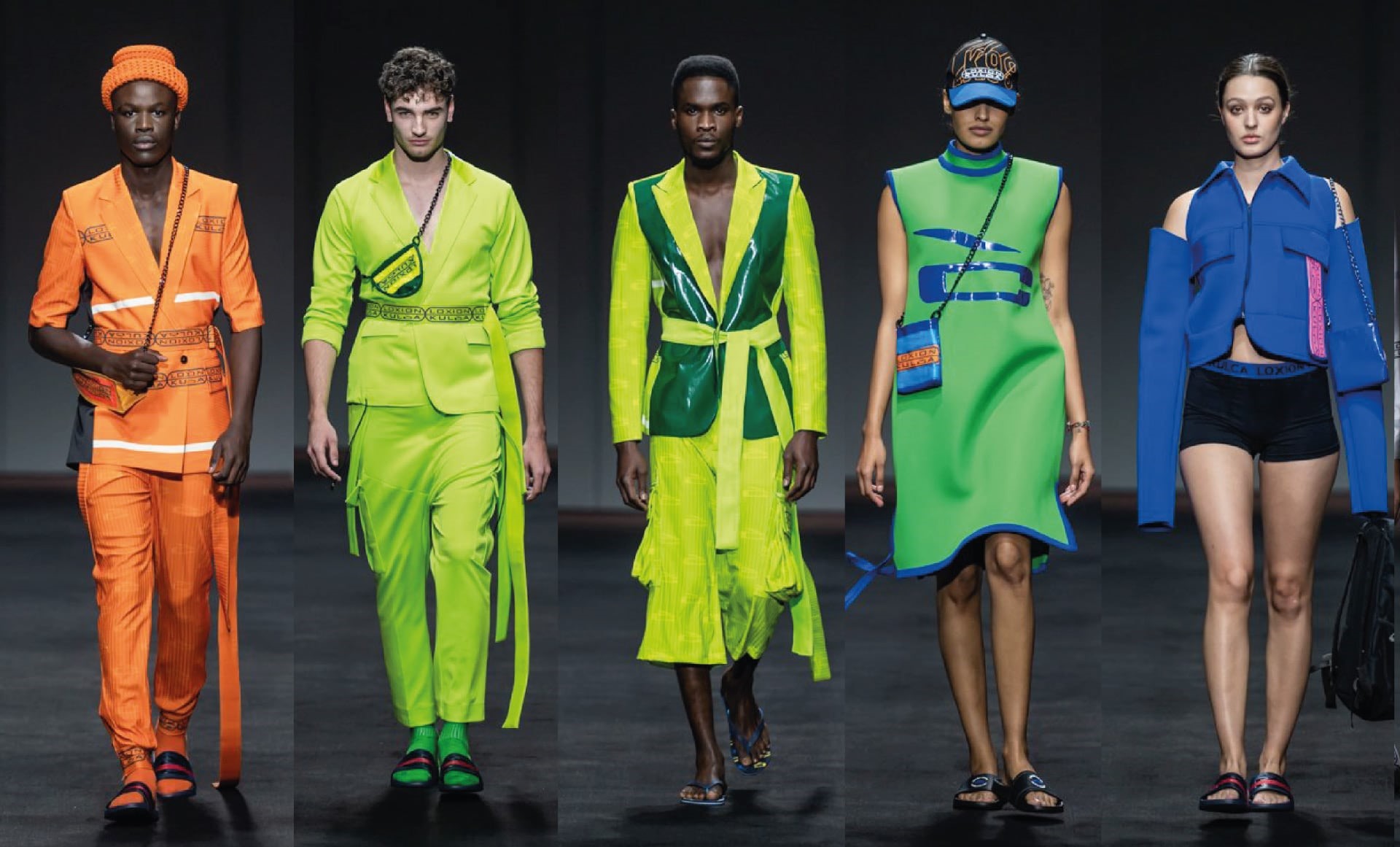
Loxion Kulca at SA Fashion Week 2022 (Loxion Kulca)
At roughly the same time, Loxion Kulca was forming an entirely different yet complementary response to the same question. Launched by Wandi Nzimande and Sechaba Mthethwa in the late 1990s, the brand drew its name from township slang (“Loxion” meaning “location”) and its energy from the streets. Loxion Kulca spoke to the generation born on the cusp of democracy. It was about young people claiming freedom through self-presentation. The brand elevated the kasi aesthetic, from bucket hats to oversized tees, turning streetwear into a marker of pride rather than proximity to struggle. In doing so, it predates global shifts that would later see streetwear dominate high fashion.
While Stoned Cherrie and Loxion Kulca grounded identity in lived experience, Marianne Fassler approached it through the lens of creative evolution. Her label, Leopard Frock, has long championed fearless print-mixing and avant-garde silhouettes, reimagining “African” as a state of mind rather than a motif. Fassler’s decades-long presence, from early homegrown fashion weeks to international showcases, bridged old and new, proving that local craft could hold its own in the conceptual realm.

Black Coffee by Jacques van der Watt (Supplied)
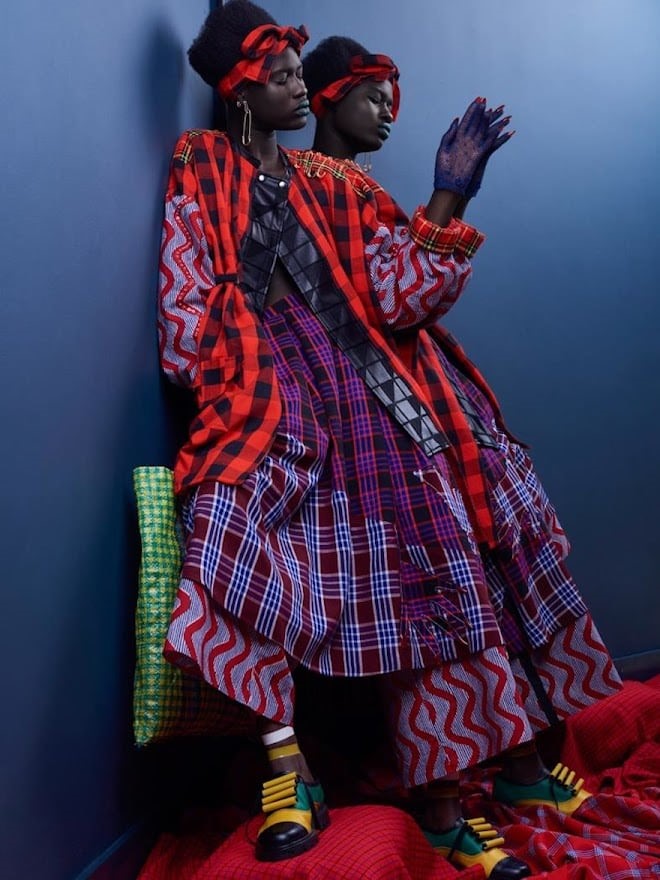
Leopard Frock by Marianne Fassler (Zander Opperman)
Similarly, Black Coffee, founded by Jacques van der Watt, introduced a new modernist minimalism that redefined how African design could be perceived. Clean lines, architectural tailoring and structural innovation replaced literal cultural referencing with form and technical mastery. This approach laid the conceptual groundwork for the likes of UNI FORM and even Lukhanyo Mdingi, whose sensitivity to craft and sustainability reflects a direct aesthetic and philosophical lineage.
Then there is Laduma Ngxokolo, whose brand MaXhosa Africa epitomises how cultural rootedness can translate globally. Drawing from Xhosa beadwork traditions and contemporary knitwear innovation, Ngxokolo’s work embodies what BoF describes as “modern heritage.” His rise from a Nelson Mandela Bay student project to international runways and Beyoncé’s wardrobe underscores how authenticity, when executed with sophistication, travels effortlessly. MaXhosa’s patterns became not just fashion statements but cultural symbols, visible in music videos, presidential addresses and living rooms alike.
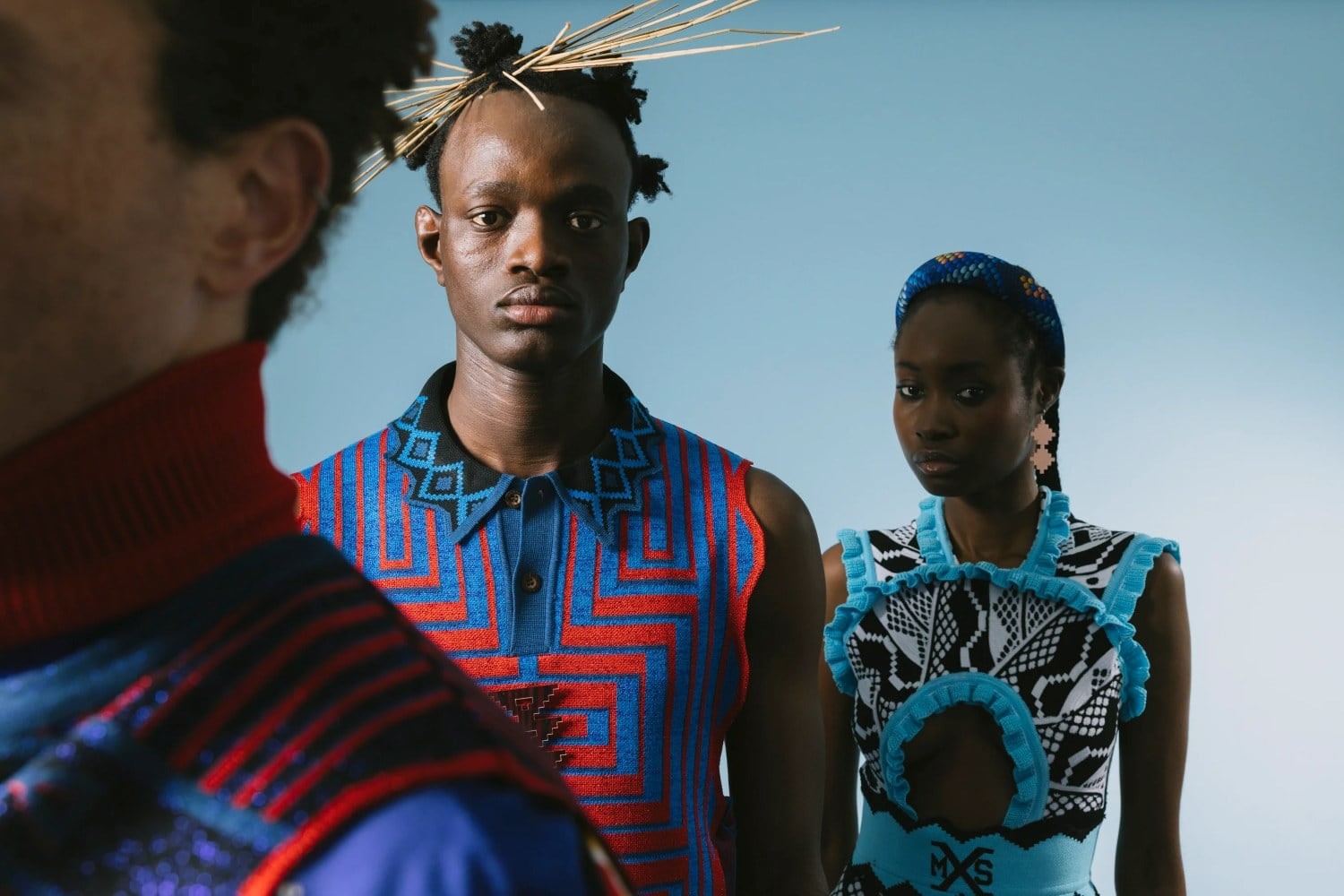
MaXhosa Africa’s Fall-Winter 2025 collection (MaXhosa)
Collectively, these designers (and many others alongside them) built a vocabulary for South African fashion that was both introspective and outward-looking. They transformed identity from a political burden into creative possibility. Their garments asked audiences to look; not at a stereotype of Africa, but at individuals shaping their own visual futures.
What connects them all is an insistence on self-definition. Whether through nostalgia, street pride, or architectural precision, each designer contributed to an aesthetic of reclamation. They showed that South African fashion was never just about dressing bodies; it was about clothing a nation newly aware of itself.
The inclusion of South Africans in the 2025 BoF 500 is therefore more than global applause. It’s recognition of a project that began three decades ago, when designers first started imagining what freedom might look like in fabric. That imagination continues to shape global conversations about representation, sustainability and cultural authorship. 
Pepkor – trading update and trading statement
Continuing operations
For the year ending 30 September 2025 (FY25), the group achieved a 12.0% increase in revenue, reaching R95.3 billion.
The group’s retail operations outperformed the rest of the market with strong trading in what remains a muted macroeconomic and highly competed consumer environment. The Pepkor business model – highly focussed on solving our customer’s needs has again proven its resilience and defensiveness.
Group market share was expanded based on latest market share data (RLC September 2025 12mma and GfK September 2025 data).
Trading statement A reasonable degree of certainty exists that the group’s headline earnings per share (“HEPS”) and earnings per share (“EPS”) for the year ended 30 September 2025, when compared to the previous corresponding period, are expected to increase within the ranges reflected in the table below.
Continuing operations
FY25 expected range (cents), FY25 expected change (%) and FY24 actual (cents)
EPS: 149.6 to 156.0; 136% to 146%; 63.4
HEPS: 153.6 to 167.6; 10% to 20%; 140.2
Normalised HEPS: 154.1 to 167.1; 18% to 28%; 130.5
Results announcement and webcast
Pepkor’s results for the year ended 30 September 2025 will be published on SENS on or about Tuesday, 25 November 2025.
A results presentation will be held at 10:00am (SAST) on Tuesday, 25 November 2025. The webcast registration link will be made available prior to publication of the results on the Pepkor website: www.pepkor.co.za.
Pepkor – conclusion of acquisitions
Pepkor shareholders and noteholders were referred to the Stock Exchange News Service (“SENS”) of the JSE Ltd. (“JSE”) announcement published on 25 March 2025, wherein the company advised that it had entered into a transaction agreement to acquire the Legit, Swagga, Style and Boardmans businesses from Retailability (Pty) Ltd. (“Retailability”) (“Proposed Transaction”).
The company confirmed that all conditions precedent for the Proposed Transaction, as set out in the relevant transaction agreements have now been fulfilled, it being noted that the approvals from all relevant competition authorities have now been obtained. On the basis that the Proposed Transaction is now unconditional, the Proposed Transaction was implemented as envisaged, effective from 2 November 2025.
Classifieds:-
We’re hiring: Garment Technologist Wanted!
To see details, click here
Send your CV to justin@industrialclothing.co.za

NewsBriefs wants to share your company profile.
If you are a manufacturer or supplier to the Clothing & Textile trade please send us your company profile on a word document up to 500 words explaining what your participation is to the industry.
You can also supply one visual in jpeg or png format.
Our aim is to share one newsworthy submission per week with our readers.
Although editorial is neither guaranteed nor implied, suitable editorial for consideration may be submitted to:- carla@newsbriefs.co.za

Where do our favorite wardrobe staples come from?

“Athleisure” isn’t as contemporary as you might think. The term was first used in 1979 in Nation’s Business to describe garments designed to appear athletic. In 2016, Merriam-Webster added the term to the dictionary: “casual clothing designed to be worn both for exercising and for general use.”
The goal of athleisure? To have a one-size-fits-all approach to your wardrobe, easily transitioning from running errands to hitting the gym to casual workwear.

Editorial Submission:
Please remember to send me your news so that we can share it with all our readers in the weekly newsletter. Although editorial is neither guaranteed nor implied, suitable editorial for consideration may be submitted to:-
