
Newsletter No 40 /24 October 2025


Click on any ad to go to the advertisers website
From Ghana to Egypt and Lesotho: Africa’s Emerging Fashion Landscape
By Celia Oliveras
Morocco and Tunisia stand as traditional suppliers to the European fashion industry, while Egypt is emerging as a significant textile producer. Meanwhile, Lesotho is a major exporter to the US, and South Africa boasts one of the continent’s highest GDPs per capita.
Driven by nearshoring, Morocco and Egypt are gradually gaining positions on the European fashion sourcing map. Lesotho, in turn, with exports to the US valued at $237 million, sees its position as the US sewing machine endangered by a tariff of up to 50% on its sales to the country. In Ghana, the Kantamanto fire has put the spotlight on where and, especially, how much of the West’s textile waste ends up, while South Africa, with one of the largest economies in the territory, is one of the entry points for European brands to Africa. Africa’s role in the fashion industry is becoming increasingly prominent.
The African continent is a complex territory, with more than 30 million square kilometers and 54 countries with extremely diverse economies, geographies and cultures. According to data from the International Monetary Fund (IMF), five countries account for half of the continent’s Gross Domestic Product (GDP), estimated at around $2.8 trillion. This, however, is unevenly distributed, with South Africa, Ethiopia, Egypt, Algeria and Nigeria accounting for up to $1.4 trillion of the total.
Africa has not yet exploded as a consumer hub for Western fashion brands. Very gradually, however, several countries have developed their productive potential, from clothing to tanneries to the cultivation of raw materials. “The African industry is concentrated both at the beginning and at the end of the value chain, in raw materials and clothing, with very little capacity in the production of fabrics and textiles,“ explains the British research center ODI Global in its latest report on the territory. This has generated, warns the text, that part of the potential value of the textile industry is diluted in third countries such as China or Bangladesh, which later sell the fabric back to the African territories at a higher price and where they are finally manufactured.
Africa sold textile worth $22 billion dollars in 2023, 3% of total exports
According to data from Harvard University, Africa exported goods and services totaling $747 billion to the rest of the world in 2023. Of the total, textiles accounted for $22 billion, almost 3%, ranging from apparel (mainly pants) to cotton exports, which account for just over 7% of all textile sales from the continent abroad. In recent years, however, the textile industry on the continent has benefited from the creation in 2018 of the African Continental Free Trade Area (Afcfta), as well as from the economic development of part of the Asian economies that concentrated the continent’s textile exports.This has raised the production and wage costs of their workers in the area, and led companies to look for cheaper alternatives.
Morocco has traditionally been one of the main textile hubs in Africa. Its proximity to Europe has been the main driver of this industry, making it a close producer for Spain, Italy and Portugal. Among the countries that are growing in the heat of a better climate for their economies, however, the big winner over the past year has been Egypt, thanks to its strong growth in the textile sector. Egypt, thanks to its cheaper labor force, proximity to European countries and lower inflation, has been the big winner over the past year, making it a cheaper and more stable alternative.
Lesotho, a small country located literally inside South Africa, has carved out a niche in fashion sourcing thanks to the USA, where it exports more than half of its textile production to giants such as Levi Strauss and Walmart. In total, fashion accounts for 90% of the country’s manufacturing exports, and employs 40,000 people, so Donald Trump’s decision to impose a 50% tariff, now estimated to remain at 15%, on Lesotho products entering the country shook the sector.
Ghana and South Africa represent the two faces of fashion consumption. On the one hand, the South African power, with a GDP per capita of 6,200 euros, at the top of the ranking of all countries on the continent, stands as one of the main, and scarce, destinations for international fashion in the territory. Major retail giants such as H&M, Inditex, Mango or Gap have had, and in some cases such as H&M and Inditex, still have a presence in the country. On the opposite side is Ghana, which has already become known as the great fashion dumping ground next to Atacama in Chile. The Kantamanto fire earlier this year put the spotlight on the fate of most of the textile waste. According to data from the European Environment Agency, up to 46% of this European waste ends up in Africa, in places like Kantamanto, where around 15 million garments arrive every week. Modaes

Is your Birkin really made in China?
By Sandiso Ngubane
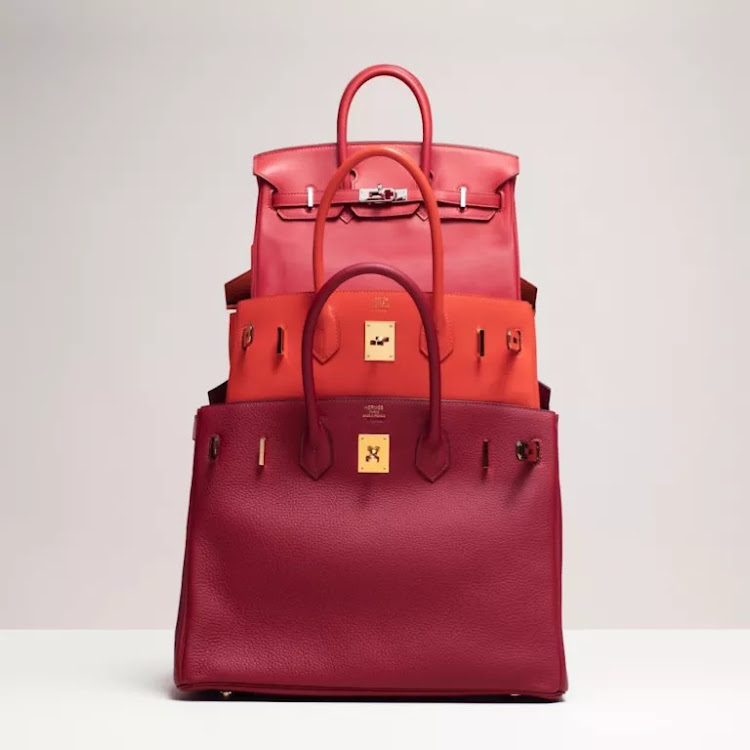
Birkin bag Image: Courtesy of Hermes
Luxury’s bang-for-buck headache reinforced by Trump’s trade war with China
“People obsessed with luxury are insecure,” reads a line from a blog I came across as I looked into the recent controversy over Chinese manufacturers claiming that they are the makers of the European luxury handbags many around the world shell out hundreds of thousands of rand to own.
In case you missed it: in several viral moments, social media videos by representatives of Chinese manufacturers alleging that European brands simply slap logos on goods made in China, marking up prices and calling it “luxury” have littered the internet recently. Spurred by Trump’s trade war with China (and the rest of the world), this is a trend that began with a single TikTok video by one Wang Seng, who claimed to be speaking on behalf of a Chinese handbag manufacturer. “In a video which gained more than 6-million views — before it was deleted and subsequently reposted by other accounts — Seng claimed that “80% of luxury bags in the world are made in China”,’ Euronews reports.
Thousands more similar videos soon popped up all over the internet as Chinese manufacturers urged American consumers specifically, to rather buy directly from them instead of spending $38,000 on a bag that cost $1,400 to make, per claims made about Hermés specifically.
But is there any truth to the claim that brands such as Hermés make their products in China? The answer is a complicated one because no single brand works the same. It becomes less complicated when we zero in on individual brands. If the brand in question is Hermés, for example, the answer is a straight-up: no, it is not made in China. While there are many brands who do manufacture parts of their products in China, slapping a “Made In Italy” on a bag made in China is illegal. The “Made In Italy” tag only applies to products whose entire manufacturing process, from raw material to end product, takes place in Italy.
Whatever the facts are, this debacle has cast a bad light on luxury brands who are in the midst of a multipronged struggle against fast-changing perceptions of luxury. It doesn’t help that the price of luxury has exploded in the past few years, and Trump’s global war on trade is setting off alarms as economists predict a global recession unlike any we’ve seen since the Great Depression. It remains unclear if said recession can even be arrested by any miracle of sensibility on the part of the Trump administration.
While it’s highly doubtful that luxury consumers are going to be swayed towards abandoning luxury as we know it, it’s plausible that many who covet these brands won’t opt for cheaper knock-offs produced in China and elsewhere in what could be a rebellion against high prices at a time where profits are falling sharply for the traditional luxury conglomerates. Not to mention the ever-increasing opposition to the current state of capitalism, which makes public discourse fertile ground for the proverbial annihilation of luxury brands and their price points.
The debate around luxury and the perception thereof also comes at a time when smaller players around the world are increasingly changing the narrative around luxury. On the African continent brands such as Maxhosa and Winston Leather, among others, are increasingly leaning on heritage-based storytelling, quality, sustainability and traditional craftsmanship rather than exorbitant price tags as a basis for luxury.
Many of them are retelling history in ways that are captivating and at least tentatively tied to popular discourse around colonialism and how it distorted the historical record to favour Europe as the centre of modern civilisation. This is not removed from the prevailing perception of European goods as superior.
But when people find out about Nigeria’s rich history of leather production that dates back to pre-colonial times, for example, it’s quite plausible that this may contribute to the fundamental shifts happening in the mainstream perception of what luxury is, or ought to be. Is it about price, quality, or bang for your buck? Is it fuelled by the insecure who buy into brand names due to the promise of exclusivity? Some would say all of the above and today this is not the exclusive purview of European — or even American — luxury brands, who are largely reliant on the historical significance of their labels to set them apart.
All of that appears to be falling apart at the seams. At least for now. 
Cape Union Mart aims to revive SA’s clothing manufacturing industry
Image by Stefan Schwihofer from Pixabay
South Africa’s textile and clothing sector has a rich history, and has, in the past, contributed significantly to the country’s economy and manufacturing capacity. Unfortunately, the sector has struggled over the past two decades, with its contribution to GDP and provision of formal employment opportunities decreasing steadily.
But some manufacturers are actively fighting this trend. Through its Green Thread design studio and manufacturing facilities, launched in 2022, the Cape Union Mart Group has created nearly 346 direct manufacturing and design jobs in Cape Town.
The impact of this employment reaches significantly further, with the economic multiplier effect meaning that the Green Thread operations contribute meaningfully to economic stability in a region where the clothing manufacturing sector has faced considerable challenges.
In collaboration with Thandeka TVET College, Green Thread Manufacturing offers a one-year learnership for unemployed youth looking to enter the sector. Each year a cohort of 20–30 learners is given a theoretical and practical introduction to garment manufacture which includes time spent in the GTM facility, shadowing employees and gradually being introduced to various roles.
Through its training programme, Green Thread Manufacturing takes people who have never used a sewing machine and moulds them into master machinists within six months. This approach to workforce development bolsters the long-term sustainability of the local manufacturing sector, creating a pipeline of skilled workers who can support the industry’s growth.
For an industry that has been stagnant for a long time with very little investment, this is an exciting breath of fresh air, and reflects a deep commitment to the country and its potential.
Here are the stories of three employees who work at Green Thread Manufacturing in Paarden Eiland, Cape Town, making garments for the Cape Union Mart Group’s Poetry and Old Khaki brands.
“I began working in clothing manufacturing straight after I finished my matric. I started out working in the factory as a sorter in the dye section, and since then I’ve worked in many roles – within CMT (cut, make and trim), despatch, and trim store, and as fabric store controller, costing clerk, merchandiser, in the grading department and as head planner. Green Thread has given me many opportunities and made me the person I am today. I grew up here and celebrated my biggest life achievements – birthdays, my marriage, baby showers – with my colleagues. They’ve really become family,” says Zulfa Viljoen, production leader at Green Thread Manufacturing.
“Whatever your niche – whether it’s administrative, using your hands, or even design – there are opportunities to learn more, and people willing to support your growth. I always tell my learners, the first day they come to my factory, that they don’t have to stay in one position for ever. If you’re curious and eager to try new things, then anything is possible. That’s the advice my leaders gave me when I started, and that’s what got me here today,” adds Viljoen.
Zayaan Seegers, a machinist at Green Thread Manufacturing, shares “I’m 24 years old, and joined Green Thread in December 2021. I enrolled for a learnership through Thandeka College, and did my practical training at Green Thread Manufacturing. I love working in the fashion industry. It’s exciting, and allows us to express our personalities, style and creativity, and to bring our ideas to life. I also love working as part of a team, and how it’s important that we trust and respect one another’s abilities and opinions.”
Noncedo Ntobongwana, industrial sewing machine mechanic at Green Thread Manufacturing comments, “I’m 44 years old, and I joined Green Thread Manufacturing in 2016 as a machinist on a production line as part of a learnership. Green Thread is like my second family – we support each other in difficult times. To work at GTM means a lot to me and my family because as a single parent I can raise my kids and support my family and live a better life.”
TFG – trading update and trading statement
This trading update and trading statement relates to the six-month period from 1 April 2025 to 30 September
2025 (“H1 FY2026” or “the period”) viewed against the comparative six-month period from 1 April 2024 to 30
September 2024 (“H1 FY2025” or “prior period”).
Trading update
Salient features
– Group sales grew by 12,7% for H1 FY2026 to R29,2 billion (3,5%^ excluding White Stuff);
– Group online sales grew by 55,3% in H1 FY2026, now contributing 14,7% to total retail sales (H1 FY2025: 10,7%), including White Stuff. TFG Africa online sales grew by 40,2% driven by our Bash platform;
– Market share in South Africa (“SA”) was maintained in Apparel, and in Homeware grew 20 basis points (“bps”) during the period when compared to H1 FY2025, according to the Retail Liaison Committee;
– Negative operating leverage across the Group arising from subdued sales growth and gross margin contraction, despite tight cost control; and
– Increase in Group finance costs of 14,5% resulting from financing of the White Stuff acquisition in October 2024, and from the IFRS 16: Leases charge related to new stores and lease renewals.
Trading statement
TFG is currently finalising its results for the six months ended 30 September 2025, which are expected to be released on SENS on or about 7 November 2025.
Shareholders were advised that a reasonable degree of certainty exists that the earnings per share (“EPS”) and headline earnings per share (“HEPS”) of the Group for the period will be between 20% to 25% lower than those reported for the corresponding prior period.
The expected ranges are as follows:
Basic Earnings per Ordinary Share
*Reported (Six months ended 30 September 2024): 368.3 cents
*Expected (Six months ended 30 September 2025): 276.2 to 294.6 cents
*Expected % Decrease: 20.0% to 25.0%
Basic Headline Earnings per Ordinary Share
*Reported (Six months ended 30 September 2024): 371.6 cents
*Expected (Six months ended 30 September 2025): 278.7 to 297.3 cents
*Expected % Decrease: 20.0% to 25.0%
Classifieds:-
We are looking for a really good, reliable golf shirt manufacturer, local or regional. justin@industrialclothing.co.za


Where do our favorite wardrobe staples come from?

Trench coats may be a fashion staple these days, but they were originally designed for British Army officers in the First and Second World War. These waterproof, khaki garments were used “in the trenches,” hence the name.
After WWII, trench coats started entering the fashion scene. Because high-ranking officers had worn them, trench coats were seen as respectable and professional, making them perfect for businesswear.
When Humphrey Bogart wore a trench coat in Casablanca and Peter Sellers wore one in Pink Panther, the trench coat instantly became a popular outerwear choice. Burberry soon went on to make the trench coat even more accessible for men and women alike.

Editorial Submission:
Please remember to send me your news so that we can share it with all our readers in the weekly newsletter. Although editorial is neither guaranteed nor implied, suitable editorial for consideration may be submitted to:-
