
Newsletter No 38/04 October 2024


NewsBriefs wants to share your company profile.
If you are a manufacturer or supplier to the Clothing & Textile trade please send us your company profile on a word document up to 500 words explaining what your participation is to the industry.
You can also supply one visual in jpeg or png format.
Our aim is to share one newsworthy submission per week with our readers.
Although editorial is neither guaranteed nor implied, suitable editorial for consideration may be submitted to:- carla@newsbriefs.co.za
Click on any ad to go to the advertisers website
Truworths to spend big on new stores, distribution centre
By Thabiso Mochiko
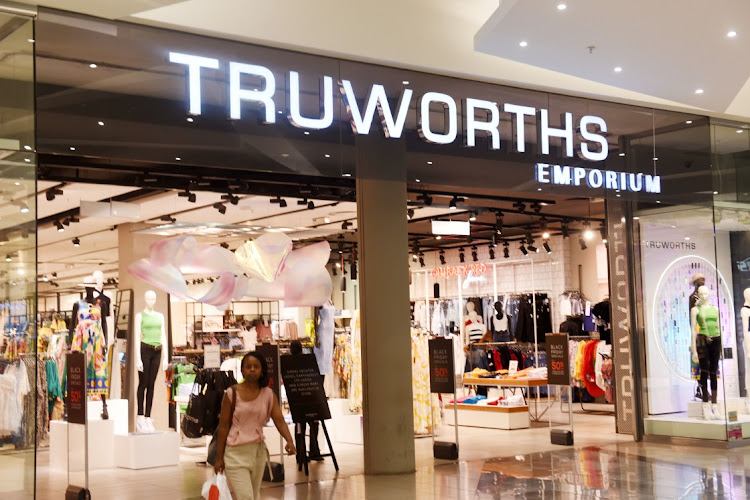
Truworths Emporioum store at the Mall of Africa at Midrand in Johannesburg.Picture: Freddy Mavunda
Clothing retailer Truworths is set to shell out R591m, the bulk of which will go to its distribution centre, the opening of new stores and the refurbishment of some of its existing outlets.
The owner of Uzzi, Earthchild, Naartjie, Identity, Young Designers Emporium and UK-based footwear brand Office did not disclose the number of stores it wanted to open but said it planned to grow its trading space by 1% in the 2025 financial year.
Truworths has 802 stores, most of them Truworths, with 353 outlets, followed by Identity, with 254. In the year to June, Truworths opened 20 new stores and closed 13.
Over the past few years, competitors TFG and Mr Price have opened hundreds of stores a year across all their brands, including fashion, homeware and furniture. “We are finding opportunities [for new stores] because we are doing well. We are opening in areas where we previously closed because there are opportunities,” said Truworths CEO Michael Mark.
“We have not disclosed specifics, but we will assess opportunities across all brands, including for our new brands, Sync and Fuel, as well as expansion opportunities for our Identity megastore concept. We will also continue to roll out our Truworths Re-imagined store concept in selected locations. With Office, we will open a number of new stores in the year ahead, and we will continue to renovate and expand existing stores in key locations.” Mark said.
As part of its product expansion, Mark said the company would also focus on categories showing “exceptional opportunities for growth”. He did not disclose these categories.
The R1bn new distribution centre, expected to be fully operational by March 2025, will boost Truworths’ local manufacturing and improve its ability to respond quickly to trading patterns.
About 55% of its apparel is imported, either through agents or Truworths’ international sourcing division. The remainder is manufactured locally, either directly through local manufacturers or via a network of design centres, including the group’s own.
“We have in-house design that can react quickly and design quickly. We have local manufacturing of 45%-50% on our doorstep and pretty much exclusive to us,” Mark said.
“We are in a much better position to take advantage of core replenishment and quickly respond to demand in fashion products. Over the next two to three years, this should come through in our numbers.”
In its results for the financial year to June, released two weeks ago, Truworths reported a decline in sales across all its categories in Africa. However, online sales in South Africa rose 34% and now represent 5% of total sales in Truworths Africa operations.
Mark said the group did not have a target for its online sales contribution, but “we continuously enhance our websites, and our full merchandise offering is available online, which means we are positioned for further online growth”.
“We expect our online sales growth will continue to surpass total store sales growth for at least five years.”
TFG’s e-commerce platform, Bash, grew turnover by 44.4% in the year to March and now contributes 4.2% to retail turnover. At Mr Price, which has more than 2,900 stores, online sales made up 2.1% of total retail sales.
On local retailers bearing the brunt of the popularity of Chinese online retailers such as Shein and Temu, Mark said South Africa had seen many new international retail entrants over the years, and they had enjoyed varying degrees of success for various reasons.
“What makes them different is whether the playing fields are level,” he said.
“How successful these new online players will be remains to be seen. Their products are cheap, they use good intelligence to enhance their products based on consumer needs, [and] they have large marketing budgets and very good distribution capability. But they don’t offer a credit model, and they don’t have the strong brand portfolio we have. They also don’t have a store presence in the top malls in the country.”
Investment analyst Chris Gilmour said that compared with its rivals Truworths was tiny when it came to sales store footprint and was predominantly a credit retailer. However, Truworths’ strength was its credit facilities, and “it is highly disciplined in its credit-granting, and that has been the main reason for its success over the years”, he said.
In the year to June, Truworths said it received 5.3-million credit applications, and the company has 2.9-million active account customers. Account sales contribution was consistent with the 2023 financial year at 70% of retail sales.
Truworths has a market capitalisation of R45bn, with Mr Price at R68bn, TFG at R52bn and Woolworths at R64bn. 

Online Seminars

As part of the Groz-Beckert Academy Mobile, we offer online seminars on a number of topics related to the textile industry with interesting information for you.
We would like to invite you to our online seminar of the Division Sewing on 22 October 2024 with the title “Stitch by stitch: Increase your efficiency in single- and multi-head embroidery”.
High-quality accessories play a crucial role in first-class embroidery. In our online seminar you will delve into the world of single- and multi-head embroidery and discover which needle systems best suit the different requirements. You will learn which point styles to use for which materials and what challenges can arise in industrial embroidery.
Whether you are just starting out or already have experience – in our online seminar you can deepen your knowledge of embroidery needles and get practical advice on how to deal with typical application problems.
Date:
Tuesday, 22 October 2024, 08.00 a.m. CEST (07.00 a.m. UTC/GMT)
Tuesday, 22 October 2024, 03.00 p.m. CEST (02.00 p.m. UTC/GMT)
Language:
English
Speaker:
Tarique Gunasekera (08.00 a.m.)
Ramon Clavijo (03.00 p.m.)
The participation in our online seminar is free of charge. Only prior registration is necessary:


Textile traders defend Africa as industry strives for circularity
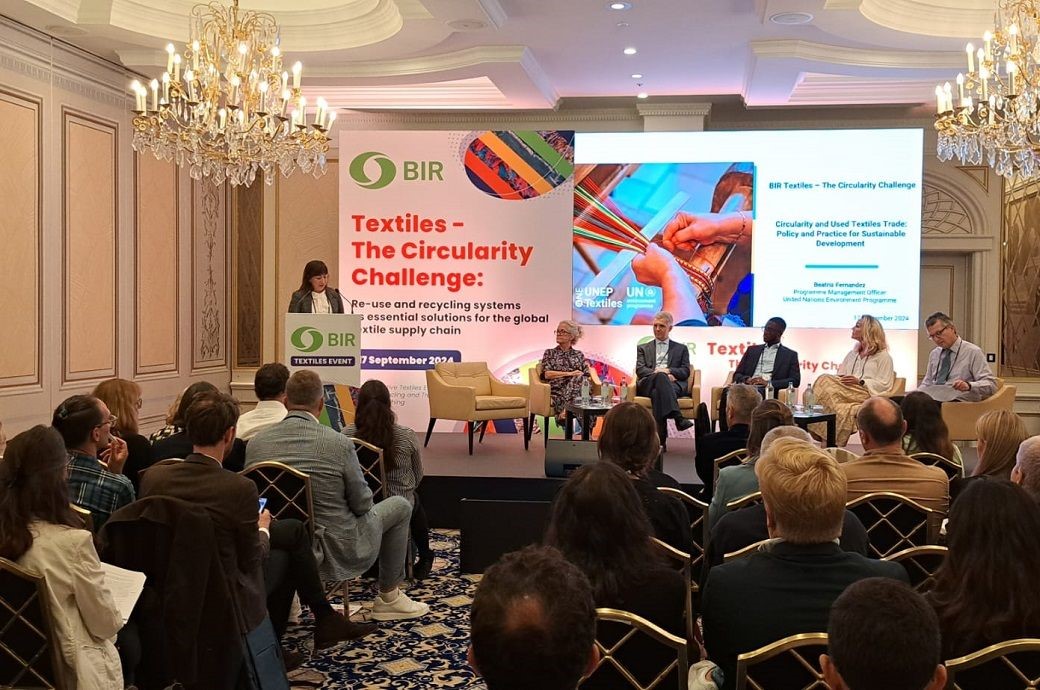
Pic: Bureau of International Recycling
Insights
The used textile market is at a ‘turning point’ and requires collaboration and innovation to deliver a truly global circular economy throughout a vibrant international supply chain. That was the key message from the very well-attended first-ever Textile Circularity conference organised by the Bureau of International Recycling.
Speakers stressed the importance of trade between developed economies and Africa, dismissing media reports that 40% of clothing exports was suitable only for landfill. Representatives from Ghana, Kenya and Uganda countered such claims, arguing that detailed research showed the proportion was actually in single figures. They said it made no sense for astute African businesses to import textiles from the EU or the US they could not use.
Participants also grappled with a range of issues facing the used textile markets, including the impact of EU regulations, “fast fashion”, the definition of “waste” and emerging technologies.
BIR held the event in Brussels on 17 September at a time when the EU sector is struggling. In a pre-recorded video message, President Susie Burrage OBE said textile reuse and recycling was at a turning point and the industry needed help to overcome the challenges it faced.
Related News
Ms Burrage insisted that collective efforts to deliver proper sorting, reuse and recycling and repurposing were vital to achieving a circular economy in textiles in both developed and developing countries.
“The narrative around end-of-life, or end-of-use, textiles is becoming increasingly tangled,” she told delegates by video link. “Media headlines often paint a one-sided picture, leaving the public confused at the real story of used clothing.”
Africa rejects dumping claims
In the conference’s first session chaired by Alan Wheeler of the UK-based Textile Recycling Association, a defiant African perspective came from Marlvin Owusu, an executive member of the Ghana Used Clothing Dealers Association. “One of the biggest challenges we have is simply the misconception of second-hand clothing.”
Mr Owusu said that while EU law defined “waste” as discarded materials no longer intended for their original use, the Ghanaian view was that it was clothing that could no longer be reused or repurposed. An independent report commissioned by his organisation using that criterion found such items made up the proportion of textiles waste arisings being imported into Ghana is only up to 5% and is often considerably less. He said this was “far below the exaggerated figures that have been put on media outlets for a long time”.
Ghanaian traders delivered quality affordable clothing in a sustainable trade at the core of circularity, he insisted. Reports such as that from the OR Foundation suggesting 40% waste in imported bales could not be trusted, he argued, because “there is no business model in the world that could support a waste level of 40%”.
Via video link, Teresiah Wairimu, chair of the Mitumba Consortium Association of Kenya, also spoke of “unverified figures” for waste from those with no understanding of the African markets. In the capital Nairobi, she insisted, the figure was 1.89%.
Ms Wairimu said she represented two million people directly employed in the clothing industry with more than 20 million others depending on it for their livelihood. “We are business people, we import goods for sale and our Government regulates and forbids waste. In Kenya, we only import sorted clothes and we are leading the way on building a circular economy through textile use … It is very insulting to hear we are importing waste.”
Mr Wheeler said it was very important that the voices of the Global South were heard in a textile circularity debate.
In a presentation on a survey of the large second-hand Owino textile market in Kampala, Uganda, Michelle Wilson, Director of Programmes for the WasteAid charity (GBR), said the biggest source of waste was from the dozens of machinists repurposing clothes within the market rather than from the hundreds of sellers. A final report is due later in the year but preliminary findings from a survey of 600 market participants suggested levels of waste of around 1%.
Ms Wilson thought definitions of waste could explain the discrepancy between this local figure and the 40% claims. She spoke of a local term ‘fagi’ – meaning textiles that may not sell because they are unfashionable or not wanted at that time.
“When we talk about waste we think of something that is ruined but, in the markets, fagi might go round and round until something else happens to it. The [actual] waste is quite low but there is lot of other materials that stay in circulation for quite a long time.”
All three felt the bigger challenge was for governments and businesses to improve the domestic waste management of all waste in their countries.
European concern for future
Martin Böschen, president of BIR’s Textile Division and CEO of TEXAID (Switzerland), was concerned about the consequences of tighter regulations for EU exports of textiles. “Are we not then opening this [African] market to others such as China or other countries that are going to export their post-consumer textiles under much less regulation and then kill this industry in Europe?” he asked.
The parlous state of the used textile trade in Europe was also raised by Mariska Boer, president of EuRIC Textiles and co-owner of Boer Group (NED). “Our biggest challenge is finding a way to regain a competitive position on the global market for textile reuse. It’s only through that we can continue to build a resilient and vibrant industry here in Europe.”
Ms Boer spoke of a continuing decline over the past 10-15 years in the quality of clothing put on the market by brands selling “cheap, ultra-fast fashion”. “If you get a lower quality in your sorting plant you can’t possibly sort a higher quality out.”
Other factors weighing on the reuse trade were the costs of labour, energy prices and the continuing war in Ukraine, she said. While proposed regulation would help in the longer term, such immediate issues were weighing heavily on the European markets.
“We call for financial incentives to support those companies within Europe that make an impactful contribution to a sustainable and circular textile value chain,” she insisted. “And we need to restrict the import of ‘throwaway’ fashion within the EU.”
Delivering new technology
One session at the conference was dedicated to the emerging technologies driving textile-to-textile recycling alongside the traditional reuse model. Notable among them is chemical recycling, reducing clothing and other fabrics to their molecular building blocks and using them to create new products of value.
Cyndi Rhoades, co-founder of Circle-8 Textile Ecosystems and founder of Worn Again Technologies (GBR), spoke about a multi-stakeholder collaboration on a pilot facility for “non-rewearable textiles” (NRTs). NRTs will be fed into an automated textile sorting and pre-processing facility due to open in the UK by early 2026. The resulting material is then broken down into purified polyester and cellulose to go into fibre spinning before becoming new textiles.
“There was a perception, which lasted for many years, that chemical recycling was too expensive and too energy intensive,” she said. “Today, innovations are getting large-scale investments and brand engagement. However, less than 1% of new textiles are made from existing textiles so there is a seriously long way to go but we are on the right track.”
Pursuing circular textiles
Another speaker was Beatriz Fernandez, programme management officer for the United Nations Environment Programme (CHE), who pointed out that textiles contribute up to 8% of the world’s greenhouse gas emissions. Material use has increased more than three times over the last 50 years and is expected to increase by 2.3% per year.
A circular business model, she said, could cut 143 million tonnes of GHG emissions by 2030 so improved production practices and greater investment in infrastructure were essential. The UN’s Circularity and Used Textile Project is currently assessing the import markets of Ghana, Kenya, Tunisia and Pakistan. “We are aiming to have social and economic growth that is coupled with environmental agendas. Circularity becomes a beacon of hope.”
The regulator’s perspective came from Vincenzo Gente, Policy Officer in the Environment Directorate at the European Commission, who spoke about progress on revising the Waste Framework Directive as it applies to textiles. Aspects include extended responsibility (EPR) schemes, producer responsibility organisations and rules on waste management. The revision is also impacted by the regulation on eco-design for sustainable products, which entered into force in June 2024, and end-of-waste criteria for textiles which were consulted on earlier in the year.
Successful first
BIR director general Arnaud Brunet said this first “Circularity Challenge” event had been so successful it would certainly not be the last. Historically, he thought BIR’s Textile Division had been Eurocentric but that was no longer the case.
“I’m interested that countries like Ghana and Pakistan are becoming exporters of recycled textiles so it’s time for companies from those countries to join BIR and strengthen the network and make sure we achieve that circular economy and that we have a global voice when we talk to regulators.” F2F
Rex True final results June 2024
Revenue for the year lowered to R890.6 million (R899.3 million) with gross profit declining to R321.6 million (R354.4 million). Profit from operating activities slumped to R33.1 million (R135 million) with loss for the year attributable to owners of the parent ending on R835 000 (profit of R85.7 million). Additionally, headline earnings per share tumbled to 37.38c per share (399.41c per share).
Dividend
No dividend was declared for the year ending June 2024.
Rex True – Trading Statement
Shareholders were accordingly advised that the Company’s:
* Loss per share for the year ended 30 June 2024 is expected to be a loss of 3.9 cents per share, representing a decrease of 101% (2023: earnings per share of 394.8 cents per share); and
* Headline earnings per share for the year ended 30 June 2024 is expected to be a profit of 37.4 cents per share, representing a decrease of 90.6% (2023: 399.4 cents per share).
Rex Trueform’s financial results for the year ended 30 June 2024 is expected to be released on or about 27 September 2024.


Walter Hunt, a man from America, invented the safety pin back in 1849.
Children wore the same styles as adults up until the 1500’s, when new trends appeared specifically for children.
In the Western world, skirts and dresses are mainly reserved for women, but in other areas of the world, both sexes wear them equally as often.

Company Profile:-
FIG Design and Production
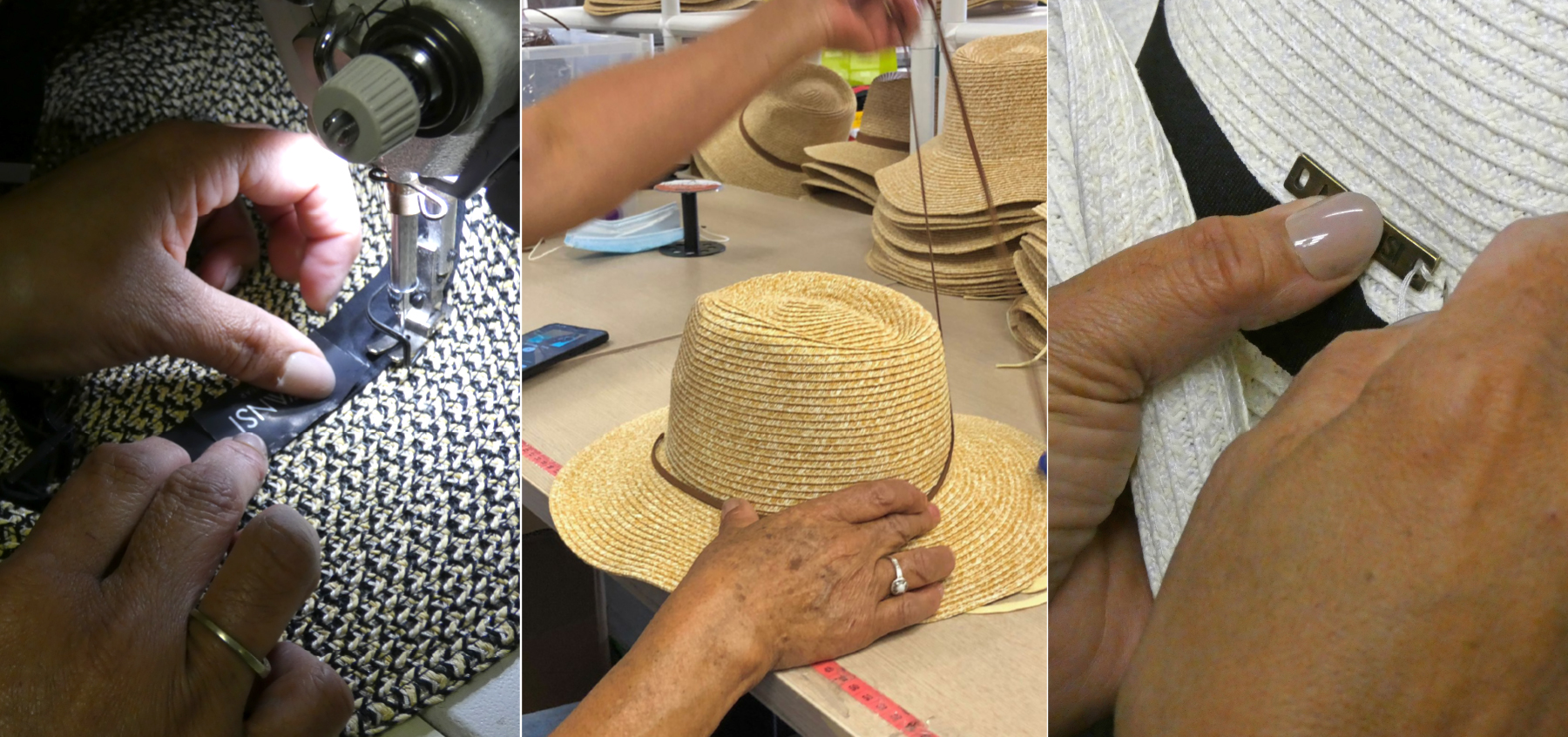
Since 2021 – FIG Design and Production is your local manufacturing partner specializing in high-quality sun protective headwear.
Situated in Cape Town, our production facility is sister to our distribution company, FIG Distribution. Fig Distribution was founded in 2017. With an extensive network across Southern Africa, Mauritius and Seychelles we’re able to provide premium sunhats to a broad target audience.
Our Team
Our dedicated design & production team consists of 7 individuals who turn ideas into hats. Starting with the design process, hats are then manufactured step-by-step by blocking (shaping) the right hat shape and size, followed by the sewing & finishing processes to complete the finished hat.
We believe in supporting local talent and we’re committed to using decorative materials sourced within our borders wherever possible, like sourcing leather from local tanneries.
Locally designed & made – Mzansi Headwear
We’re proud to introduce our newest brand, MZANSI Headwear. With an emphasis on craftsmanship and style, each MZANSI hat is locally designed and made by our dedicated local team.
The beaded bands that adorn many of our hats are another testament to the artistry of our people. Each band is individually crafted, drawing on traditional beading techniques that have been passed down through generations. These bands are not just decorations; they are stories in themselves, telling tales of culture, identity, and connection.
You’re not just wearing a hat – you’re wearing a story. A story of a continent that is as diverse as it is beautiful, these hats are a celebration of all that makes Africa unique.
Private labelling – customised hats
Offering private label services that allow brands to customize their own collections, we can turn ideas and designs into reality tailored to suit a business’s needs.
Get in Touch
For more information on our various brands, or how we can assist your business with private labelling, please get in touch.
Editorial Submission:
Please remember to send me your news so that we can share it with all our readers in the weekly newsletter. Although editorial is neither guaranteed nor implied, suitable editorial for consideration may be submitted to:-
