
Newsletter No 35 /19 September 2025

Click on any ad to go to the advertisers website
To agents, manufacturers, distributors & wholesalers. Please upgrade your 1 line listing to a business listing at least. The Sourcing Directory and Newsletter is dependent on industry support and your business listing offers potential clients more information about your company, products, branches, agents etc.
The cost of a business listing for the entire year is only R1400.
To add a logo is an additional R440. carla@newsbriefs.co.za


Durban Overall celebrates 35 years in industry
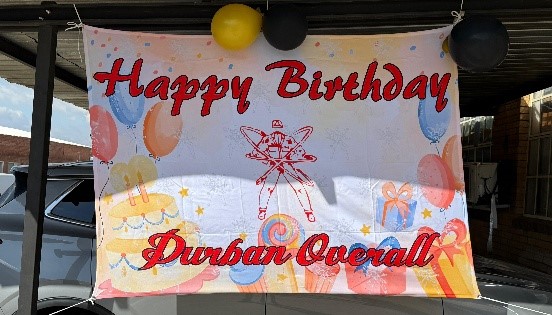
Durban Overall, located in Ladysmith, KwaZulu-Natal, was founded 35 years ago by Mr. Steve Tandy, the current CEO. At the time, he started with 14 sewing machines doing CMT work for a few customers. The company has grown to employing close to 2,000 permanent employees at its facilities in Ladysmith and Hammarsdale.
The company follows a motto that “Happy Customers Pay Our Wages” and believes this is key to success in the difficult business environment. To fulfil this obligation, the company has over time ensured that it was SABS and ISO 9001 (2015) accredited. The company has an FP&M Seta-accredited training centre and is a certified BBBEE Level 2 supplier.
Durban Overall’s product range stretches from manufacturing of workwear for the construction, mining, security, defence, hospitality, healthcare, outdoor, and fashion industries. To be able to supply our variety of customers, Durban Overall has over the years managed to develop a multiskilled and flexible workforce. This, in conjunction with the company’s lean manufacturing culture, has enabled Durban Overall to survive and maintain its competitive edge.
The company’s training centre has over the past 5 years trained 412 employees on its learnership and skills programmes, and 141 employees on the YES programme. A large number of the beneficiaries of this training were unemployed and were all absorbed in permanent positions with the company. The company is proud of its association with the Inkanyezi School for the Disabled, and 4% of its permanent employees are disabled. Durban Overall supports the school with the donation of sewing machines, fabric and trims, and training for the relevant teachers.
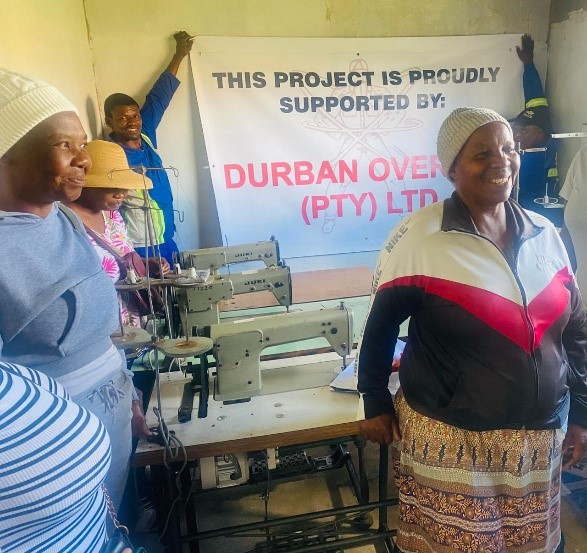
Co-Op Enterprise Development
The company is aware of its responsibility towards the environment and communities in the Ladysmith area. Sustainability projects include solar energy, boreholes for water, and structured waste management processes. Its enterprise development activities include the establishment of 6 CMT cooperatives, where each received 15 sewing machines, fabric, and related trims. These cooperatives are supported with management training, maintenance support, and raw materials. These cooperatives provide a livelihood for 130 families.
Besides its other support to various communities, the company, in conjunction with the local Rotary Club, distributed over 1,800 bicycles in the past 2 years to children in rural area schools. This was supported with basic maintenance training at each institution. The iThembeni Project in Ladysmith, whose main goal is to strengthen and equip marginalised rural women and youth so that they are empowered to become active, contributing participants in their communities and are dignified in their contribution, is mainly sponsored by Durban Overall. The company further actively supports The Dare/Dignity Campaign. This is a programme of The Dignity Campaign, which is a Christian initiative that envisions community transformation by changing the lives of young women and men. As a Christian organization, they are governed by Christian principles and values. The purpose of The Dignity Campaign is to create a space where individuals and organizations working with young women and men can be trained and equipped to address challenges at a local level. They form partnerships with churches and community-based organizations to advocate for, empower, and educate young women and men.
The company is committed to upholding these activities whilst being operationally competitive in the global environment in which it operates. Durban Overall is privileged to have had 35 years in this ever-shrinking industry and wants to make use of this opportunity to thank its customers, suppliers, and employees for their support over this period.
As is practice, all employees will be celebrating the birthday with some Kentucky Fried Chicken and a cooldrink.
South Africa’s clothing sector battles global disruption
By Adrian Ephraim
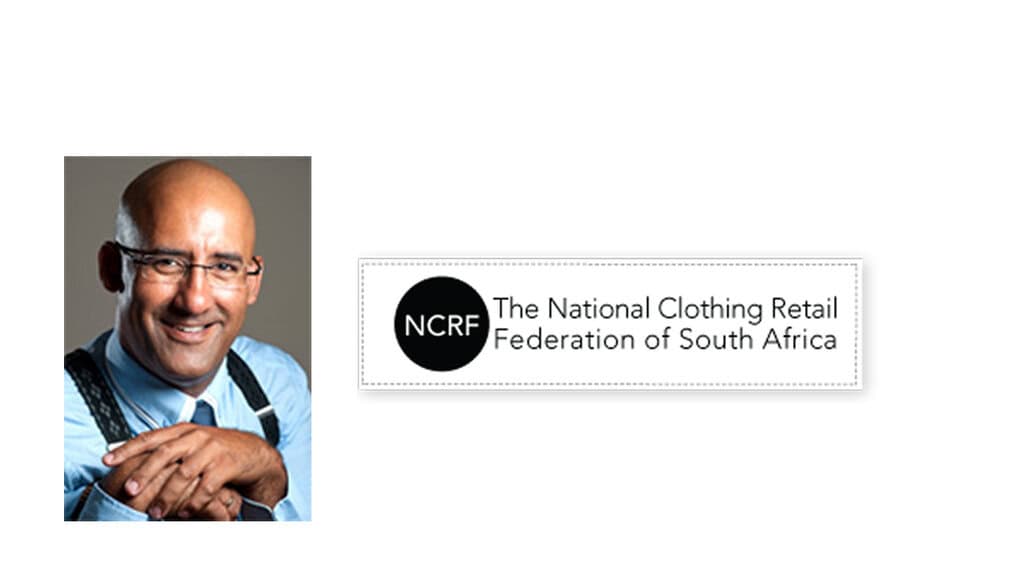
Michael Lawrence, Chair of the National Clothing Retail Federation (NCRF).
South Africa’s clothing sector battles global disruption
South Africa’s clothing and textile industry stands at a crossroads. With 200 000 retail staff and significant manufacturing operations, the sector faces unprecedented challenges from offshore online giants and structural inefficiencies that threaten its survival.
Michael Lawrence, Chair of the National Clothing Retail Federation (NCRF), paints a sobering picture of an industry under siege. “Shein and Temu and others are welcome to the game,” he says, but the welcome comes with a warning – these platforms could cost South Africa over 34 000 jobs if current trends continue.
Global disruption in South Africa clothing industry
Chinese e-commerce giants Shein and Temu have fundamentally altered the competitive landscape. Lawrence acknowledges their sophistication: “There must be real hard cash behind all of that because they’ve got some very smart business models.”
These platforms leverage artificial intelligence for personalised pricing and have established integrated supply chains. “They’ve got design copying which does not happen from people. It’s actually digitally generated,” Lawrence explains, highlighting the technological gap South African retailers face.
Five years ago, the NCRF signed a master plan to boost local manufacturing. The results show promise – participating retailers increased average local content sourcing from 35% to just over 46%. “And average means some people are even over 50%,” Lawrence explains.
However, fundamental challenges persist. Lawrence describes manufacturing as burdened by “legacy equipment” and outdated models. “Most of our manufacturing sector has legacy equipment that needs to be sweated 20 hours a day, not six hours a day.”
South Africa clothing sector scale and skills gap
Manufacturing operations need significant scale to justify quality management. “You’re really optimised at about 150 staff members. Ideally you want about 300,” Lawrence says.
The sector also suffers from operational constraints. Manufacturing facilities operate limited hours while service industries remain open weekends. “We have a million service industries that are open on a Sunday. But manufacturing closes down Friday at 12:00,” Lawrence says.
The skills shortage is equally critical. “Who goes to high school these days and says I want to work in clothing manufacturing? Nobody,” Lawrence says bluntly. This contrasts sharply with competitive markets where workers actively plan entrepreneurial ventures while employed.
“We need people who know how to work numbers, who can walk into a factory and put together logic sequences necessary for optimising machinery,” he explains.
Lawrence criticises the regulatory environment as “unnecessarily burdensome,” advocating for the government to act as facilitator rather than transactional player. “Business does not work like that. We need an environment that gives a lot more flexibility.”
Regional opportunities for South Africa clothing sector
Despite challenges, Lawrence sees potential in regional expansion. The federation sources from Madagascar, Mauritius, and other SADC countries. “We still sell in excess of 2 billion units of clothing in this country collectively,” he notes.
The African Continental Free Trade Area presents opportunities with over a billion consumers, while seasonal differences between hemispheres could enable export-focused manufacturing models.
Entrepreneurship gap in South Africa’s clothing industry
Lawrence identifies a critical entrepreneurship deficit compared to competitive markets. In countries like Vietnam and Cambodia, workers systematically plan their businesses from day one. “By age 30, they know everything about running a factory and can show they know everything,” he explains.
In contrast, “my average 30-year-old in this country is only interested in joining a union for a set salary.”
The industry needs genuine entrepreneurs, not just self-employed individuals. “We need people who can prove entrepreneurial skill. I actually think there is money” for the right ventures, Lawrence believes.
For entrepreneurs entering the sector, Lawrence emphasises the importance of long-term planning. “Nobody’s going to give you an order for the next six months. Someone’s going to give you an order for 18 months. That’s your space.”
Lawrence’s vision requires addressing structural issues: modernising equipment, improving operational flexibility, developing skills, and creating enabling environments. “It’s never too late,” he insists, but success demands coordinated action.
Manufacturing needs to move beyond limited operational hours and embrace technologies that allow 20-hour daily operations. The sector must also develop fabric manufacturing capabilities once product manufacturing establishes clear input demands.
“We’ve got roads that run, but the government must fix the potholes,” Lawrence concludes. “We need proper substantive dialogue on how to address this as a problem at scale.”
Published by Robin

Connect, source products and grow your business with China Homelife South Africa
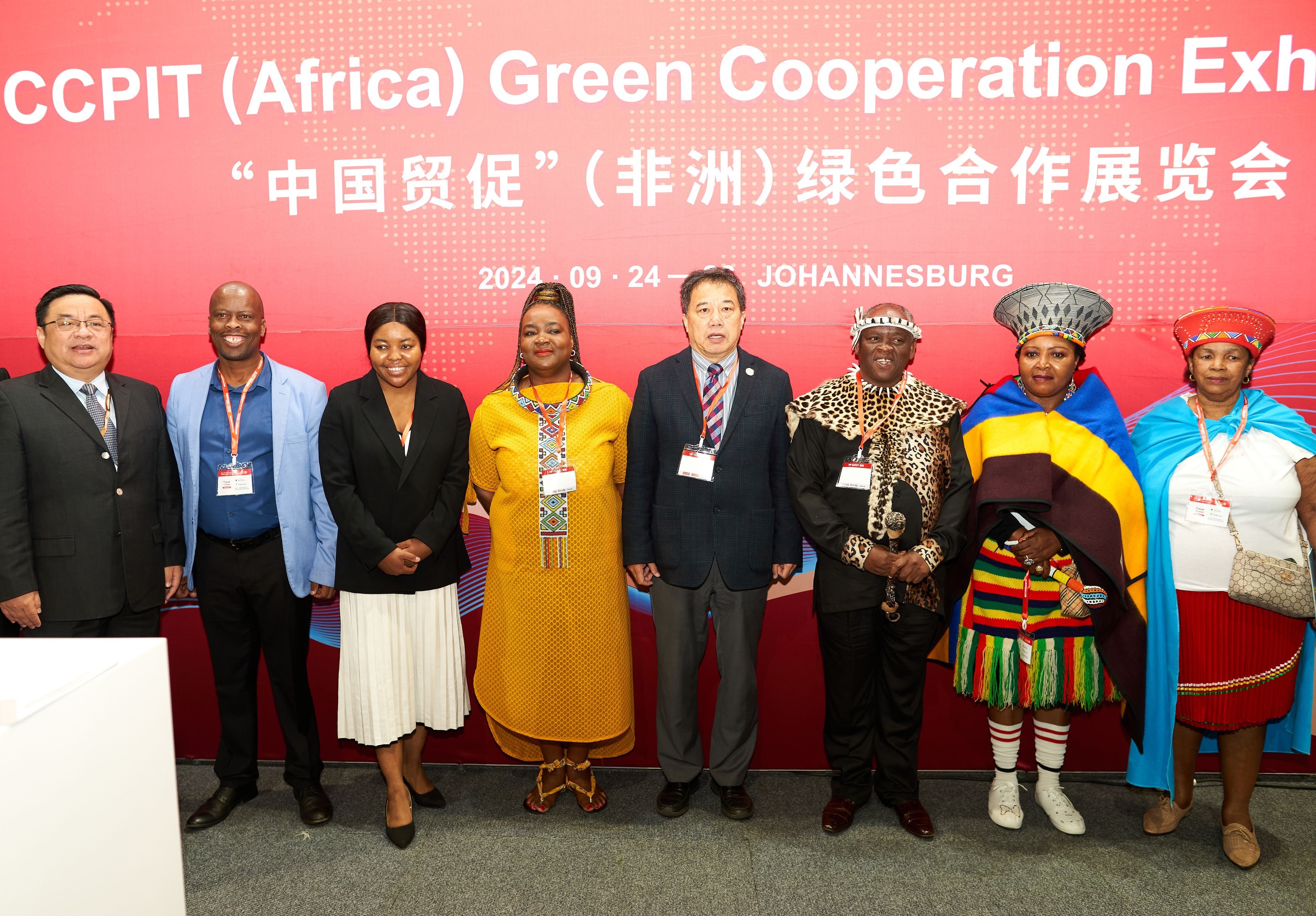
Johannesburg: China-South Africa relations continue to grow stronger, marked by deeper trade, policy, and political cooperation. One of the most visible examples of this partnership is the China Homelife South Africa and Machinex Trade Fair, the largest sourcing event for Chinese products and machinery on the continent.
The 2025 edition will be held at the Gallagher Convention Centre, Midrand, from 23 to 25 September, running daily from 10:00 am to 5:00 pm. For three days, Johannesburg will become the hub of trade opportunities, connecting Chinese manufacturers with African importers, wholesalers, and business leaders.
The fair will showcase an impressive 500 verified Chinese exhibitors presenting more than 10,000 high-quality products across multiple sectors, including:
Building Materials, Appliances and Electronics, Household Goods and Gifts, Machinery, Textiles and Apparel as well as Décor and Furniture.
China Homelife South Africa is more than just an exhibition-it’s a business gateway. Visitors can:
Discover cost-effective, certified products directly from manufacturers. Build long-term partnerships with trusted Chinese suppliers. Gain insights into the importing process and competitive industry trends.
Experience product demonstrations and interact with suppliers face-to-face.
Now in its ninth year, the fair has become the leading China sourcing event in Africa, helping local businesses explore new opportunities and access innovative, world-class products.
Saki Mabhele, the CEO of Papasha Media, the local organisers of China Homelife South Africa, says there are many benefits to attending the show including it being a wonderful opportunity for South African importers and wholesalers to find out about affordable and innovative products directly from Chinese manufactures. “It’s a great opportunity to connect with global suppliers and industry leaders, discover the latest product innovations before your competitors, grow your supplier base and transform your business.”
China Homelife is part of a global exhibition series hosted annually in 13 major cities worldwide, including Johannesburg, São Paulo, Istanbul, Dubai, Mumbai, Cairo, Amman, Warsaw, Mexico City, Lagos, Nairobi, Tehran, and Almaty. This global reach ensures that African businesses connect with suppliers, trusted by companies around the world.
Exhibitors undergo a rigorous verification process to ensure that only the most reliable and competitive Chinese companies participate. Buyers can be confident they are sourcing products that meet international standards.
Over the years, the fair has attracted visitors not only from South Africa but also from Botswana, Namibia, Mozambique, Eswatini, Zimbabwe, Zambia, and Malawi. It offers entrepreneurs and decision-makers a powerful, convenient platform to explore new products and strengthen their business strategies.
Alongside this year’s China Homelife South Africa Expo is the Ubuntu Smart Cities Conference. Aimed at creating a shared smart cities vision, the conference’s objectives are to promote funding and investment, enhance capacity building and skills development, facilitate access to cutting-edge knowledge and expertise, expose businesses to new markets, and build networks that directly address the pressing challenges facing African cities today.
Its focus spans across key sectors including Smart Infrastructure & Construction, Green Energy & Utilities, ICT & Digital Transformation, Manufacturing & Industry 4.0, Transport & Mobility, Smart Agriculture & Food Security, Financial Services & Investment, Real Estate & Urban Planning, and Public Sector Development.
Entry is free for all registered visitors to the China Homelife South Africa Trade Fair. To skip the queues and enjoy fast-track access, pre-register at www.chinahomelife.co.za


Obscure text additions sometimes added to clothing labels. Apparently, there can be secret messages too!


Editorial Submission:
Please remember to send me your news so that we can share it with all our readers in the weekly newsletter. Although editorial is neither guaranteed nor implied, suitable editorial for consideration may be submitted to:-
