
Newsletter No 34 /12 September 2025

Click on any ad to go to the advertisers website
To agents, manufacturers, distributors & wholesalers. Please upgrade your 1 line listing to a business listing at least. The Sourcing Directory and Newsletter is dependent on industry support and your business listing offers potential clients more information about your company, products, branches, agents etc.
The cost of a business listing for the entire year is only R1400.
To add a logo is an additional R440. carla@newsbriefs.co.za


Miniboom in retail spending may be over for now
By Chris Gilmour
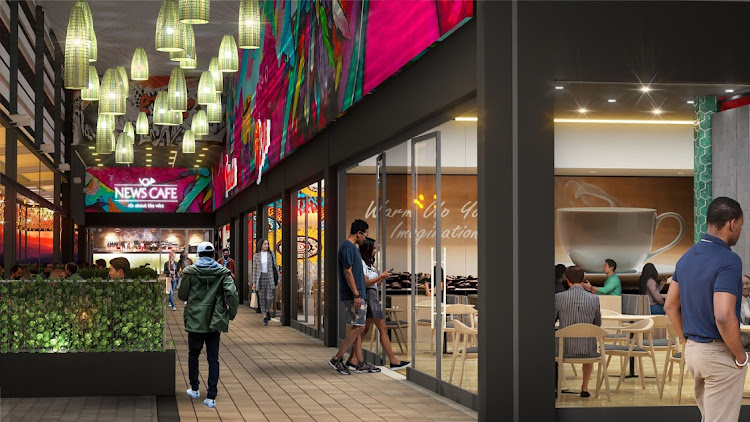
While overall retail growth has slowed, strong performance in discretionary sectors and signs of recovery in home improvement suggest pockets of resilience in the market, says the writer. Picture: Supplied
Momentum in consumer spending during the second half of 2024 and earlier part of this year appears to have slowed down
The retail sales figures from Stats SA are full of interesting data. The momentum in consumer spending, reflected in robust retail sales growth during the second half of 2024 and the earlier part of this year, appears to have slowed down considerably.
Much of that improved spending last year was due to load-shedding ending, with the minibonanza caused by the release of funds from the so-called “two-pot” pension fund reorganisation. Both events have now steadied and year-on-year comparisons are more normal.
Year-on-year retail sales growth for June at constant 2019 prices was only 1.6%, compared with 4.3% in May and 5.2% in April. Spending on discretionary items such as clothing and furniture & appliances has held up remarkably well, with the only declines being in staples such as food and food-related categories.
The strongest category in June was furniture & household, appliances & equipment, with year-on-year growth of 6.9%, after 6.8% in May and 8.8% in April. This category has been consistently strong for many months, aided by the availability of credit to buy big-ticket items such as furniture & bedding, televisions & audio.
This is reflected in the continuing strength of the only pure-play JSE-listed furniture & appliance retailer, Lewis Group. Of all the categories of retail spending this is the most discretionary, as it often involves expenditure of many thousands of rand and purchases are rarely if ever made on a whim.
The second-strongest category was hardware, paint & glass, a proxy for home improvement/DIY. This category has been stagnant for a few years. There have been many “false starts” in the past few years, when it seemed as if growth was about to resume in this sector, only for subsequent months to exhibit negative growth.
However, not only is there a visibly shallow uptrend in the data, but the year-on-year growth for June at 5.4% was one of the strongest upturns this category has exhibited in at least four years. And the two main JSE-listed companies in this sector, Cashbuild and Italtile, recently posted surprisingly stable results. This category may thus possibly be at the beginning of a positive turnaround.
The third-best performing category was clothing, footwear, textiles & leather (CFTL), which grew 4.6% year on year, after 12.6% growth in May and 12.1% in April. Like furniture & household, this is a discretionary category and some of the retailers in the survey offer credit to buy their merchandise. This category has been generally strong for many years, though punctuated by periods of negative growth when competition from extremely cheap Far Eastern online retailers such as Shein and Temu were at their peak.
However, on balance the local SA retailers have been able to hold their own in this intensely competitive marketplace, as evidenced by the generally positive trend of the category. In Stats SA’s sampling method online retailers such as Shein and Temu’s turnovers would not be included in the CFTL category.
Coming in just behind CFTL at 4.2% growth is pharmaceutical & medical goods, cosmetics & toiletries. Shown graphically, the pattern is similar to that of hardware, paint & glass, with a gradual uptrend evident in March 2024. This is also reflected in the continued strength of the main JSE-listed companies in this category, such as Clicks and Dis-Chem.
This really just leaves the two food and food-related categories — general dealers (minus 0.2%) and food, beverages & tobacco in specialised stores (minus 4.5%). While both are negative, they are well within historical norms when shown graphically. As usual, the hodgepodge of “all other retailers”, which includes online retailers, doesn’t include anything of particular interest, at year-on-year growth of 2.3%. 
Jockey South Africa unveils Spring/Summer 2025 Collection


Launching this September, Jockey South Africa is proud to introduce its Spring/Summer 2025 collection. Alongside its campaign, the collection captures the freedom and optimism of the season, celebrating self-expression and the confidence that comes from wearing pieces that fit your life, personality, and style.
For nearly 150 years, Jockey has been part of people’s everyday lives, blending comfort, style, and quality. According to Bruce McMurray, general manager of Jockey South Africa, the upcoming release, available from September through to January, is rooted in today’s trends, viewed through Jockey’s timeless lens.
“We take pride in staying true to what our consumers want,” says McMurray. “This Spring/Summer, we’re launching collections that reflect the spirit of now – trend-aware, consciously developed, and grounded in the quality and comfort Jockey has delivered for generations.”
This collection is built around what matters most when it comes to underwear and sleepwear: thoughtful design, precise detail, and an uncompromising focus on fit and comfort. Developed and made locally, the Spring/Summer range channels the energy of the season while showcasing the strength of South African design. Each piece reflects the creativity and craftsmanship of the local industry, bringing world-class quality with a distinctively homegrown feel.
By designing and producing this range locally, Jockey stays closely connected to both the process and the people behind each piece. It’s a more intentional way of working, supporting local skills, reducing the journey from maker to wearer, and building in greater care at every step. The result is a collection that’s not just well made, but made with integrity.
“Our Spring/Summer range features a colour palette that moves with the season – starting fresh and airy in spring, then evolving into richer, more expressive tones for summer,” says Nombuso Ncapai, marketing manager at Jockey South Africa.
“September brings soft pastels and warm citrus hues for a fresh seasonal start. In October and November, the colours turn bolder, with tropical brights, ocean blues, rich jewel tones, playful sorbets, and energetic neons. By December and January, the palette softens again, introducing muted greens, calming blues, and gentle neutrals. Each shift reflects how people dress, and feel, as the season unfolds, adding versatility and personality to everyday essentials.”

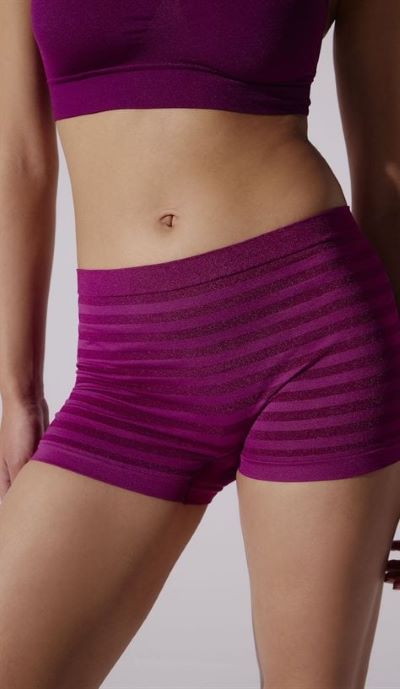
Beyond fabric and fit, the collection taps into the feel-good factor that’s long been part of Jockey’s DNA. There’s a quiet confidence in clothing that’s comfortable and reliable, and a certain joy in choosing pieces that reflect your individuality, even when it’s just your underwear. These are the everyday essentials that feel right, look good, and let personal style shine through in the smallest details.
The Jockey Spring/Summer 2025 collection is more than just a new range, it’s a reflection of a heritage brand that continues to evolve while staying true to its roots. It celebrates modern living with comfort, quality, and thoughtful design at its core. Above all, this seasonal collection invites wearers to feel confident, seen, and completely themselves – every day, in every moment.

Advances in Protective Textiles: Pioneering Innovations Across Industries
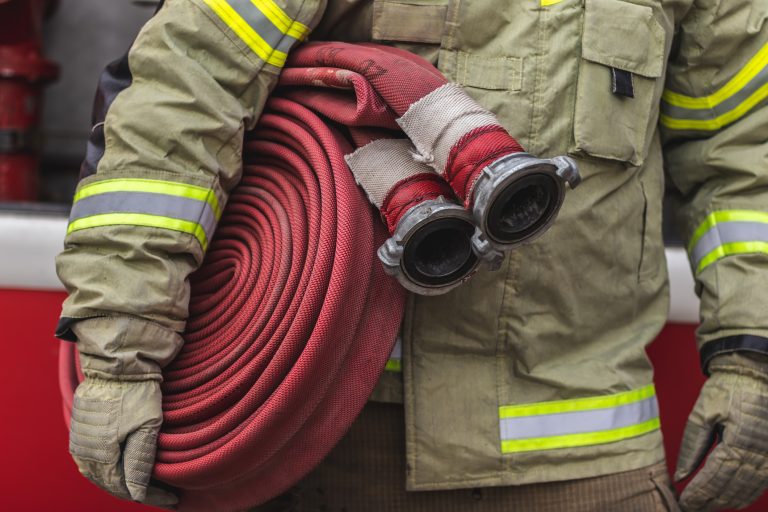
Firefighter gear. Image credit: Getty Images.
The protective textiles market is on a significant growth trajectory, anticipated to reach an impressive US$8.5 billion by 2027.1 This surge is driven by increasing demands across various sectors, such as defense, manufacturing and construction, mining, oil and gas, and emergency services. According to Roshan Paul, Senior Program Manager and Team Leader, Smart Finishing, Institut für Textiltechnik of RWTH Aachen University, Germany, “The recent innovations have helped to enhance the safety of industrial workers, especially for fire protection and efficient communication (e-textiles).”
Protective textiles, designed to safeguard individuals against various environmental and occupational hazards, have evolved remarkably, with innovations tailoring solutions to the specific needs of each sector and end-user.
Emergency Services: Integrating Technology for Enhanced Response
Emergency services personnel, including firefighters, paramedics, and police officers, rely heavily on protective textiles to keep them safe while they perform their life-saving duties. The primary focus in this sector has been on developing textiles that offer multi-hazard protection while integrating technology to assist in emergency response. As Dr Paul states, “The challenges security personnel and fire fighters face today are more complex and diverse than a decade ago. Apart from protecting the wearer, protective textiles should be lightweight and comfortable to wear.”
Flame-resistant textiles have seen substantial advancements. Firefighters, for example, benefit from the latest innovations in flame-retardant textiles, which now offer improved thermal insulation and moisture management. Materials like PBI (Polybenzimidazole), aramids and Kermel provide superior protection against extreme heat and flames, while also ensuring the garments remain breathable and comfortable during extended use.2
Wearable technology has started to play a critical role in emergency services. Protective garments are now being equipped with sensors that can monitor environmental conditions, track the wearer’s location, and even detect vital signs. These smart e-textiles are connected to communication networks, allowing for real-time updates and quicker responses during emergencies.3,4
Defense: Enhancing Soldier Safety with Smart Textiles

Soldier in Ukrainian military uniform. Image credit: Getty Images.
In the defense sector, protective textiles have become increasingly sophisticated, focusing on both protection and enhancing the overall functionality of military gear. Traditional body armor, once heavy and cumbersome, has given way to lighter, more flexible materials without compromising protection. Innovations such as Kevlar, Twaron, and Dyneema have revolutionized ballistic protection, providing high-strength, lightweight solutions that enhance mobility.5
The integration of smart e-textiles, which can monitor vital signs, detect chemical or biological agents, and even administer first aid, represents a significant leap forward. In 2023, the Smart Electrically Powered and Networked Textile Systems (SMART ePANTS), a smart apparel project by the Intelligence Advanced Research Projects Activity (IARPA) arm of the US Office of the Director of National Intelligence, received a $22 million funding boost for the development of performance-grade computerized clothing.6 These e-textiles incorporate sensors and conductive fibers, enabling real-time audio, video, and geolocation data transmission to command centers or medical teams in high-stress environments.7 This development not only improves individual soldier safety but also enhances the strategic capabilities of military operations.
Another development is the Smart Shirt for Wound detection by Legionarius. The shirt, which makes use of embedded sensors to detect injuries from penetrative objects such as bullets and shrapnel, has been tested by airmen, soldiers and special operations forces. In addition to detecting injuries and alerting the appropriate personnel, work is ongoing to take the technology one step further, incorporating injury treatment to the shirt’s capabilities.8
Manufacturing and Construction: Durability and Comfort in High-Risk Environments

Example of coated textile. Photo courtesy Roshan Paul.
In the manufacturing and construction industries, protective textiles must balance durability with comfort, ensuring that workers remain safe without compromising productivity. Innovations in this sector have focused on developing materials that offer superior resistance to cuts, abrasions, and punctures while also being breathable and lightweight.
High-performance fibers like Ultra-High-Molecular-Weight Polyethylene (UHMWPE) and advanced composites have become staples in creating protective clothing such as gloves, aprons, and full-body suits. These materials are engineered to withstand the rigors of heavy machinery, sharp tools, and harsh working conditions, significantly reducing workplace injuries.9
An important area in protective textiles are functional finishes. Dr Paul explains that, “Traditionally, protective functions are provided by technical fibers. On the contrary, functional finishes can create technical properties, even on non-technical fibers such as cotton.” Once a finish is applied, the textile can be referred to as a ‘treated material.’ Treated materials such as Nomex and Proban offer enhanced protection against heat and fire.10 These textiles are particularly crucial in welding, metalworking, and other high-temperature environments, providing workers with the necessary protection to perform their tasks safely.
Mining and Oil & Gas: Resilience Against Extreme Conditions
The mining, oil and gas industries operate in some of the most hazardous environments, where protective textiles must withstand extreme conditions such as high pressures, temperatures, and exposure to harmful chemicals. Innovations in this sector have focused on creating textiles that are not only resistant to these harsh conditions but also enhance the safety and comfort of workers in challenging environments.
One notable advancement is the development of textiles with improved chemical resistance, using materials such as polyvinyl chloride (PVC) and polytetrafluoroethylene (PTFE).11 These textiles are used in protective suits, gloves, and boots, providing a barrier against corrosive substances and toxic gases commonly encountered in these industries.11
Additionally, anti-static textiles have become increasingly important in the oil and gas sector, where the risk of explosions due to static discharge is a constant threat.12 Advanced anti-static materials, often incorporating carbon or metal fibers, help dissipate electrical charges, significantly reducing the risk of ignition in volatile environments.
Sustainability
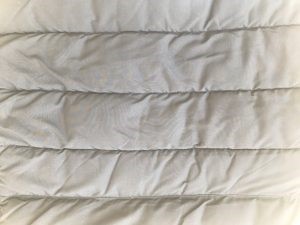
Waterproof finished winter jacket part. Photo courtesy Roshan Paul.
A significant driver of innovation in protective textiles is the need to ensure sustainability in the life cycle of the materials. Dr Paul says, “Sustainable practices in protective textiles are gaining more importance and biotransformation is holding the key. Research is ongoing to develop bio-based solutions based on anchor peptides.”
An example of innovation in protective finishing is the SmartBioFinish project, sponsored by the German Federal Ministry of Education and Research (BMBF) as part of the BIOTEXFUTURE program. The project is developing water and oil-repellent textiles using environmentally friendly bio-based anchor peptides. Anchor peptides, along with bio-based water and oil-repellent functional additives have the potential to replace per- and polyfluorinated alkyl compounds (PFAS), which are facing a potential ban in the EU. The SmartBioFinish project has applications for areas of sportswear, industrial workwear and PPE for fire protection.13 Anchor peptide-based biohybrid flame retardants are already developed in BioFlaT project, also sponsored by the BMBF.14
In addition to sustainability, Dr Paul emphasizes the importance of cost-effectiveness, stating that, “Due to increasing awareness of textile sustainability and the circular economy, the ‘use and throw’ culture is fading away. It should be possible, after proper cleaning, to refurbish and reuse protective clothing originally used for high-risk environments. As the PPE is already in the garment form, spray finishing and digital coating of certain areas is more appropriate. The modification of non-technical fiber and fabric properties using innovative finishes could be a cheaper route to high performance, rather than using a high-cost fiber with inherent performance properties.”
The Future of Protective Textiles
As industries continue to evolve and new challenges emerge, the protective textiles market will likely see continued innovation and expansion. The convergence of advanced materials science, including material composition, functional finishes, and smart textiles, promises to create protective gear that is more effective, comfortable, and adaptable to various sectors’ needs. 


Obscure text additions sometimes added to clothing labels. Apparently, there can be secret messages too!


Editorial Submission:
Please remember to send me your news so that we can share it with all our readers in the weekly newsletter. Although editorial is neither guaranteed nor implied, suitable editorial for consideration may be submitted to:-
