
Newsletter No 31 /22 August 2025

Click on any ad to go to the advertisers website

To agents, manufacturers, distributors & wholesalers. Please upgrade your 1 line listing to a business listing at least. The Sourcing Directory and Newsletter is dependent on industry support and your business listing offers potential clients more information about your company, products, branches, agents etc.
The cost of a business listing for the entire year is only R1400.
To add a logo is an additional R440. carla@newsbriefs.co.za


With Temu and Shein it’s buyer beware, china
By Chris Barron

Queen Munyai, CEO of the consumer goods and services ombud. Picture; Masi Losi
Head of consumer ombud Queen Munyai says her writ doesn’t run beyond the country’s borders — and the state needs to act
The government needs to crack down on foreign online vendors that are beyond the jurisdiction of South African consumer protection bodies, says Queen Munyai, CEO of the consumer goods & services ombud (CGSO).
“If they don’t comply with our consumer laws they must be barred from accessing our market,” she says. “Compliance must be a condition of access.”
Allowing noncompliant suppliers into the market and then trying to get them to comply is a losing battle for the ombud. By far the highest number of consumer complaints to her office are related to online transactions, says Munyai, who has held the CGSO post for seven years.
“That number keeps growing year by year, so we should as soon as possible try and make sure that the online area is legislated properly. Our laws should be able to accommodate redress for consumers and hold suppliers accountable. There’s a serious mismatch between consumer expectations in terms of protection from online scams and what the law allows.”
Much more can be done in terms of education and legislation to improve e-commerce safety for consumers, she says.
The job of the CGSO is to maintain a fair marketplace. But online marketplaces deny responsibility for transactions between third-party sellers and consumers.
This means that although contractual liability lies with the third party it can decide whether to refund consumers for defective goods, repair them, replace them or walk away, and there is little the CGSO in South Africa can do about it.
“We are seeing by the rising number of complaints that more online suppliers are taking the gap,” she says.
A recent report by research firm BMA, which says e-commerce sales climbed from just 2.4% of the South African market in 2015 to nearly 10% last year, calls for stronger compliance and consumer protection.
The Consumer Protection Act (CPA) is only applicable where the consumer and supplier are both in South Africa, says Munyai.
“As soon as the supplier is inside South Africa they are required to comply. But we find that trying to enforce it, use it to make suppliers outside South Africa accountable for their behaviour inside South Africa, is a big challenge.”
Local laws such as the CPA and Electronic Communications & Transactions Act need to be updated so they apply to suppliers outside South Africa and offer more protection to local consumers.
“There is definitely room for improvement of these acts.”
The CGSO has no jurisdiction over platforms such as Chinese online giants Shein and Temu, which according BMA are rapidly swallowing the market share of local retailers and manufacturers and taking billions in consumer spending away from domestic value chains. In 2024 alone, according to BMA, they raked in an estimated R7.3bn in South African sales, more than a third of all online clothing purchases in South Africa.
Temu has just opened a warehouse in South Africa, which Munyai says makes it “more eligible to comply” with the CPA and ECTA.
“But it’s not a clear-cut process to enforce the law inside South Africa. We are engaging with them. They are co-operating, but it’s low. It’s not happening the way we would like to see.”
When push comes to shove the CGSO cannot force Temu or Shein to comply with either the CPA or ECTA.
“If those laws were strengthened it would help us to enforce consumer protection better,” she says. “Government must make it more difficult. If South African suppliers want to do business in other countries it’s not that easy. There are a lot of hoops you must go through. It should be the same here.”
There must be more enforcement and consumer bodies must have more teeth to hold both local and offshore suppliers accountable.
Why has the government not already acted? “There are things that are happening,” Munyai says. “It’s just that it takes long for government to finalise the processes even though we’ve made submissions and have been advising them on necessary changes to strengthen the CPA and make it more enforceable against offshore suppliers.
“We don’t know when that process will be completed and when it will be enforced. But there is a conversation going on and the process is under way.”
It has been speculated that there may be political reasons why the government is moving so slowly, given South Africa’s close relationship with its Brics partner China.
“Perhaps I may have limited access to knowledge of exactly what is the delay, but I am seeing that there are efforts in place from a regulators’ point of view for government to try and do this,” Munyai says. “I’m just not sure of issues that may be in the background.”
As e-commerce in South Africa balloons, local consumers are increasingly exposed to the unaccountability of suppliers. The CGSO closed about 12,400 cases against suppliers in the last financial year, which Munyai says is “the tip of the iceberg”. The ombud received claims over transactions totalling more than R1.4bn from aggrieved consumers but was able to secure refunds of only R11.9m, she says.
“In many cases we can’t deal with complaints because suppliers are not co-operative or can’t be reached. That is a big percentage of complaints we receive.”
The problem goes even deeper than the numbers suggest, says Munyai. In the goods and services industry only about 2,000 suppliers, or about half, are registered with the CGSO. This means they are willing to resolve complaints and uphold the CPA, and acknowledge that consumers are entitled to redress.
“The majority are not interested. They run away and we have to struggle to find them, to trace them through different platforms.”
The CGSO has dispute resolution schemes but many suppliers refuse to sign up. “They tell us straight that they’re not going to sign up because they feel they’re not covered under the CPA.”
Many of them use this as an excuse to dodge accountability, she says. 

Is grey the new blue?
By Sandiso Ngubane

Looks from KNWLS Fall/Winter 2024 Ready-to-Wear, Diesel Fall 2024 Ready-to-Wear and Akris Fall 2024 Ready-to-Wear. Image: Daniele Oberrauch / Filippo Fior / Gorunway.com / Vogue
Why denim’s most understated shade is taking over 2025
When we talk about denim, it’s highly likely that the colour you have in mind is blue. It’s a classic style that seems untouchable. From indigo workwear to vintage-washed jeans, blue has been fashion’s universal language since denim transitioned from workwear and counterculture fashion in the 1970s to become a timeless, casual, and undeniably democratic style. But in 2025, a quieter, moodier player is stepping into the spotlight. Subtle yet statement-making, grey denim is the versatile shade that is redefining what it means to wear jeans. Brands, designers, celebrities and everyday dressers are all taking notice.
From runway to reality
Grey denim’s rise isn’t happening by accident. Luxury houses including Diesel, Akris, and KNWLS introduced the shade across their Fall/Winter 2024 collections, using it in sharp suiting, oversized jackets, and even structured bustiers. Rather than sticking to simple washes, these houses leaned into textured greys — charcoal, ash, fog — to show that denim can be both rugged and refined.
The message seems to have landed. Fashion publications from Vogue to Glamour have declared grey denim as 2025’s must-own trend, predicting it will overtake blue as the default everyday jean.
Neutral, modern, effortless
But, why does grey denim hold so much appeal? In one word? Versatility. Glamour Magazine says: “Grey denim replacing blue jeans in fall 2025 is a direct response to the search for new colour palettes and the evolution of basics as the shade’s neutrality is perceived as more elegant and adaptable to different styles. Furthermore, brands have made a strong commitment to including grey denim in all their catalogues, from distressed styles to deep graphite tones, successfully winning over both young audiences and those seeking a mature and refined alternative to traditional blue jeans.”
In a nutshell, grey denim is a shape-shifter. It’s softer than black, sleeker than blue, and infinitely easier to style. Whether you prefer the clean minimalism of monochrome dressing or want a neutral base to offset bold colours, grey works.

Bella Hadid pairs grey denims with a white tank and oversized button-down for an effortless look in New York City in 2022. Image: Gotham / GC Images
For minimalists, it can be paired with a crisp white shirt and loafers. For streetwear lovers, charcoal baggy jeans with chunky sneakers and a bomber jacket is an option. For more bold styling, you can easily combine multiple shades of grey in a tonal look with an oversized hoodie, slate jeans, and silver (or gold) accessories.
Grey also fits seamlessly into fashion’s broader shift towards muted, wearable colour palettes. Just as taupe sneakers and beige trench coats have replaced flashier hues, grey jeans feel quietly sophisticated, like a modern uniform piece.
The celebrity effect
Celebrity style has supercharged the trend. Sarah Jessica Parker, long known for pushing denim boundaries, has been spotted in grey jeans paired with tuxedo jackets and heeled boots, in an effortless mix of elegance and edge. Street-style stars across Seoul, Paris, and New York have been wearing baggy grey jeans with crop tops, varsity jackets, and platform sandals, proving the shade’s universal appeal.
Grey denim is becoming the blank canvas of 2025, an item that works whether you’re going casual for the weekend or building a statement look.
Not just skinny jeans any more
The grey denim trend also reflects denim’s evolution as a whole, something we’ve covered before. Gone are the days when skinny jeans dominated wardrobes. In 2025, baggy, barrel-leg and straight-leg silhouettes reign supreme. With its clean neutrality, grey gives these looser cuts an added sense of polish, transforming what could look “slouchy” into something undeniably fashion-forward.
Designers are also experimenting with modular denim. Think detachable pockets, two-tone grey patchwork, and jeans that can be styled multiple ways. It’s a colour that’s proving to be the ideal base for such innovations: functional, urban, but still upscale.
The future of denim
Whether grey can truly dethrone blue as the palette of choice when it comes to denim is probably a stretch. Blue denim has too deep a history to suggest that it might suddenly disappear in favour of another colour. But its dominance is certainly no longer absolute. Grey’s rise represents what, at least for now, seems like a fundamental shift in fashion’s mood. One that favours understated confidence, quiet luxury, and effortless adaptability.
As designers push forward with climate-conscious production and consumers seek timeless yet fresh pieces, expect grey to hold its place well beyond this year. In other words, grey isn’t just a passing trend. Like many current trends, it signals a nascent wardrobe evolution. 
Woolworths unveils exclusive Lily Capsule collection at new Tygervalley concept store
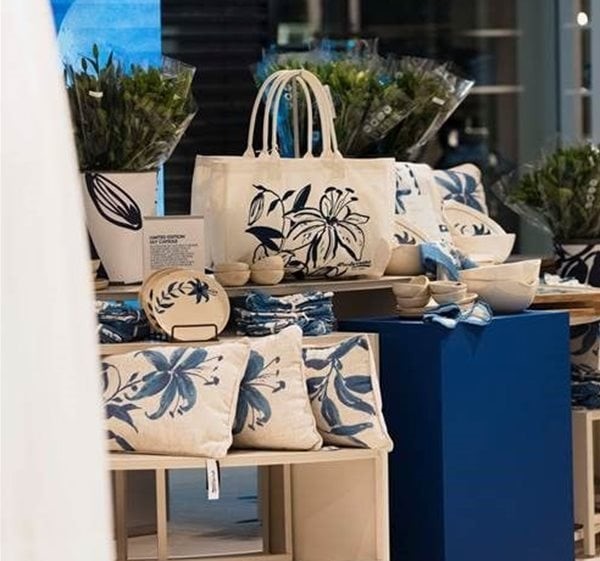
Image supplied
Woolworths has launched a limited edition, store-exclusive capsule collection called the Lily Capsule.
The collection is available at the recently opened concept store at Tygervalley Shopping Centre.
“This capsule collection was created to honour the significance of the location and celebrate both Woolworths’ heritage and Tygervalley’s identity,” says Wikus Du Plessis and Philippa Elson, both Heads of Design for Fashion at Woolworths.
“We wanted to create something special for our local customers by offering a range that’s unique to this store, conscious of their patience over the four-month refurbishment process,” Du Plessis adds.
The new-look Woolworths Tygervalley concept store reimagines retail through a hyper-personalised, innovation-first lens, seamlessly integrating beauty, fashion, food and homeware into a cohesive, customer-centric experience.
The story behind Tygervalley’s distinctive symbol
Though the exact inspiration behind the Tygervalley Shopping Centre’s floral logo is unconfirmed, it’s understood that the Tiger Lily was adopted as a symbolic motif.
Known for its bold colouring and speckled petals, the flower mirrors the region’s tiger-like naming heritage.
In some cultures, the Tiger Lily also represents wealth, positivity and pride, attributes that align with the centre’s role in the local community.
The Lily Capsule
Building on this symbolism, the Lily Capsule draws inspiration from the iconic bloom, featuring a striking sketch-style outline of the Tiger Lily in navy blue.
It also incorporates an archival Woolworths logo from 1931 as a nod to the brand’s heritage and a tribute to the significance of the 2025 concept store launch.
Shoppers can get their hands on the following pieces from the limited-edition collection:
The limited-edition Lily Capsule collections is available exclusively in store at Woolworths Tygervalley.


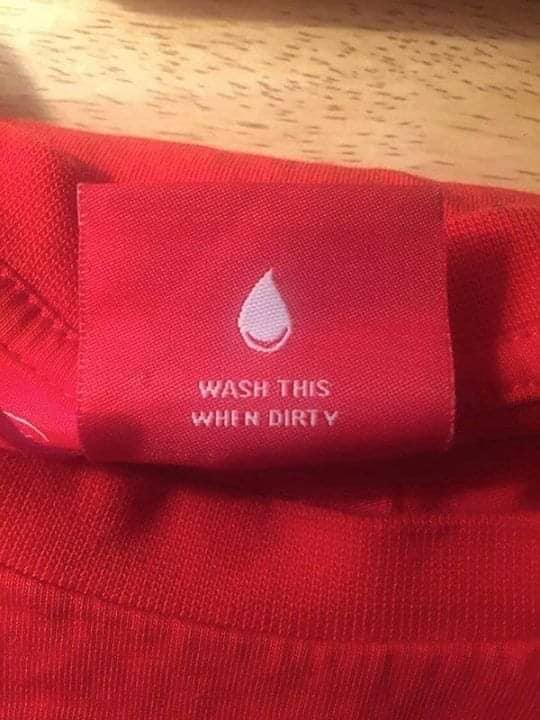
Obscure text additions sometimes added to clothing labels. Apparently, there can be secret messages too!

Editorial Submission:
Please remember to send me your news so that we can share it with all our readers in the weekly newsletter. Although editorial is neither guaranteed nor implied, suitable editorial for consideration may be submitted to:-
