
Newsletter No 30 /15 August 2025

Click on any ad to go to the advertisers website
To agents, manufacturers, distributors & wholesalers. Please upgrade your 1 line listing to a business listing at least. The Sourcing Directory and Newsletter is dependent on industry support and your business listing offers potential clients more information about your company, products, branches, agents etc.
The cost of a business listing for the entire year is only R1400.
To add a logo is an additional R440. carla@newsbriefs.co.za


PnP Clothing teams up with Thabiso Musi for a tribute to African women
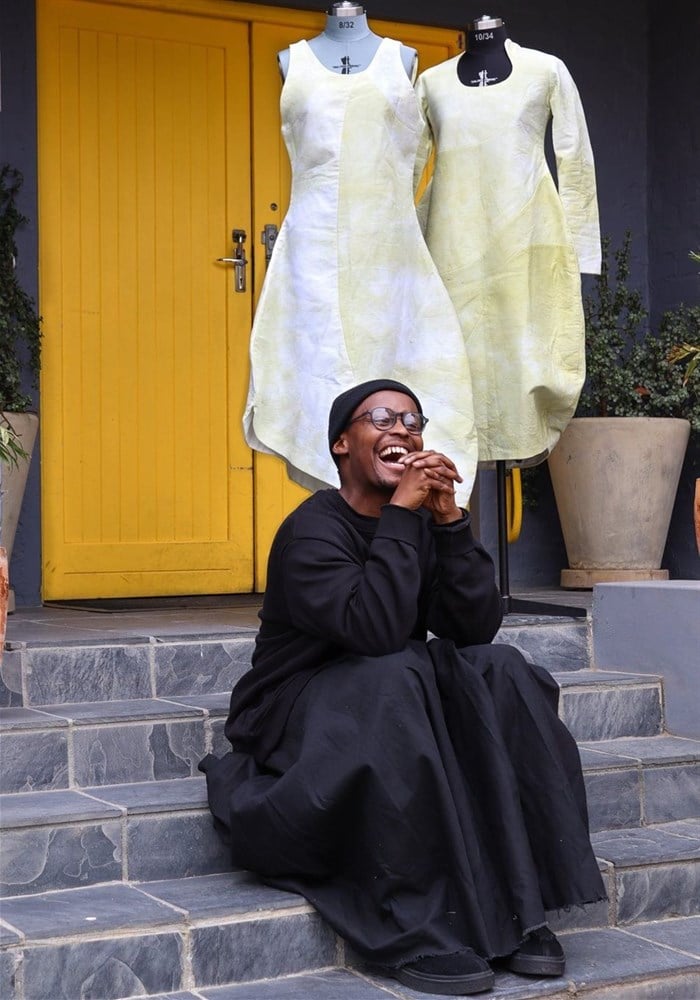
Designer Thabiso Musi. Image supplied
In celebration of Women’s Month, Pick n Pay has named Thabiso Musi as 2025’s first Futurewear designer, the retailer’s incubator programme dedicated to elevating South Africa’s emerging fashion talent by creating commercially viable collections.
At a young age, Free State-born Thabiso Musi discovered his deep passion for fashion. Since then, his fashion wear has become synonymous with the richness of African art and the minimalism of abstract design.
With an unwavering focus on the continent’s cultural depth, Musi sees himself as a modern-day storyteller that connects the past, present, and future to transform garments into tools of empowerment.
As a designer who takes inspiration from three core pillars – women, art, and the ancient world – Musi understands the power of fashion to honour women’s roles in history and today’s society.
Inspired by the Khoisan culture, the fashion range pays tribute to the tragic story of Krotoa, a Khoekhoe woman who lived in 17th-century South Africa. As a multilingual, she was forced to act as a cultural mediator between the colonists and her people.
“The creative essence of this collection is to honour the legacies of historic heroines such as Krotoa, while recognising the strength and courage of the modern woman,” explains Musi.
The result is a limited-edition women’s fashion range called Abstract clay, featuring statement pieces such as A-line dresses, relaxed pants, and African wrap-around tops with bold patterns in earthy colours.
“Every thread, fabric, and stitching were meticulously chosen for this collection to simultaneously celebrate a collective culture and express individuality,” explains Musi.
Now in its sixth year, PnP Clothing’s Futurewear programme offers support and training to local designers by creating a springboard between fashion concepts and nationwide commercialisation.
The programe was conceptualised by PnP Clothing Executive Hazel Pillay and renowned designer Gavin Rajah to support local designers and production while giving them a platform to commercialise their creativity.
“Musi was a natural fit for this partnership – he is a creative visionary who is passionate about his craftmanship,” says Hazel Pillay, Managing Executive for PnP Clothing. “Creating a fashion range that is expressive, eye-catching yet wearable and comfortable is very challenging, but this is exactly what Musi has achieved. We believe our customers will proudly wear his beautifully designed garments.”
The PnP Clothing X Thabiso Musi women’s range collection is the first of many Futurewear design collabs. Customers can look forward to more limited-edition fashion ranges with local designers as part of Pick n Pay’s commitment to empowering local talent.
The PnP Clothing X Thabiso Musi Futurewear range will be available to in-store customers on 8 August at 40 Pick n Pay stores nationwide.
ACTOM’s Women’s Empowerment Programme fuels economic growth in South Africa
By Mamiki Matlawa
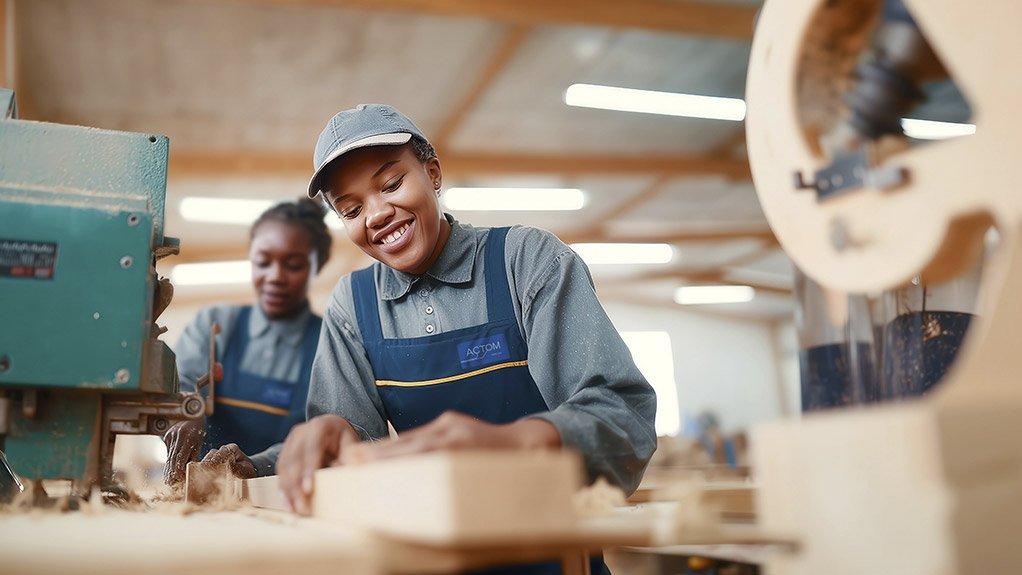
As South Africa proudly observes Women’s Month, ACTOM reaffirms the critical importance of fostering gender-inclusive economies. The company’s Women’s Empowerment Programme, launched in 2022, is not simply a corporate social investment; it is a deeply embedded initiative designed to cultivate real economic independence for women, directly contributing to South Africa’s growth
Recognising the immense potential within disadvantaged communities near ACTOM’s Germiston premises, the Women’s Empowerment Programme provides young women with essential skills and comprehensive entrepreneurship training. This targeted approach directly addresses the high unemployment rates prevalent in these areas — a situation exacerbated by the growth of informal settlements, which housed approximately 120,000 individuals in 2019, with numbers having increased significantly since then.
The programme offers training in trades like sewing, plumbing, carpentry, electrical and beautician skills, alongside a “New Venture” learnership, empowering participants to launch and manage their own businesses. Twenty women were initially selected for this transformative opportunity, each representing the potential for substantial economic contribution.
“Investing in training and skills impartation is the most sustainable form of socio-economic development. It equips women with lifelong tools, creating a ripple effect of empowerment,” states Sylvester Makamu, Group Executive Director at ACTOM. “This goes beyond temporary relief; it’s about building foundational skills that will serve these women and their communities for generations.”
Izintombi Zodwa Trading – a success story in sewing
The programme’s immense impact is exemplified by the success of Izintombi Zodwa Trading. Founded by Nozuko Mtsila, Nteokase Mosima, and Khonzeka Mdleleni, this sewing business operates from ACTOM’s premises and has become a key supplier to the ACTOM group. With continuous mentorship and support, these ladies are involved in the manufacture of corporate and protective clothing for factories, showcasing the significant leap they have made towards economic independence. Their journey is a compelling illustration of how the programme directly translates into tangible economic independence and the creation of viable livelihoods.
ACTOM’s initial support in facilitating their business registration, providing essential workspace and equipment, and ensuring continuous, experienced business mentorship has been instrumental in their growth. A key milestone for the female-led business was the successful production of branded t-shirts for a 1,000-participant marathon, demonstrating their ability to handle large-scale projects and meet stringent quality standards, solidifying their position as a reliable and valued supplier.
“This isn’t just about skills transfer; it’s about igniting confidence and building future entrepreneurs who will drive the economy,” adds Makamu, highlighting the programme’s broader goals. “Witnessing the growth of Izintombi Zodwa Trading from a concept within our empowerment programme to a functioning, contributing business is the ultimate validation of our commitment.”
A call to action for corporates
ACTOM’s programme has successfully transitioned from socio-economic development to enterprise development, and now to supplier development. The organisation calls upon other companies to actively embrace their responsibility in championing gender equality and fostering widespread economic inclusion.
The long-term goal is to see these businesses flourish and create further employment,
contributing to a more equitable and prosperous South Africa. The company believes that businesses have a responsibility to invest in their communities, and that these investments should be strategic and sustainable.
ACTOM’s initiative serves as a model for other companies, showcasing how targeted investments in women’s empowerment yields significant economic and social returns. “It’s not just ticking boxes. There’s a strategic link between socio-economic development, enterprise, and supplier development, creating mutually beneficial, long-term partnerships that serve both business and community,” concludes Makamu, reinforcing the strategic approach.

AI in Fashion: Tool or turning point?
By Sandiso Ngubane
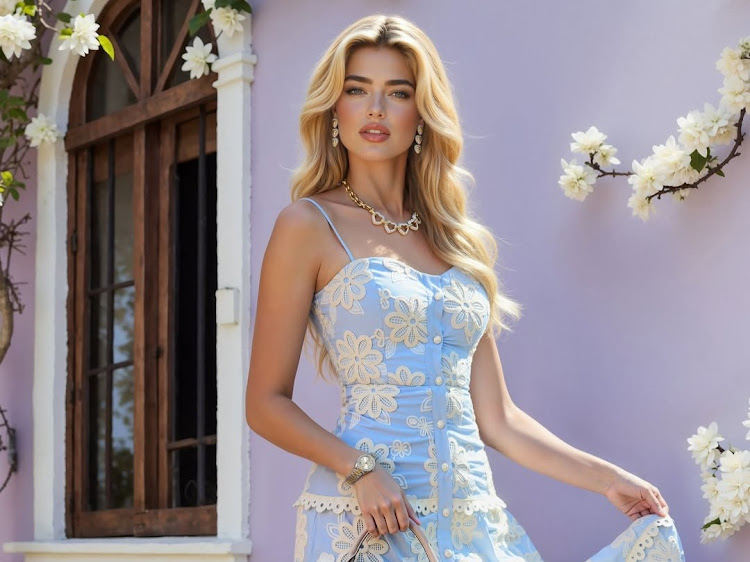
Vogue USA’s latest issue includes a Guess ad with AI-generated models. Image: Seraphine Vallora
Five ways of understanding the significance of the first fully AI-generated advert in Vogue Magazine
When US Vogue’s August 2025 print edition hit news stands recently, all eyes were on its cover star, Anne Hathaway. But tucked away between its glossy pages was something more quietly radical: a Guess advert featuring an entirely artificial intelligence (AI) generated model. No photographers, stylists, makeup artists or human models, just an entirely digital simulation conjured by the London-based AI creative studio Seraphinne Vallora.
While the publication did label the ad as AI in a tiny footnote, readers flooded the magazine with criticism across social media platforms, with many threatening to cancel their subscriptions. What seemed like a novelty, or a flirtation with futuristic tech, turned out to be a controversial episode for Vogue and Guess.
Beyond the controversy, this marks a pivotal moment in fashion’s evolution. Not just because it happened, but because it happened in Vogue, a publication long regarded as fashion’s global authority. But what does it all mean?
Here are five ways of understanding the deeper implications of fashion’s first fully AI-generated ad.
Creativity is being mechanised
AI doesn’t invent; it samples, remixes and generates. The “models” featured in the ad (Vivienne and Anastasia) are visual syntheses built from data sets reflecting decades of fashion photography. The campaign offers a seductive image of the future, but it’s ultimately just the past, reprocessed through code.
The danger here isn’t just aesthetic sameness. It’s the slow erosion of fashion’s core, which is human creativity. Innovation has always come from visionaries breaking rules, drawing from lived experience and disrupting visual norms. AI can’t do that. It can only reproduce what already works.
The creative workforce is being displaced
Every fashion ad is usually a collaborative effort involving dozens of skilled professionals, many of whom are freelancers and emerging creatives from marginalised backgrounds. This ad required none of them. While some may insist that AI is just a tool and won’t replace workers, the replacement of an entire shoot with a series of prompts to produce an ad tells a different story. As this tech scales, jobs will definitely disappear, not just for the models, but for photographers, set designers, lighting technicians, hair stylists, makeup artists, retouchers and more. The fashion industry, already precarious for many, just got a little more so.

The Guess campaign was developed by London-based AI-driven marketing agency, Seraphinne Vallora Image: Seraphinne Vallora
AI reinforces unrealistic beauty standards
The AI-generated models in the Guess ad are thin, poreless, and impossibly symmetrical. While the creators claim they don’t promote unattainable ideals, their visuals say otherwise. This isn’t a new critique. Fashion has long grappled with idealised imagery. But AI raises the stakes. These figures are not just retouched; they’re entirely unreal. And yet they’re being presented alongside real-world fashion products, blurring the line between inspiration and deception. We’re not just confronting a Photoshop problem any more; we’re confronting a post-human one.
Fashion as cultural commentary and record of history is at risk
Great fashion imagery doesn’t just look good; it says something. It captures spirit, subversion or social change. But AI-generated visuals can’t respond to the world in real time. They aren’t political. They aren’t personal. They don’t challenge norms because they don’t live in society.
If AI becomes the dominant tool for fashion advertising or editorial work, we risk losing that layer of commentary. The clothes may still be stylish, but the stories they tell risk growing emptier. Fashion may remain beautiful but beauty without context is just noise.
Algorithmic gatekeeping will worsen inequality
AI models are trained on existing data and existing biases. The fashion industry has only recently begun to correct its historic exclusion of black, brown, queer, trans, plus-size and disabled bodies, as well as its inherent ageism. But AI, if left unchecked, may quietly undo that progress.
When the gatekeepers are algorithms, and those algorithms are built on biased archives, diversity doesn’t evolve. It regresses. We stop seeing difference, because difference wasn’t in the training set. The result? An industry that looks less like the world we live in, and more like a Pinterest board from 2012.
The Vogue Guess ad is more than a curiosity; it’s a cultural signal. It tells us where the fashion industry could go if left to commercial and technological convenience. But it also gives us the chance to choose something different. AI can be a tool, but if we’re not careful, it will become the driver rather than the assistant. The difference lies in intention, in policy, and in how loudly we speak up for the human hands behind fashion’s most iconic images. So, at this moment in time, we must ask ourselves whether AI in fashion is merely a tool or a turning point? 
Truworths – update and trading statement
The Group, covering the 52-week period ended 29 June 2025, reports resilient trading amid challenging macroeconomic conditions. Operating in South Africa, Truworths Africa faced subdued consumer confidence due to geopolitical tensions, inflation, and slow economic growth, which resulted in a slight retail sales decline of 0.4%, with online sales growth of 33.7%. Despite pressure on gross profit margins, the segment’s credit environment showed signs of improvement, supported by disciplined credit management. Meanwhile, Office UK demonstrated robust performance, with retail sales rising by 9.7% in Sterling and a 6.4% increase in trading space, driven by strategic investments and strong e-commerce sales, which accounted for 44.9% of its retail turnover. Group retail sales increased by 2.7% to “ZAR 22.0 billion.
The Group estimates its earnings per share (‘EPS’) and headline earnings per share (‘HEPS’) for the current period, on an undiluted basis, to be within the ranges reflected in the table below. Prior period earnings were significantly enhanced by the inclusion of trademark and right-of-use asset impairment reversals, the impact of the first-time consolidation of the Group’s charitable trusts and insurance recoveries, with a combined value of R993 million, net of tax. The disparity between EPS and HEPS performance is due to trademark and asset impairment reversals being included in earnings but excluded from headline earnings.
Earnings Per Share (EPS):
*52 weeks to 29 June 2025: 712 – 754 cents
*52 weeks to 30 June 2024: 1 046.9 cents
*Estimated change on prior period: -32% to -28%
Headline Earnings Per Share (HEPS):
*52 weeks to 29 June 2025: 728 – 761 cents
*52 weeks to 30 June 2024: 817.9 cents
*Estimated change on prior period: -11% to -7%
The Group’s audited financial results for the current period are scheduled for release on or about Thursday, 28 August 2025.


Obscure text additions sometimes added to clothing labels. Apparently, there can be secret messages too!


Editorial Submission:
Please remember to send me your news so that we can share it with all our readers in the weekly newsletter. Although editorial is neither guaranteed nor implied, suitable editorial for consideration may be submitted to:-
