
Newsletter No 30/8 August 2024


NewsBriefs wants to share your company profile.
If you are a manufacturer or supplier to the Clothing & Textile trade please send us your company profile on a word document up to 500 words explaining what your participation is to the industry.
You can also supply one visual in jpeg or png format.
Our aim is to share one newsworthy submission per week with our readers.
Although editorial is neither guaranteed nor implied, suitable editorial for consideration may be submitted to:- carla@newsbriefs.co.za
Click on any ad to go to the advertisers website

Gauteng MEC pleads with Kganyago not to leave Drip dry
By Kabelo Khumalo

Gauteng MEC for finance and economic development Lebohang Maile is pleading with the Reserve Bank not to liquidate Drip Group. Picture: Freddy Mavunda/Business Day
Gauteng finance MEC Lebogang Maile issues plea for leniency to Reserve Bank governor after local fashion brand breaches exchange controls
The future of Drip Group, one of SA’s fastest growing fashion brands, is in peril after the Reserve Bank seized $200,000 of the company’s funds after finding it had breached the country’s exchange control regulations, a move that has seen Gauteng MEC for finance and economic development Lebogang Maile now pleading with the central bank not to liquidate the company.
A spokesperson of the company, founded and run by Lekau Sehoana, refused to comment, saying the group’s lawyers were seized with the matter.
Founded in 2019 as Drip Footwear, which included sneakers made using recycled materials, the group went on to launch different ranges, including collaborating with rapper Cassper Nyovest on the Root Of Fame range. Drip has since opened 25 retail outlets, including a children’s clothing shops.
In statement Maile expressed his acceptance of exchange control regulations but requested a “rehabilitative intervention for The Drip Group” from Bank governor Lesetja Kganyago.
“The investigation, instituted by the Financial Surveillance Department (FinSurv) of SARB, has been ongoing for just over two years. The MEC has communicated that in respecting the rule of law and wanting to maintain the very crucial principle of the separation of powers, it’s important that the law should never be punitive but rather, rehabilitative,” Maile said.
“We cannot sit back and watch The Drip Group (Pty) Ltd, a company founded in the township of Ivory Park by a young Black man who had the odds stacked against him, be liquidated. The company provides employment to hundreds of people, many of them from historically disadvantaged groups that include women and youth.”
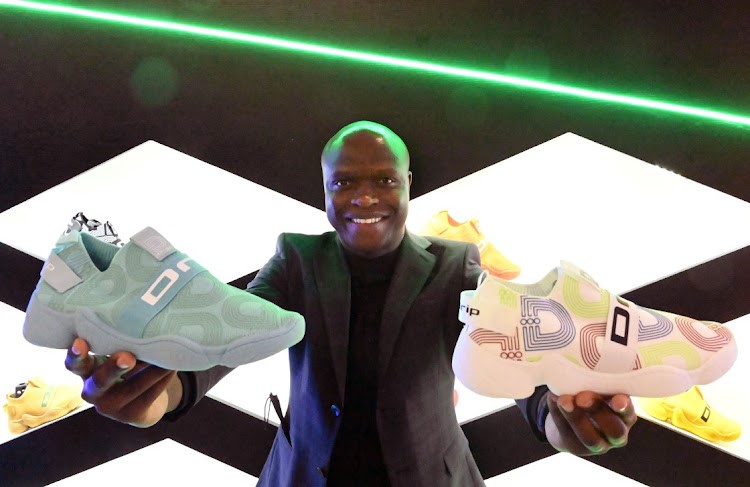
Drip Group founder Lekau Sehoana at the unveiling of the company’s footwear in 2021. Picture: Gallo Images/Oupa Bopape
The Bank has issued more than 300 forfeiture orders in the past five years to scores of individuals and entities found wanting in terms of SA’s exchange control regulations, netting the fiscus billions of rand in the process.
A cursory examination of the notices, legally known as a “notice and order of forfeiture” by the central bank, since 2021 shows the Bank has been on a drive to punish those found to be in breach of exchange control rules after investigations by its financial surveillance department.
The biggest haul to date is the R6bn seized from different accounts of Ibex Investments, formerly Steinhoff.
Maile said small companies such as Drip need to build skills when it comes to complying with the country’s laws.
“We have an obligation to equip such businesses with the necessary skills and ask that the government, private sector, and civil society all play their part in helping these businesses succeed. Part of what that demands is that institutions such as SARB also assist us to equip these businesses with the requisite knowledge and skills rather than to apply a punitive approach,” he said.
“In this way, we can ensure the sustainability and survival of township businesses and SMMEs broadly, thereby growing and developing the provincial economy to the benefit of all the people of Gauteng”. 

Verve – Forest meets Fashion at Africa Textile Talks
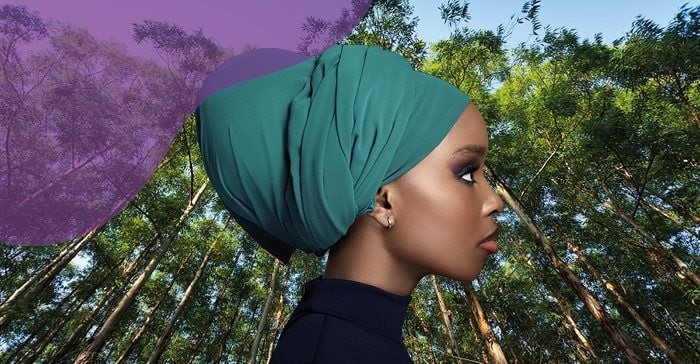
Have you ever wondered where the fibre for clothing and textile comes from? That is part of Sappi Verve’s story – one that starts in the plantation and ends up unbeknownst to many, as fibre transformed in “Forest meets Fashion”.
Worldwide textile markets are growing, and consumer demand is shifting towards the use of more natural fibres over synthetic ones. This is precisely where Sappi Verve makes its mark as a sustainable product, providing the textile market with an alternative fibre of choice. To further demonstrate its commitment to sustainability, Sappi Verve is sponsoring the Africa Textile Talks, hosted by TWYG in Cape Town from 15-17 August 2024.
Using this event to educate audiences, Verve tells the story of a renewable and biodegradable product that contributes to a circular economy. Krelyne Andrew, Sappi’s general manager Sustainability reflects on Africa Textile Talks as being a great platform to engage with like-minded companies to promote the use of sustainable wood-based fabrics that originate in South Africa. We gather to learn from each other, openly share our most pressing challenges and explore opportunities for collaboration. Krelyne takes the audience through the intricacies of producing dissolving pulp in a sustainable manner and the roles of science and biodiversity in the process.
But what is Verve dissolving pulp? It is a form of purified cellulosic pulp (cellulose is an organic compound of wood), mostly consumed in the textile industry where pulp is converted through the value chain to yarn and ultimately textiles such as viscose and lyocell. This provides soft, breathable fabrics which hold colour well and drape beautifully. The fibre produced from dissolving pulp also acts as a good blend partner in fabric with cotton and polyester. Dissolving pulp is also used for a myriad of household, industrial and pharmaceutical applications including in tablets, acetates, sponges and non-wovens. (https://www.sappi.com/the-spirit-of-verve)
Fashion is not only creative, it inspires and reflects our personalities, but at the same time provides an opportunity to make a difference. Sappi Verve is consciously contributing to make a difference in minimising our environmental impact on the planet and creating shared value.
As a responsible manufacturer Sappi drives the sustainability agenda helping consumers to make more informed and sustainable choices. Verve meets customer needs with an enhanced environmental profile to provide innovative solutions for textiles which in turn advances our customer’s own sustainability goals. Our Verve brand captures the essence of life, fervour, passion and strength. As a trusted, ethical and transparent partner Sappi helps to create a sustainable and thriving world.

What’s behind basics fashion boom
By Sandiso Ngubane

Simplicity as a need Image: luxicofashion.com
Pared-down simplicity is more attractive than before
“You look so chic,” a friend said as I approached him for a hug recently. I was dressed in a simple pair of calf-length, flared, black linen pants; a black crew neck sweater with an oversized, dark grey, pinstripe suit jacket, black boots and black beanie. To me, it felt like the most simple of outfits based on a personal quest to take the fuss out of getting dressed.
I’m building a capsule wardrobe that consists mainly of three colours — white, black, grey — and their many variations. I’m playing with cuts and silhouettes but trying to keep my clothing choices as simple, and basic as possible. If it’s a tee or shirt and it’s not plain white, black or grey, and crew neck, I’m not spending my money on it.
Brands such as Good Good Good, which offers the plain tee in a variety of cuts, colours and silhouettes; Cape Town-based Artclub & Friends and NUUN; as well as Uni-Form and Superella come to mind as I think of local brands that offer the kind of simplicity I am after.
I’m not alone, it seems. A recent article from Vogue poses the question: “Have we reached peak basics?”, noting the flurry of brands “selling almost identical clothing. Whether it’s streetwear labels replacing logo-heavy items with blank, elevated essential wear”. There’s a clear trend towards pared back, minimalistic and polished fashion.
Per the Vogue article, this “antitrend” sentiment is evident across fashion. Google Trends searches for “capsule wardrobe” have surged by 60% in the last year, and the word “uniform” is up by 40%. And check this out: the same article reports that online retailer Farfetch offers more than 1,000 cotton blouse styles, and Nordstrorm has 787 on offer. Asos has 1,627 plain tees from 157 brands and an Amazon search will yield 8,000-plus results when you search for white tees. There’s no better gauge for what’s really trending in fashion than what the buyers are putting in front of us.
The allure of simplicity
It feels like there is so much going on in the world that I’ve had to consciously find ways of amplifying simplicity in every aspect of my life, where possible. What I wear seems to be the easiest way of offloading some responsibility, and cancelling out at least some of the noise.
It’s not just limited to how I dress. It also extends to my diet and maintaining routine. I’m simply not attracted to complex dishes or flavours at the moment, and I’m finding a lot of comfort in routine because, frankly, it feels to me like there is way too much going on everywhere I look.
Every time I open any of my social media platforms, I’m either confronted by what appears to be global social polarisation with no end in sight. If it’s not the so-called diaspora wars on social media; it’s the xenophobia and afrophobia in the wake of Chidimma Adetshina’s entry into the Miss SA 2024 finals.
Perhaps, just like me, the people searching terms like “capsule wardrobe” and “uniform” feel drained by it all, and we have not yet moved on from the pristine promise of “quiet luxury”. This is a trend I’ve maintained will not be going away soon, even though the lightning speed of the TikTok trend cycle had many writing the pared down aesthetic’s obituary.
Sensory overload
Social media-driven trends have a short lifespan precisely because they are not rooted in anything real beyond viral moments that are either fleeting, or specifically engineered by a smart social media strategist sitting in an office somewhere. There is so much information coming at us from every angle at almost every minute of the day. Many of us are so consistently engaged that it feels impossible to shut down. Combine this with the economic pressure many of us are feeling and you have the perfect environment for an antidote to thrive — one that favours calm.
What makes trends stick and endure in the way quiet luxury has — and I am happy to argue will continue to — is when they are rooted in a need. I’m sure many of us agree that pared down simplicity is preferable in the wake of the sensory overload we experience daily. It is the antidote to the throwaway consumerism that is finally becoming unappealing to many.
I’m certain that increased sustainability efforts also have a lot to do with the boom in fashion basics because it’s the most accessible way for any of us to participate in sustainability as it goes mainstream, even though the choices are either limited or out of reach for most people financially. But more than anything, something soft; something clean, or “chic” as my friend puts it, feels like the best armour in these times. 
Homechoice – trading statement
Shareholders were advised that the basic earnings per share (“EPS”) and the basic headline earnings per share (“HEPS'”) for the current interim period ended 30 June 2024, are expected to be between 179.6c per share and 208.4c per share, representing between 25% and 45%, increase (2023: 143.7c per share).
The Group’s summarised interim financial results for the six-months ended 30 June 2024 is expected to be released on the Stock Exchange News Service on or about 18 August 2024.


Many companies try to be an ethical and environmentally-friendly as possible, but Stella McCartney bags went a step further and are made out of corn.
Up until the beginning of the 19th century, models were not used to showcase clothes. Fashion companies would use dolls instead.
Harry Winston was the designer of the most expensive shoes in the world. The red ruby slippers he designed sold for $3 million.

Editorial Submission:
Please remember to send me your news so that we can share it with all our readers in the weekly newsletter. Although editorial is neither guaranteed nor implied, suitable editorial for consideration may be submitted to:-
