
Newsletter No 27 /25 July 2025

Click on any ad to go to the advertisers website

To agents, manufacturers, distributors & wholesalers. Please upgrade your 1 line listing to a business listing at least. The Sourcing Directory and Newsletter is dependent on industry support and your business listing offers potential clients more information about your company, products, branches, agents etc.
The cost of a business listing for the entire year is only R1400.
To add a logo is an additional R440. carla@newsbriefs.co.za


Recognition and Resilience: Cape Town’s Clothing Industry Charts a Course for Inclusive Growth
Opinion Piece by James Vos, Mayoral Committee Member for Economic Growth at the City of Cape Town
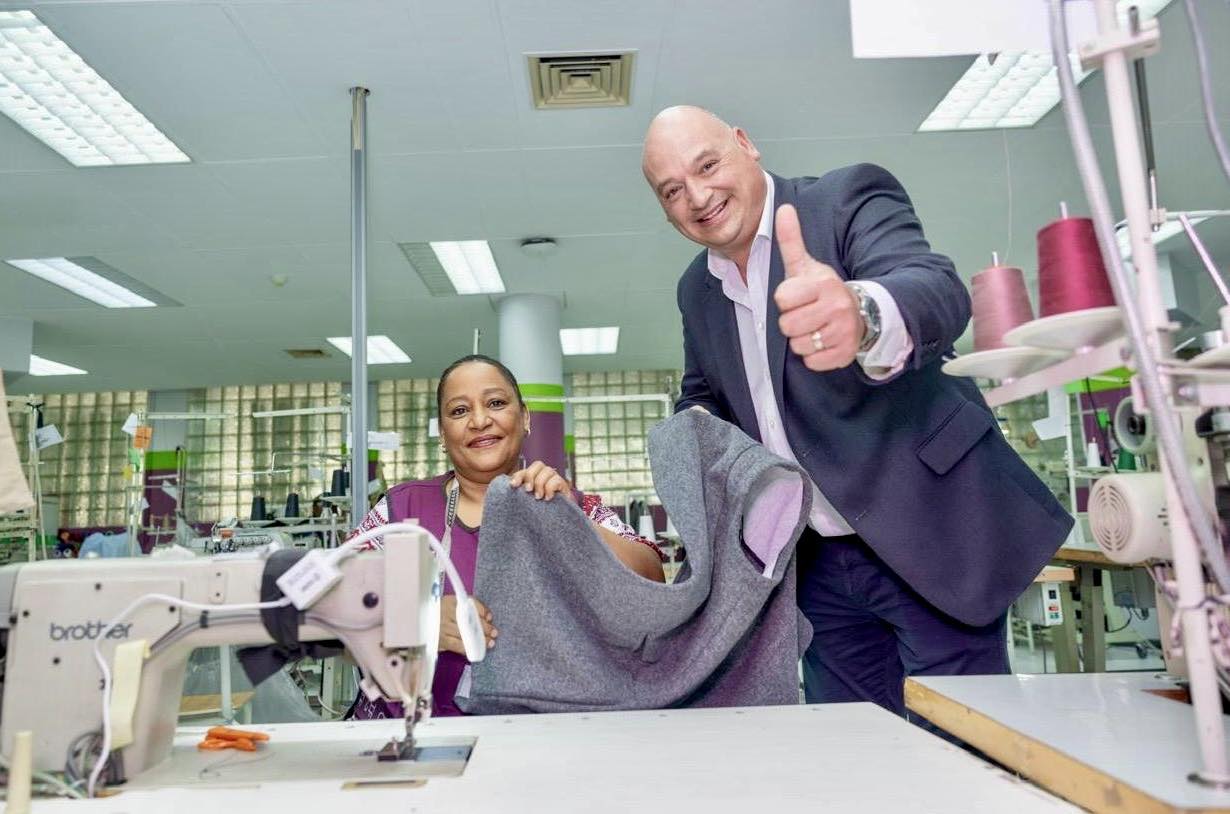
James Vos, Mayoral Committee Member for Economic Growth with Wilma Engelbrecht, an employee at Prestige Clothing, in Epping.
At the 20th Annual General Meeting of the Cape Clothing and Textile Cluster (CCTC), I had the honour of receiving the Industry Champion Award, a deeply meaningful recognition of the work we’ve done together to strengthen Cape Town’s clothing and textile sector.
This award is a strong signal that our shared efforts are delivering real results. It’s also an encouraging reminder that focused, practical support can help entire sectors grow, adapt, and thrive.
This recognition comes at a pivotal moment. As recent reporting in the Daily Maverick highlights, South Africa’s clothing and textile industry is under intense pressure, from both global trade dynamics and the need to drive local development. While it’s encouraging to see growth in exports, low-cost imports continue to flood the market, posing serious challenges to local manufacturers.
In the face of these headwinds, our approach in Cape Town, one rooted in partnership and clustering, has proven its value. I’ve seen firsthand how collaboration, more than competition, drives progress. Bringing businesses together to solve common challenges sparks innovation, strengthens operations, and builds resilience.
Beyond the clothing and textile sector, we’ve applied this same model to others — like marine manufacturing, business process outsourcing, and green technology — with equally impressive results. Each cluster helps unlock opportunities, drives innovation, and build a skilled workforce for the future.
Within the CCTC, programmes such as Project Present are changing the game. This initiative, aimed at reducing absenteeism, recovered 1.2 million production minutes and achieved an 11.2% improvement in just seven months. Likewise, Origin8 has helped small and medium manufacturers scale their operations, and the Team Leaders Programme has strengthened factory floor management across the city.
All of this ties into my economic growth programme of action, which focuses on unlocking investment, preparing our workforce, and ensuring that economic growth is inclusive and sustainable.
On a personal note, one of the things I love most about engaging this industry is visiting clothing factories and meeting the people behind our garments, from the patternmakers, machinists, to team leads, and quality checkers. It’s wonderful to witness the craftsmanship, creativity, and care that goes into every item. These are the people whose skills and dedication power our local economy.
Looking ahead, I fully support the CCTC’s bold 2030 targets: to localise the production of an additional 30 million garments each year, create 12,500 new direct jobs, and unlock R2 billion in value chain investment. These are ambitious, but entirely achievable goals, and they reflect our shared commitment to building Cape Town’s manufacturing muscle.
As I said at the AGM, this award is not just a personal honour, it reflects a collective effort. Together, government and industry are building a more resilient, competitive, and inclusive economy. Cape Town’s manufacturers are already producing over 110 million garments annually within national retail supply chains. With continued partnership, we can achieve even more.
I remain committed to this mission — driving growth, creating opportunity, and ensuring that the benefits of economic development reach every community in our city. Cape Business News

Fund managers bet big on banks, apparel stocks as markets rebound
by Nompilo Goba
Picture: Supplied
Managers forecast 12-month total returns of 16% for equities, ahead of returns for bonds and cash .
A fund managers are increasing their exposure to banks and apparel retail, positioning themselves to benefit from improving domestic conditions.
According to Bank of America’s SA fund manager survey for July 2025, banks are the most overweight sector, followed by clothing retail.
The rotation comes as managers forecast 12-month total returns of 16% for equities, ahead of returns for bonds and cash. The two preferred equity sectors are seen as sensitive to interest rate changes and local consumption, areas expected to stabilise if inflation remains benign and policy remains supportive.
The renewed appetite for retail stocks comes amid mixed performances across major apparel companies. According to Iress data Pepkor, the largest apparel retailer by market capitalisation, has gained almost 37% on a year-rolling basis. Mr Price, despite a year-to-date slump of more than 28%, remains marginally positive over the same period. TFG is down 24% so far this year, but has picked up a little in the past month. Truworths and Woolworths have struggled for much of the year.
Meanwhile, bank stocks have shown positive momentum. Capitec, now worth more than R400bn, has gained 11% year to date and 29% over the past year. While Standard Bank is only up 4% this year, it has gained 11% in a year. Absa, with a market cap of R158bn, is down 7% in 2025 and FirstRand is flat.
The improved investor sentiment follows the formation of the government of national unity in 2024 and growing confidence in structural reforms. According to Scope Markets SA, this has contributed to a narrowing of the long-standing “SA discount” and a recovery in local markets.
“Markets have rallied, the long-standing ‘SA discount’ has narrowed, and policy momentum is driving a new level of optimism. Structural reforms aimed at restoring 3% GDP growth are gaining traction, and both domestic and international investors are beginning to reprice the SA opportunity,” Scope Markets SA CEO Robert J van Eyden said.
“This renewed confidence is visible not only in equity performance but also in trade volumes across bonds and listed instruments. SA remains one of the few global markets where price formation still occurs primarily on-book, on-exchange; an essential feature of a healthy, transparent market ecosystem.
“The robustness of this infrastructure, supported by a deep institutional backbone, gives retail traders a rare level of access to clean price discovery and liquidity.”
According to Statista, SA’s apparel market is valued at $6bn (R106bn), led by women’s apparel, and is expected to grow steadily at 5.4% annually through to 2029.
With an average spend of $93.11 and 24 pieces per person, Statista said the market is largely driven by non-luxury items, which make up 97% of sales. While global giants such as the US dominate in revenue, SA stands out for its rising demand for sustainable and ethically produced clothing.
Bank of America also reports a change in institutional positioning, with increased exposure to domestic equities, gold and life insurance, and reduced allocations to healthcare, telecom and offshore assets. The survey also shows that cash holdings have fallen to a record low of 4.3%, as managers rotate into risk assets in anticipation of improved market conditions. 

A South African Textile Industry Market Update

The South African textile industry is seeing an increase in cheap, imported textiles. These are clothing or materials that are deemed fake and illegal due to their unlawful entry into the country. This market update highlights the efforts of industry stakeholders in improving the South African market.
The National Council of Provinces (NCOP) recognises the need to revitalise the clothing and textiles industries to unlock the economic potential of the township and rural economies. This is seen as the gateway to creating more jobs, reducing inequality and empowering local communities.
Through the government’s National Development Plan, it supports the textile, clothing, footwear and leather growth programme, which was implemented by the government and is recently being accelerated. It has planned initiatives to revitalise the sector to unlock its potential, such as the Retail-Clothing, Textile, Footwear and Leather (R-CTFL) Master Plan.
In a debate by government delegates in November 2024, Minister of Small Business Development (SBD), Ms Stella Ndabeni-Abrahams, reminded stakeholders that the government has set strategic actions that will transform the textile sector. However, she highlighted that role players need to support such initiatives for them to be successful in bolstering the economy and creating jobs.
Ultimately, one of the motivations behind growing the textile sector is also due to the decline of South Africa’s textile industry brought on by international trade agreements and global competition. Cheap textiles and clothing from China, Eswatini and Madagascar, to name a few, have resulted in the influx of cheap, possibly low-quality, textiles with which the local market cannot compete.
This led to the joint efforts of the SBD, the Department of Trade, Industry and Competition and the South African Revenue Service to cut down on cheap imports through tariffs, including on e-commerce platforms, and clamp down on fake imports entering the country.
South African Textile Industry Shifts
It appears that consumers are shifting towards more sustainable, locally manufactured products, indicating that there is an awareness and preference for eco-friendly products.
Furthermore, local content regulations are promoting local manufacturing and reducing dependency on imports. This is made possible through trade policies because it enhances export opportunities and market access.
The South Africa Textile Market Report – Q4 2024 indicated that the South African textile industry is undergoing a technological transformation. It is adopting smart textiles and digital manufacturing processes to improve operational efficiencies and product offerings.
What the Numbers Say
When we talk about imports, the numbers combine a few categories under textiles and textile articles. This can be rolls of fabric, clothing, blankets, objects made from textiles such as bags, other apparel or even furniture. Between January and February 2025, South Africa’s imports of these products totalled R11 897 million ($646 million). SARS reported that it is 21,1% more than the previous year, of which 2,7% was for the same two months in the previous year.
The trade figures include transactions with Botswana, Eswatini, Lesotho, and Namibia (BELN).
Exports, on the other hand, rose by 47,1% to R1 964 million ($106,64 million) in February 2025. This showed a year-on-year growth of 1,8%.
Relevance for Small Businesses
Small businesses need sector-relevant support. For the South African textile industry, that means the creation of local business homes and incubation and development programmes. Not only do these programmes need to assist businesses with training, but they also need to help them with market access. One such example is accelerators that help connect SMEs with retailers.
Other focus areas include reducing transportation costs and making the supply chain shorter. This all enables businesses in South Africa’s textile industry to compete on a global scale.
There is also a need to prioritise exports ahead of imports so local textile businesses can grow. Additionally, they also require a skilled workforce, indicating that there needs to be a bigger emphasis on the training of unskilled workers to specifically enter the textile sector.
Ideally, these programmes need to equip young people and women in rural areas with skills such as garment making, textile design, weaving, knitting and entrepreneurship. This will enable them not only to start their own businesses with these skills but also to manage their businesses effectively. 
Mr Price – trading update
During the first quarter from 30 March 2025 to 28 June 2025 (“the Period”) of the financial year ending 28 March 2026, Mr Price Group’s retail sales increased by 6.3% to R9.0 billion and comparable store sales grew by 3.0%.
Market share gains of 10bps were recorded during the Period as the group outperformed the total comparable market’s retail sales growth, according to the Retailers’ Liaison Committee. The group has gained more than R300m in market share from competitors over the last twelve months, highlighting the effectiveness of its differentiated fashion-value offering.


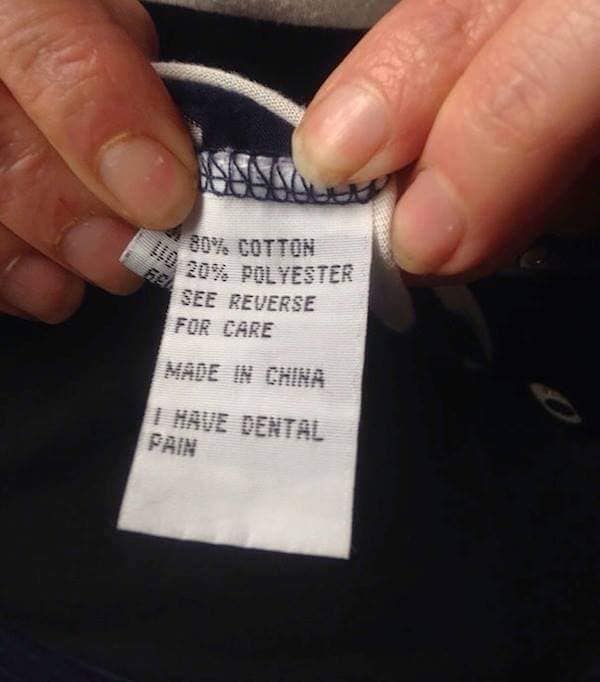
Obscure text additions sometimes added to clothing labels. Apparently, there can be secret messages too!

Editorial Submission:
Please remember to send me your news so that we can share it with all our readers in the weekly newsletter. Although editorial is neither guaranteed nor implied, suitable editorial for consideration may be submitted to:-
