
Newsletter No 25/5 July 2024


NewsBriefs wants to share your company profile.
If you are a manufacturer or supplier to the Clothing & Textile trade please send us your company profile on a word document up to 500 words explaining what your participation is to the industry.
You can also supply one visual in jpeg or png format.
Our aim is to share one newsworthy submission per week with our readers.
Although editorial is neither guaranteed nor implied, suitable editorial for consideration may be submitted to:- carla@newsbriefs.co.za
Click on any ad to go to the advertisers website
Ackerman family not welcome on Boxer’s board after unbundling from Pick n Pay
By Kabelo Khumalo

Gareth Ackerman. Picture: Supplied
Meanwhile, Growthpoint is warming to the idea of having Boxer as a tenant
Retail major Pick n Pay has confirmed that no member of the founding Ackerman family will sit on the board of its cash cow, Boxer, after it unbundles from the group in the next few months.
This is as the family retreats from the control it has exercised over the group for nearly six decades. Earlier in 2024, Pick n Pay made a decision to spin off Boxer as part of its recapitalisation plan to keep the company afloat.
In its annual report published on Wednesday, the group said the Ackerman family’s investment vehicle, Ackerman Investment Holdings (AIH), would not have representation on the Boxer board.
“In the context of the proposed Boxer IPO, the Group confirms that there will be no AIH representation on the Boxer board and that there will be no controlling voting structures for Boxer,” Pick n Pay said.
The proceeds of the Boxer’s mooted unbundling is expected to go a long way towards paying off Pick n Pay’s R6.3bn debt pile.
The Ackerman family took many by surprise in May when it relinquished control of Pick n Pay. To give effect to this, the group’s chair, Gareth Ackerman, will step down in 2025 after serving 14 years in the role. In all, Ackerman has been on the board for four decades.
AIH also ceased nominating the positions of chair, CEO and CFO, while the family’s representation on the Pick n Pay board will be reduced from five to three.
The changes were made after the group reported a R1.5bn trading loss for Pick n Pay and a R1.9bn trading profit for Boxer. The trading loss reported by the Pick n Pay business triggered a R2.8bn non-cash impairment on the assets of Pick n Pay company-owned stores.
In the annual report, the group said it would prioritise liquidity and debt repayment until the completion of its two-step recapitalisation plan — which includes an R4bn rights issue.
The group said capital investment would be limited to about R2.2bn in the 2025 financial year, significantly lower than the R3.8bn invested in the 2024 financial year. Capital investment would be prioritised in the group’s high-performing Boxer brand, clothing and online businesses to maximise investment returns.
The group also said capital spend in Pick n Pay supermarkets would be limited to the critical spend required to maintain the quality of the estate and improve like-for-like volume growth, and that the cutback in capex was “a trade-off between short-term space growth in Pick n Pay and greater profitability and stability over the longer term.”
The imminent unbundling of Boxer is expected to unlock value for shareholders. Pick n Pay bought Boxer in the early 2000s. The group plans to convert some of its loss-making stores into Boxer and limit the overlap of the Pick n Pay and Boxer brands.
Pick n Pay’s focus will be on middle-income and more affluent customers, while Boxer will continue targeting less affluent segments of the market.
“During our review of loss-making stores, we identified several Pick n Pay locations better served by Boxer. Converting these stores will help avoid further Pick n Pay losses and support the new store pipeline for Boxer,” it said.
SA’s largest commercial property owner, Growthpoint, said on Thursday that it was maintaining good relations with Pick n Pay and discussions over the retailer’s restructuring were ongoing.
Growthpoint said excluding liquor and clothing stores, Pick n Pay now occupied 9.4% of its total retail gross lettable area, making it its fourth-largest tenant by gross rental.
“They will be vacating Alberton Mall and Fourways Crossing and we have received offers for the space at both malls. We expect two Hyper stores, Northgate and Woodmead, to downsize gradually. We have no Boxer stores in our portfolio and are discussing expanding both Boxer and Pick n Pay Clothing,” the property group said.
Pick n Pay has identified about 100 loss-making stores in its portfolio, which it will convert to Boxer and close others.
The retailer said it would not be paying dividends until it completed its recapitalisation plan and returned to profitability. 

Mantsho x Nedbank’s fashion line inspired by MiGoals Premium
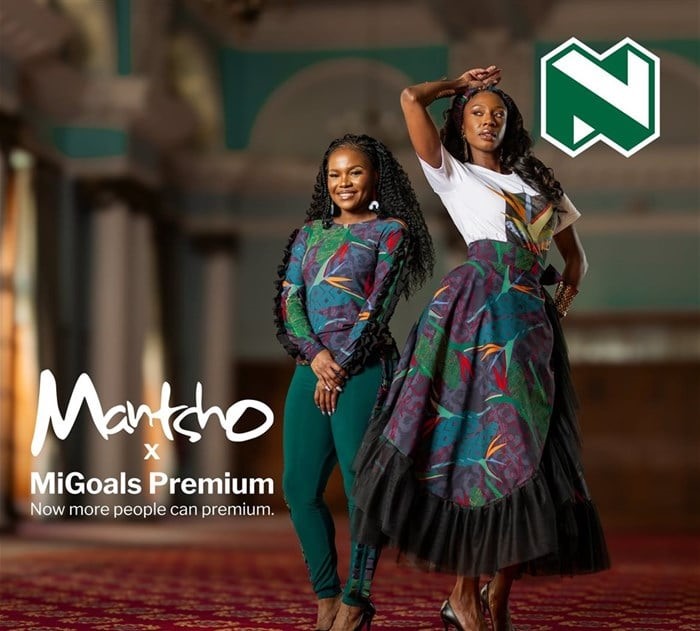
Image supplied
In partnership with renowned fashion designer and founder of Mantsho, Palesa Mokubung, Nedbank launches South Africa’s first-ever fashion collection inspired by a bank account titled ‘Now More People Can Premium’ by Mantsho x Nedbank’s MiGoals Premium.
Nedbank’s ‘Premium’ offering is no longer reserved for a select few. The exclusive Mantsho collection is created as an embodiment of the notion behind the MiGoals Premium Account: giving more people the chance to enjoy the premium lifestyle and everything that comes with it.
Nedbank’s partnership with Mantsho emphasises the brand’s investment in cultural and social capital, showcasing a commitment to empowerment and inspiration beyond financial services. The collaboration celebrates African culture and is dedicated to bringing the heritage and innovation of the continent to a broader audience through experiences.
Mantsho x Nedbank partnership
Executive head of marketing for Retail and Business Banking at Nedbank, Buli Ndlovu, shares some insight into the concept: ‘The Mantsho partnership is incredibly exciting for us, as it is a high-end, award-winning fashion brand, a lot of people weren’t able access to these iconic pieces. So, in taking inspiration from our Nedbank MiGoals Premium Account, which was designed to allow more people to experience the premium lifestyle, we’ve created a fashion line embodying this, bringing premium access to more people.’
In 2004, Mokubung founded Mantsho, a Sesotho name meaning ‘Black is Beautiful’, which has become renowned for its bold, confident, and vibrant designs that celebrate the spirit of African womanhood.
Mokubung’s journey in fashion began with a profound passion for design and a deep-rooted connection to her African heritage, which led to her becoming a pioneering South African fashion designer, celebrated globally for her innovative and culturally rich designs.
With a career marked by bold creativity and international acclaim, Mokubung has firmly positioned herself and her brand at the forefront of the international fashion scene.
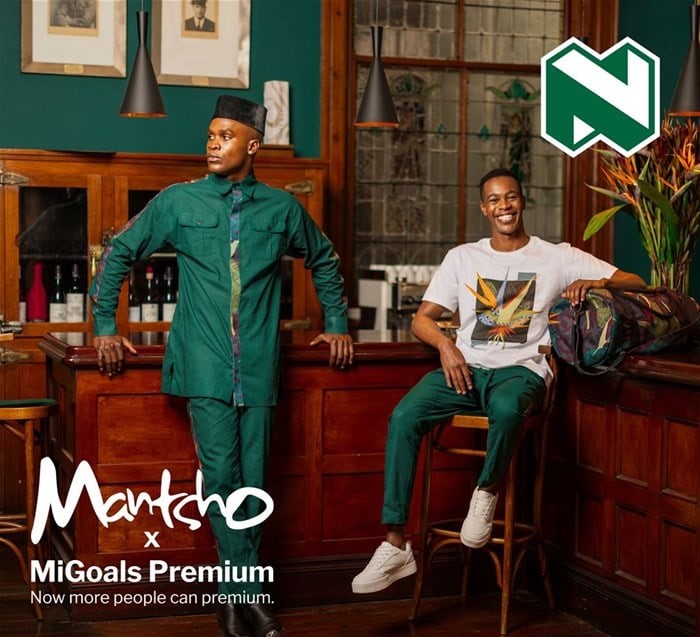
Image supplied
“This collection is designed to be more than just apparel; it’s about enhancing the lifestyle of Nedbank MiGoals Premium account holders. We aim to make luxury and high fashion accessible, helping customers express their personal style and aspirations confidently. The collection supports a lifestyle where elegance and ambition go hand in hand, enabling our clients to present their best selves to the world,” says Mokubung.
Mantsho x Nedbank’s MiGoals Premium collection
The locally made ‘Now More People Can Premium’ by Mantsho x Nedbank’s MiGoals Premium collection comprises nine items, which include accessories, T-shirts and kimono dresses – all created from locally sourced fabrics.
Each item from the collection was curated specifically because of its dynamic and contemporary take on high fashion with a local flair to give shoppers a chance to own a statement piece of cultural pride and sophistication.
The line will be exclusively available on the Avo SuperShop. This hyper-personalised shopping platform features a wide range of South Africa’s favourite brands across shopping, takeaways, groceries and more in a single, secure space.
With a massive discount of 30% available to holders of a Nedbank MiGoals Premium Account, the idea of ‘Now More People Can Premium’ has never rung truer – and owning an iconic Mantsho piece has never been easier.
‘Making our brand affordable opens it up to a new audience. We are bringing a premium brand that is much closer to a wider audience, which is what we love about it. We also love the fact that the Mantsho brand and Nedbank share so many of the same values: we are both intent on doing something more meaningful in a creative space. It feels like a good and genuine synergy,’ Ndlovu said.
‘South African fashion continues to push creative boundaries, and this is a great embodiment of this. A fashion line inspired by the MiGoals Premium Account is unexpected and interesting, and we love the challenge of bringing this concept to life,’ concludes Ndlovu. Bizcommunity

Africa’s fashion breakthrough
By Marcia Klein
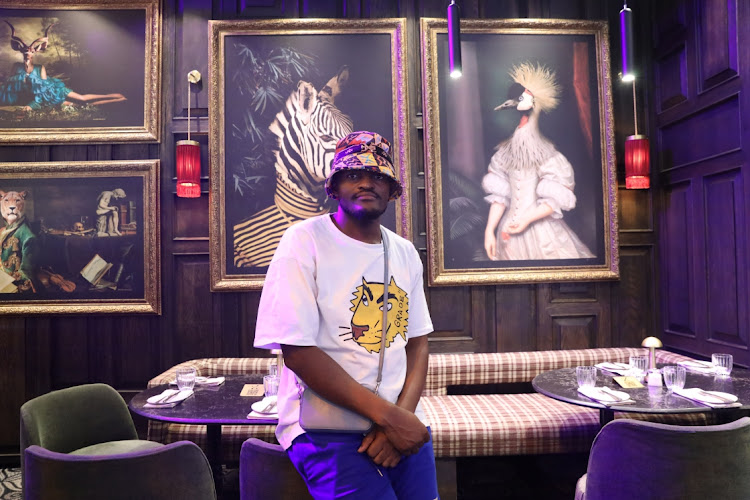
Award winning designer, entrepreneur, creative artist and founder of MaXhosa brand, Laduma Ngxokolo. Picture: Thapelo Morebudi
The continent’s clothing designers and makers are muscling in on a crowded marketplace
Launching a new brand and making it stick, especially in the competitive and crowded world of fashion, is hard. Doing so at breakneck speed is even more remarkable. Yet that is what five of the top 10 most admired South African brands have done.
Named in the Brand Africa 100: Africa’s Best Brands survey, the five were launched only over the past decade or so — sneakers brand Bathu (ranked No 1), MaXhosa knitwear (2), Drip Footwear (4), Redbat denim (5) and Galxboy clothing and accessories (9). They joined the long-established Woolworths (3), Pick n Pay (6), Shoprite/Checkers (7), MTN (8) and Tiger Brands (10).
Except for Nando’s, MTN, Vodacom and Capitec, it has always been difficult for local brands to succeed, especially in a sluggish economy. Bathu was launched in 2015, MaXhosa in 2012 and Drip in 2019, and all gained significant awareness.
The brand awareness of a local design and fashion product is relevant, because only about 15% of the most admired brands in Africa are African. The top six most admired by Africans in 31 countries are Nike, adidas, Puma, Samsung, Coca-Cola and Apple. They are followed by Bathu (7) and MaXhosa (9). New local companies TymeBank and Rain have not achieved similar recognition.
The rise of fashion brands can be partly explained by African consumers seeing and expressing themselves in music, fashion, arts and culture, says Thebe Ikalafeng, chair of Brand Africa. “These are the areas in which they are creating the most,” he says. Older generations were focused on putting food on the table, but a new generation is expressing itself through culture and heritage, “which is why we are seeing the rise of amapiano, for example”.
Ikalafeng says it is also easier to write a song or design clothing than to open a factory or owna farm.
He says 40% of the ranked brands (Bathu, MaXhosa, Drip and Galxboy) were created by young people. They relate to the struggle of today’s generation, he says, “creating a system that works for them and [indicating] that they aren’t going to wait for someone to do something for them”.
All four of these brands have done what is traditionally not expected of a young brand. “Whereas one would expect new companies to make something to put on someone else’s shelf, those brands have to a large extent taken over the entire value chain, owning the design, the production and the retail, and doing their own marketing.”
They learnt from the most successful brands to have clarity about what they stand for, differentiation, consistency, quality and accessibility, but they had their own clear proposition, Ikalafeng says.
“They have rewritten the script about how to build brands and have upended the stalwart heritage brands. One would think it would be unimaginable that they could rank higher than the Tiger Brands and the MTNs, but they have done so, indicating that it is not good enough to be big and accessible, there must also be relatability.”
This has been the basis of MaXhosa’s growing brand recognition. MaXhosa Africa MD Lihle Nqini says: “We capitalised on our identity and cultural relevance. We would like to believe that we stay true to our cultural roots and heritage, which resonates with customers looking for authenticity in the products they purchase.”
She says the company tries to continually innovate and adapt to market trends “while staying true to our core DNA. The balance between tradition and modernity plays a crucial role in ensuring we are relevant.”
While clearly admired, and expanding — with MaXhosa launching its first store in New York last month — these brands have a long way to go before they have significant scale and volume. Bathu and Drip have about 30 stores and MaXhosa has fewer than 10, though that’s not necessarily a benchmark, because the brands have gained significant awareness online.
However, their capacity to grow could be limited by the crowded marketplace and the prominence of big brands, as well as the funding required to scale up. Drip has already encountered these issues; a company recently applied for its liquidation after it failed to settle a R20m debt. On the other hand, when opening his 30th store in 2021, Bathu founder Theo Baloyi posted on X that he had done so with “no funding … no finance (built from the ground up)”.
Jeremy Sampson, executive chair of Brand Finance Africa, which values brands, says that unlike some of the tech brands such as Apple or Nvidia that have significant capacity to scale up, new clothing brands generally stay niche. “There is still room for new brands, but as they grow, smaller brands are often gobbled up by big companies,” he says. 
TFG – board change
Nomahlubi Simamane will be retiring from the Board of TFG with effect from 5 September 2024, following the conclusion of the Company’s annual general meeting. Consequently, she will also step down as a member of the Audit, Risk and Social & Ethics Committees.
Rex True – preference shares dividend
A cash dividend on the 6% cumulative preference shares (“preference shares”) for the six months ending 30 June 2024 at the rate of 6% per annum (6.00 cents per preference share) has been declared and will be paid on Monday, 22 July 2024 to all holders of preference shares


Historically, purple clothes were only worn by magistrates, emperors and other aristocracy in Rome, Italy.
The loincloth is the oldest item of clothing, but the second oldest is the skirt – an item which is still very popular today.
Thousands of fashion magazines are sold every year, but the first ever fashion magazine was sold in Germany in 1586.

Editorial Submission:
Please remember to send me your news so that we can share it with all our readers in the weekly newsletter. Although editorial is neither guaranteed nor implied, suitable editorial for consideration may be submitted to:-
