
Newsletter No 21/7 June 2024


NewsBriefs wants to share your company profile.
If you are a manufacturer or supplier to the Clothing & Textile trade please send us your company profile on a word document up to 500 words explaining what your participation is to the industry.
You can also supply one visual in jpeg or png format.
Our aim is to share one newsworthy submission per week with our readers.
Although editorial is neither guaranteed nor implied, suitable editorial for consideration may be submitted to:- carla@newsbriefs.co.za
Click on any ad to go to the advertisers website
G-Star presents: Homegrown Denim First denim brand to successfully grow greenhouse cotton
By Bohang Mohale
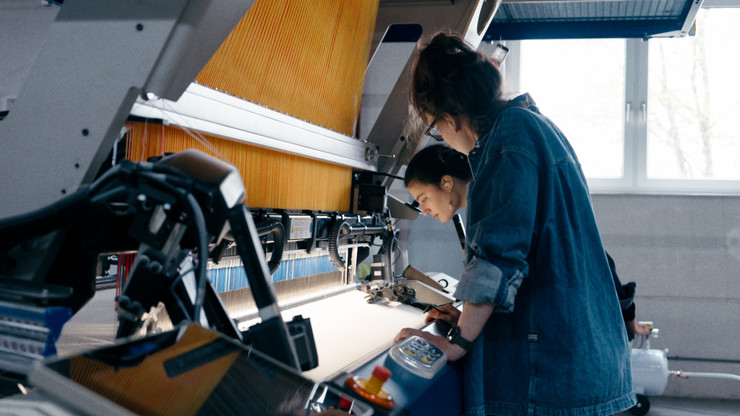
Amsterdam, May 29, 2024 – G-Star unveils its latest denim innovation ‘Homegrown Denim’, a pioneering scientific collaboration with Wageningen University & Research, and Dutch Cotton. This experiment, funded by G-Star, explores how greenhouse-grown cotton could help drastically reduce the impact of cotton growing worldwide, and presents these findings for the benefit of the whole industry.
The Challenges
Cotton is an easy crop to grow, but requires a lot of agricultural space and can take up to 10,000 liters of water to produce 1 kilo of cotton. Besides this, cotton growing also relies on a very specific warm climate, making cotton fields the starting point of a long and complex supply chain. To add to these challenges, the global demand for responsible cotton is growing rapidly, but there is a huge shortfall. What if cotton could be grown better, anywhere?
“G-Star’s curiosity and drive for innovation led us to our partnership with Wageningen University & Research to study the feasibility of growing cotton in a greenhouse. This groundbreaking experiment could revolutionize cotton production by severely decreasing water consumption and land use, eliminating the use of chemical pesticides, improving the quality of cotton, and drastically shortening the supply chain.” Rebecka Sancho – Head of Sustainability G-Star
The Research
For six months, a crop of greenhouse-grown cotton was studied at a research facility in Bleiswijk, the Netherlands. The research examined quality, yield, and fiber properties, comparing its environmental footprint to traditional methods. Strategies like precision irrigation and renewable energy were explored for reducing impact, with economic viability and market potential also analyzed.
The Result: The First Dutch Greenhouse-Grown Cotton With Findings
Overall, it was discovered that growing cotton in a greenhouse provides a controlled and protected environment that boosts crop productivity, quality and sustainability, and lowers the risks that come with outdoor growing.
Here are the top 8 benefits that were found:
The full report can be downloaded at www.gstar.com/homegrown-denim
“The biggest surprise for me in this research was how much cotton you can grow with how little water. We were able to harvest 5 – 23 times as much cotton with up to 95% less water.” Filip van Noort – Crop Specialist Wageningen University & Research.
The Supply Chain
With greenhouse-grown cotton in place, G-Star joined forces with local suppliers (listed below in credits) to create the first ever fully locally sourced and manufactured jean. Every aspect of cotton processing and production of the garment was completed within the country, from ginning (separating cotton from its seeds) to spinning, weaving, sewing, dyeing and finishing. In addition,
G-Star used electric vehicles between suppliers, creating the shortest possible supply chain with the least impact.
“This research allows us to rethink the way the entire industry is set up. And that is exactly what we need to do to find new and effective ways to improve our impact together. Therefore, getting involved in this project was an absolute must for G-Star, to support solutions for the future of denim.” Willeke Hendriks – Chief Product Officer G-Star
The Jeans
G-Star prototypes were created from the first greenhouse-grown cotton harvest. The jeans were garment dyed and finished with G-Star trims. The limited pieces are not for sale, but will be available exclusively for press usage.
The Future
This research and collaboration could be the first step in a promising journey towards more sustainable cotton growing. G-Star has committed to support the next phase for which new cotton is currently being cultivated in the greenhouse facility in collaboration with Wageningen University & Research. G-Star and WUR have also invited a two new partners, Inno Growers and substrate company Grodan, to transition the research efforts into practical cultivation and scale up production. In addition to optimizing growing methods, the primary goal this year is to enhance cotton yield per square meter, aiming to increase it from 1,2kg to 2,2-2,5 kg. The next phase involves inviting other industry stakeholders to join forces, co-invest, and amplify efforts – generating substantial impact and reshaping the fashion supply chain for the collective good.
The Campaign: ‘Homegrown Denim’
To promote the greenhouse-grown cotton project to a broader audience G-Star worked with award-winning illustrator and artist Christian Borstlap who also collaborated on the Raw for the Oceans campaign in 2014, and creative director, Joris Kuijpers. The ‘Homegrown Denim’ animation uses visual poetry and animation to share the findings in an artistic way.
The campaign will launch on the 29th of May 2024. The full findings report can be downloaded at www.G-Star.com/homegrown-denim Fashion, Lifestyle, Trends

Viviers: A fashion mind for the times
By Kgomotso Moncho-Maripane
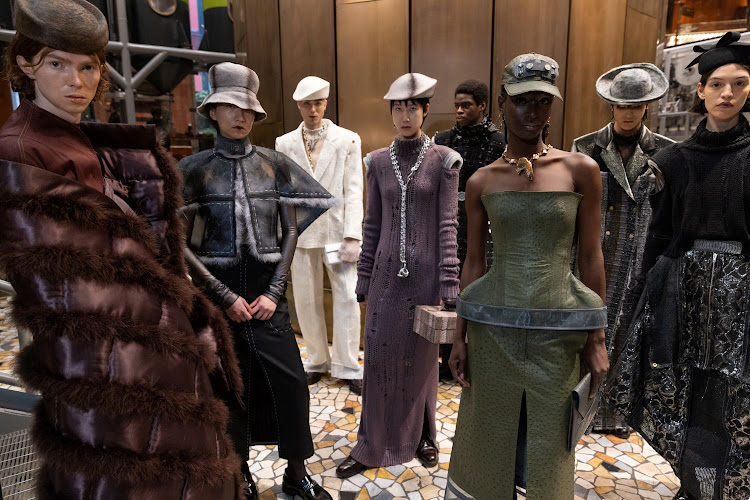
Viviers, In Our Elemental collection Image: Eva Losada
Designer Lezanne Viviers speaks about her vision and approach to design
Lezanne Viviers is an interesting talent to watch. Her Viviers collections are philosophical discourses made to make us think about the current world, the past that produced it and what the future might hold.
Her latest In Our Elemental collection – shown with her third appearance at SA Fashion Week’s Spring/Summer 2024 season and as part of the Fashion Bridges project with the Italian embassy – was a futuristic commentary on the interconnectedness of all beings and our collective potential.
She works with juxtapositions in her tailoring and fabrication, presenting sophistication against a grungy rebellion, soft materials against textured details. Her designs are avant garde, sculptural and sustainably made. The conviction of her voice invites one to look at her work and listen to what the clothes say.
What is your design ethos?
Viviers was created as my preferred artistic medium and as a solution to help fill my interdisciplinary needs. My background in art, specifically sculpture, photography and ceramics, is combined with my love for collecting rare and unusual vintage textiles and art.
I chose clothes as the expressive medium in my creative process as an artist. I rarely found clothes that fully embodied who I am, so I decided to make my own.
Clothing is my medium to explore and express this inner duality; to dress is the act of balancing myself. I love to mix opposing textures; organic, hand-spun, handcrafted, naturally dyed, natural materials are offset by my inner love for responsibly sourced, plastic and synthetics.
Clothes are my language, where words fail me, they help me to communicate and reflect on my own sacred African context.
Why are the themes you explore through design and process important to you?
As an artist, my work is frayed between the conceptual, the philosophical, the qualitative, the aesthetic and the methodical. I use my practice, Viviers, for contemplation and reflection to deepen my understanding of the mystical truths of the universe, seeking practical solutions that fire my curiosity to re-culture a beautiful way forward. This is never an approach in isolation, but one of synchronised partnerships and collaborations.
Photography is the initial lens through which I study form and matter, space and time. My field notes are sketched in the form of photographs and little poems that could later form the substance of a new series of both limited editions and/or unique works of clothing.
Our work aims to fossilise the synergy of the best of SA’s artists and artisans, using responsible, luxurious SA raw materials, with a universal in-born message that stems from our shared origin stories.
Your garments on the runway feel like conversation through time — futuristic yet borrowing from the past and rooted in the present. Is that the intention?
“Future Fossils” is an idea our brand constantly explores. How can we reimagine a new culture, a new human race, a race re-born from the ashes of division and strife and pollution?
Imagine a world where plastic, instead of a disposal, undervalued material, is elevated to the status of silk, gold or wool.
Visionaries like Credo Mutwa and Plato remind us that we are all united and interconnected, we are star children.
Imagine artists co-operating with artisans, all grounded through our shared sacred geometric building blocks, to reimagine a post-pandemic architecture.
Can you speak to your approach to genderless clothing in your use of fabrication and tailoring?
Viviers’ clothes could be considered a sculptural juxtaposition of sharp, traditional masculine tailoring and more organically draped, flowy items, often associated with conventional femininity. The interplay and constant balancing act between these extremes are further explored through our mismatched fabric choices; organic and natural fibres, directly offset by technical and industrial fabrics, like upcycled nylon or reclaimed plastic.
These unexpected hybrids and combinations narrate our unique stories that are birthed from SA soil, yet with topics that could be projections into the future.
What are your sustainable goals?
Our team of creative, specialised and experienced tailors takes great care in making collectable and limited edition pieces, that could also be ready-to-wear or made-to-measure. Meticulous consideration and attention to detail and quality go into all the items we innovate.
The Shokunin spirit of Japan not only inspires our approach to conscious making but also translates into our Japanese way of pattern-cutting. The very simple and squared Origami-style pattern approach is the most effective way of saving fabric, allowing for almost no waste.
Our artisanal, made-to-order model allows for sensitively tailored pieces that are made to fit and last well. Our approach is zero-wastage, and any leftovers are reimagined as innovative new materials, upcycled as appliqué, cut into strips for weaving and knitting or used as other forms of embellishments.
Beyond this, we firmly believe that the inclusion of advanced and innovative technology like 3D printing, laser cutting and digital printing plays a key role in finding alternative and ethical manufacturing solutions and preserving and protecting our natural resources.
In the age of technology and AI, craft and innovation, infused through the human hand, is the highest form of luxury. 
Woolworths – trading statement
The WHL Group disposed of its David Jones operations during the third quarter of the Group’s 2023 financial year. Accordingly, the Group’s results to be reported for the 53 weeks ending 30 June 2024 (‘current period’) are not directly comparable to that of the 52 weeks ended 25 June 2023 (‘prior year’ or ‘prior period’). The Earnings per share (‘EPS’), headline EPS (‘HEPS’) and adjusted diluted HEPS (‘adHEPS’) for the Total Group for the current period are expected to be more than 20% lower than the reported EPS, HEPS and adHEPS for the prior year, in part as a result of the inclusion of the David Jones business, as well as the profit on disposal, in the Group’s 2023 results.
At the time of releasing our interim results, our outlook for the second half of the 2024 financial year was expected to remain challenging, considering the continued pressure on consumer disposable income from high interest rates and living costs. Management had also advised that the Group was well positioned to benefit from any cyclical consumer recovery. Trading conditions in the second half to-date have, however, proven tougher than expected for our apparel businesses, with further deterioration in footfall and discretionary spend in both geographies.
Whilst costs remain well controlled across the Group, the impact of a weaker top-line environment is resulting in continued negative operational leverage in our apparel businesses. In Australia, the Country Road Group is being further impacted by inflated import costs due to a weaker AUD, coupled with higher fixed costs. Our Food business continues to prove its resilience, with strong trade and market share gains underpinned by the ongoing investment in innovation and our value proposition.
Woolworths will issue a further trading statement in order to provide specific guidance on the Total Group and its continuing operations once the Group is reasonably certain regarding the EPS, HEPS and adHEPS ranges for the 53 weeks ended 30 June 2024. The Group’s results for the year are expected to be released on or about 4 September 2024.
SAFW Mr Price Scouting Menswear 2024 Brief – registration is now open

Should you experience any technical difficulties contact: content@safashionweek.co.za
Electronic Portfolios to be sent to: scoutingmenswear@safashionweek.co.za
All entires must be marked – SAFW Mr Price Scouting Menswear Competition
Classifieds:-
Job Description

Title: Sales Consultant, Permanent Position
Reports to: Sales Director
Hours: Mon – Thurs 08:30 – 17:00, Fri – 08:30 – 16:00
We are actively seeking a Sales Consultant to join our esteemed team at a leading textile company based in the Northern Suburbs. If you possess a deep understanding of textiles, coupled with exceptional customer engagement skills, we encourage you to apply.
The ideal candidate will:
Key Responsibilities:
If you are eager to take on this exciting opportunity, kindly submit your CV, recent photograph, and salary expectations to accounts@linings.co.za. Please note, if you do not receive a response within one week, your application may not have progressed to the next stage.
Company profile:-
The Branson Group
The Branson name has been associated with textiles around the world for over 70 years. The original company was started by Arthur Schroeder in 1952 along with two partners. Arthur Schroeder was a well known personality in the industry for many years. Branson is now a third-generation family business, which is something which Arthur was immensely proud of.
Branson has gone through many life cycles but has remained deeply rooted in the Textile Industry. Now based in Hilton, KZN, Branson forms part of a group of companies serving the South Africa and the Sub-Saharan African region in Textiles and Agricultural Commodities and services.
There is a vast local and international textile knowledge amongst the Branson team in both natural and manmade fibre, yarns and fabrics.
Branson is the agent and distributor of the following products –
Cotton – Lint, Seed, Cake, Linters, Motes and Cotton Yarns
Cotton Ginning Machinery, Spares and Consumables(bale strapping & jute bags ) as well as Cotton Pickers Strippers and Baling Machines.
Polyester – Fiber, Poly Cotton Yarns, Filament yarns, Dope Dyed Yarns
Acrylic – Fiber, Acrylic Yarns
Fabric – Greige fabric, Woven or Knitted
We also trade Agric commodities, eg maize, wheat, soya and various essential oils (such as tea tree which we also farm and produce).
We would welcome any enquires to assist the local Textile, Cotton and Agricultural industry. Please contact trading@invictuscb.co.za


Milk-based clothing
Milk-based clothing became popular in Mussolini’s Italy, with the rise of rebellious self-sufficient materials, in rejection of industry. The clothing used proteins in milk as wool, and was regarded to be highly fashionable, futuristic and daring.
Nowadays, it’s no longer groundbreaking to see clothes made out of an already-used something-or-other. Particularly on social media, innovative sartorial creations attract likes abound – last year on Instagram artist Nicole McLaughlin made a bra out of packets of baby-wipes.
Concepts like Nicole’s definitely became more of a fixture in world media recently, as recyclable fashion became its own genre of art, and then re-emerged in ready-to-wear trends. ‘Secondhand’ became restyled as ‘vintage’ in the past decade, and the fight against fast fashion caught momentum once we realised we had set the planet on fire by needing a new ‘fit every time we left the house.
But it’s nothing new. In 1930’s Italy, there was zero knowledge about the eventual effect of industry on the planet, but there was a sincere appetite – whetted by fascist leader Mussolini – for the emboldening of the economy. Mussolini liked ‘Futurist’ thinker Filippo Marinetti’s ideas, which all revolted against the old, the traditional – the industrial. Marinetti, in his radical Futurist Manifesto, had called for a refocusing of societal attention, away from the past and onto innovations in engineering and designing, such as the automobile. Futurists wanted fashion to change too. Manufacturers were compelled by Mussolini and a nation of futurist Italians to craft clothing out of new, revolutionary materials, such as cardboard, paper, glass, rubber, hemp – and, bizarrely, milk.
Milk is a protein (called casein) and so is wool, so on a scientific level, it made sense, and after years of advancing the milk-material theory, lanital was created. Lanital allowed clothes crafted from cow’s milk to be manufactured and sold around the world. Today, you can buy milk-based clothing from high-street sellers (Uniqlo’s popular Heattech line, for example, is partially made from milk proteins), which is both biodegradable and sustainable. Who knew that Mussolini was the original sustain-fluencer…

Editorial Submission:
Please remember to send me your news so that we can share it with all our readers in the weekly newsletter. Although editorial is neither guaranteed nor implied, suitable editorial for consideration may be submitted to:-
