
Newsletter No 20/31 May 2024


NewsBriefs wants to share your company profile.
If you are a manufacturer or supplier to the Clothing & Textile trade please send us your company profile on a word document up to 500 words explaining what your participation is to the industry.
You can also supply one visual in jpeg or png format.
Our aim is to share one newsworthy submission per week with our readers.
Although editorial is neither guaranteed nor implied, suitable editorial for consideration may be submitted to:- carla@newsbriefs.co.za
Click on any ad to go to the advertisers website

Pepkor speeds up Brazil expansion
By Kabelo Khumalo and Jacqueline MacKenzie
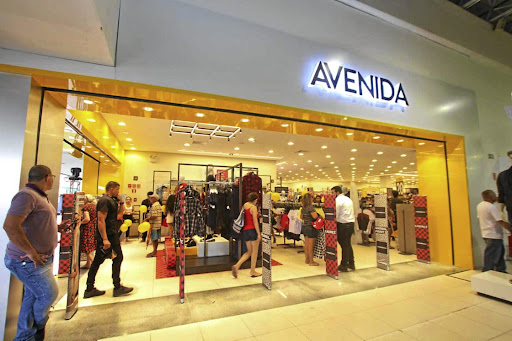
Brazilian retailer Grupo Avenida. Picture: Supplied
Pepkor, SA’s largest retailer by store footprint, is accelerating its expansion in Brazil — where it sees a long runway to win market share — two years after it acquired South American retailer Grupo Avenida.
The group on Tuesday said it had increased its presence in Brazil and would continue to do so due to its prospects in that country.
“New store openings in Avenida accelerated to 22 during the period, up from six new stores opened in the same period last year. The Avenida store network expanded to 163 stores,” it said.
“The potential for expansion in Brazil remains compelling, allowing the group to build international scale and once again establish itself as a global leader in discount and value retail.”
Avenida is now one of the 10 largest retail chains in Brazil and has more than 160 stores across two brands: Lojas Avenida, which offers clothing, footwear and homeware, and Giovanna Calçados, a footwear store.
Pepkor in 2022 spent about $22m buying a controlling stake in Avenida.
The size of Brazil’s population, estimated at 220-million was one of the drawcards for Pepkor in making a foray into Latin America. Avenida has a market-leading position in the core midwest and northern regions of Brazil.
Pepkor reported a 3% decline in profit at the halfway stage of the financial year as consumers remain financially constrained.
Profit for the period from continuing operations for the six months ended March declined to R2.77bn from R2.86bn a year ago, the company said in a statement on Tuesday.
Including discontinued operations, profit was down 17.7% at R2.47bn. Revenue was up 9.5% to R43.3bn, driven by robust trading in traditional retail, which strengthened further into the second quarter.
The Easter trading period was successful on a comparable basis with double-digit sales growth achieved by PEP, Ackermans and Specialty, and high single-digit sales growth in JD Group, it said.
Headline earnings per share declined 3.1% to 75c.
Resilience
The group continues to build resilience in renewable solar capacity and through collaborative initiatives such as electricity load curtailment achieved in PepClo at the Parow campus in Cape Town.
Import supply chain disruption adversely affected in-store product availability during the period, it said.
Retail gross margins benefited from improved full-price sales with lower markdown activity. Retail store expansion continued with a total of 111 new stores opened by the group during the period, taking the total retail store base to 5,823 stores.
The group’s ambition to expand its underrepresented share of the adult apparel market led to the decision to reposition the women’s stand-alone retail concept in Speciality as a mid-market retail brand.
Good progress was made during the period in the execution of the group’s fintech strategy. Fintech revenue increased 24.5% to R5.8bn.
More than 550,000 new A+ accounts were opened and over 200,000 active cellular handset rentals achieved.
Since March, trading had continued to fluctuate but remained resilient, it said. Trading strengthened across most brands in April but weakened in May.
The second half of the group’s 2024 financial year will have to contend with a higher base as the previous year included a 53rd trading week.
The import supply-chain disruption continues to adversely affect merchandise inflows to stores in addition to fluctuating shipping rates. Logistics teams are making good progress in flexing the group’s distribution capability to deal with supply backlogs, prioritising stock freshness to minimise the risk of markdowns.
The group’s strategic execution is progressing according to plan with initial success demonstrated in the reporting period. 

Shipping from China: Problems as vessels ‘redirected to South America’

Durban, KZN, SA – The cost of sea freight from China to SA has risen, and has been compounded by a shortage of space, according to component suppliers in China.
In an email today to upper material wholesaler A. Greenaways (Natal), a supplier in China wrote: “The goods are ready, but can’t catch a ship this week. We can ship it next week. But now sea freight is crazy high – it is about USD6000 for a 20ft container.”
On 13 May, a supplier warned Greenaways: “Please be aware that the sea freight for next week’s vessel has risen to USD3250 per MSK 20′ GP. COSCO will be USD3730 – the ship space is a bit cramped too.
“P.S. The freight costs for various shipping routes are skyrocketing. The cargo for our Peruvian clients, which previously cost less than 2000 for sea transport, is more than 5000 this week.”
On 22 May, the same supplier wrote: “I regret to inform you: this container was originally scheduled to be loaded in warehouse today, but last night the freight forwarder informed me that the shipping company refused to release our container due to insufficient space… The freight forwarder is helping us find new space today, but the shipping schedule is still uncertain… Moreover, the price will also be a big problem, prices are rising every day now, and there’s no guarantee [that there will be space]. This will have a significant impact on the subsequent shipment of goods, and it may be difficult to improve in the short term.”
The reason for the shortage of space and the rise in prices was because Chinese companies were diverting shipping to South America, he wrote.
“The recent increase in shipping costs may be related to the following reasons. The price increase on all routes this time mainly started from South America. The reason for the price increase in South America is primarily due to Brazil imposing additional tariffs on new energy vehicles from China after July. New energy vehicle companies are accelerating the export of vehicles to South America. In addition, the United States has announced future additional tariffs on China, leading to some Chinese companies increasing their investment in South America. Shipping companies are facing a significant shortage of capacity, causing some African routes to be redirected to South America, resulting in a lack of capacity in Africa and a general increase in shipping costs. Another major factor is that shipping companies intentionally reduce ship capacity, the insufficient number of available seats has led to a significant increase in prices.” S&V

Gert-Johan Coetzee launches sunglasses collection

Image supplied
South African fashion designer Gert-Johan Coetzee has debuted his first-ever sunglasses collection, embodying the label’s signature flair for bold design and timeless elegance.
The collection features a range of styles to flatter various face shapes and preferences. From classic aviators to chic cat-eyes. Adding a distinct touch of Coetzee’s signature style, the sunglasses incorporate the brand’s iconic trademark – the two majestic elephants.
This powerful symbol, a constant presence in Coetzee’s designs, represents strength and warmth, values deeply embedded in the brand’s ethos.
“I’m thrilled to finally unveil this exciting new venture,” says Coetzee. “These sunglasses are an extension of my design philosophy, offering a touch of luxury and timeless elegance that complements any look. The inclusion of our signature two elephants adds an African and personal touch, allowing wearers to embrace the power and confidence that the brand represents.”
The sunglasses range is available on the brand’s online store. Bizcommunity
Pick n Pay – AIH support, board changes and GM
Shareholders were referred to the SENS and ANS announcements released by the Company on Thursday, 22 February 2024 in terms of which they were advised, inter alia, of the Company’s proposed two-step recapitalisation plan which, subject to final approval by the board of directors of the Company (“the Board”) as well as the requisite shareholder and other regulatory approvals being obtained, will comprise a rights offer to existing shareholders of the Company of R4.0 billion (“Rights Offer”), followed by an offering and listing of shares in the Group’s Boxer business on the Main Board of the Johannesburg Stock Exchange (“IPO”). The Rights Offer is expected to take place in the middle of 2024, followed by the IPO towards the end of 2024.
Shareholder resolutions
In order to advance the Rights Offer, a general meeting of shareholders will be convened (“General Meeting”) for the purposes of considering and, if deemed fit, passing, the resolutions necessary to approve and implement the following actions (“Resolutions”):
*The conversion of the ordinary shares of the Company from par value to no par value shares;
*An increase in the authorised ordinary shares and B shares of the Company, through the creation of new authorised ordinary and B shares;
*Amendments to the memorandum of incorporation (“MOI”) of the Company to effect the changes sought to the share capital; and
*The issue of shares with voting power exceeding 30% of the voting power of the shares currently in issue as part of the Rights Offer.
In addition to the Resolutions required to advance the Rights Offer, as set out above, the Company will ask shareholders to consider and, if deemed fit, to pass the following Resolutions:
*Amendments to the terms and conditions attached to the B shares as set out in the MOI, which will permit B shareholders to approve, by special resolution, a lower B Share Issue Ratio (as defined in the MOI). This will facilitate a reduction in the voting rights exercisable by B shareholders; and
*Amendments to the MOI to better align the director rotation provisions in the MOI with the Company’s Governance Charter (“Governance Charter”).
Standby Underwriting Agreement
The Company has concluded a standby underwriting agreement with Absa Bank Limited, Rand Merchant Bank (A division of FirstRand Bank Limited) and The Standard Bank of South Africa Limited in terms of which they have agreed, subject, inter alia, to the conclusion of an underwriting agreement on customary terms, to underwrite the Rights Offer amount in equal proportions.
Board and control changes
In accordance with paragraph 3.59 of the JSE Ltd. Listings Requirements, the Board wishes to advise of the following changes to the Board, its Committees and charters:
*Retirement of Board Chair and Changes to his Committee Memberships Gareth Ackerman will retire from his role as Chairman of the Board following the release of the Company’s FY25 results next year. In addition, Gareth will step down from the Nominations and Corporate Governance Committee and Treasury Committee with immediate effect. The Board extends its sincere thanks to Gareth for his invaluable contribution as Chairman of the Board over the past 14 years and appreciates the support he will provide to management over the coming months. The Board will announce his successor as Chairperson of the Board in due course.
*Retirement of Non-Executive Director David Robins will retire as a non-executive director at the Company’s 2024 Annual General Meeting (“AGM”), reducing the representation of the Ackerman family on the Board to three members (Gareth Ackerman, Jonathan Ackerman and Suzanne Ackerman). The Board extends heartfelt gratitude to David for his unwavering commitment to the Group for over thirty years and for his incredible 22-year contribution to the Board.
*Other changes in Committee Memberships a. Nominations and Corporate Governance Committee Suzanne Ackerman, Haroon Bhorat and David Friedland will retire from the Nominations and Corporate Governance Committee with immediate effect. The Board has appointed lead independent director James Formby to the Nominations and Corporate Governance Committee and has named Annamarie van der Merwe as the Chair of the committee. Current membership comprises Annamarie van der Merwe (Chair), James Formby, Aboubakar Jakoet and Audrey Mothupi.
Social, Ethics and Transformation Committee
The Board notes the retirement of David Robins from the Social, Ethics and Transformation Committee and has appointed independent non-executive director Haroon Bhorat to the committee. The committee now comprises Suzanne Ackerman (Chair), Jonathan Ackerman, Haroon Bhorat and Annamarie van der Merwe.
Finance and Investment Committee
The Treasury Committee – an advisory sub-committee to the Audit, Risk and Compliance Committee – has been constituted as a key standing committee and renamed as the Finance and Investment Committee.
The renamed Finance and Investment Committee is chaired by lead independent director James Formby and includes independent non-executive directors Haroon Bhorat, Mariam Cassim, David Friedland and Aboubakar Jakoet as members.
Independent Board Committee
The Corporate Finance Committee has been renamed as the Independent Board Committee and comprises only independent non-executive directors, chaired by the lead independent director James Formby. This Committee is not a key standing committee and is convened only for major regulated transactions or investment decisions.
In addition to the changes detailed above, the Board will initiate a process for long-serving independent non-executive directors to rotate and retire in the ordinary course of board appointments over the next 12-18 months.
Notice of General Meeting
The General Meeting will be held entirely by electronic communication, as contemplated in the MOI and in section 63(2)(a) of the Companies Act 71 of 2008, at 08:30 on Wednesday, 26 June 2024.
Woolworths Holdings Ltd. – New Financial Instrument Listing – WHL13
A notification regarding the listing of a new debt instrument has been issued.


White wedding dresses
No-one wore a white dress to their wedding until Queen Victoria wore one to wed Prince Albert.
Royal weddings have always set the wedding industry alight, bridal fashions in particular. Classic Western ideals of nuptial fashion choices always mirror those of queens and princesses on their big day. Connected closely to the ‘classic’ wedding mood board, is of course the colour white – virginal, heavenly, holy and celebratory.
Although she wasn’t the first royal to wear white to her wedding – Mary, Queen of Scots was, in 1559 – Queen Victoria was the original trendsetter. She chose a white court dress made of heavy silk satin to marry Prince Albert in 1840. Her choice seemed to be down to the fact that debutante royals – young princesses – were expected to wear white to their ‘presentation’. If you’ve managed to catch any of Netflix series Bridgerton, you’ll know what I’m talking about.
Soon enough, wealthy and fashionable brides copied Queen V, and custom seemed to decide that white was the best colour for a wedding dress. Even Kate and Meghan, history’s most recent royal brides, followed suit – imagine the splash if they hadn’t.

Editorial Submission:
Please remember to send me your news so that we can share it with all our readers in the weekly newsletter. Although editorial is neither guaranteed nor implied, suitable editorial for consideration may be submitted to:-
