
Newsletter No 18 /23 May 2025

Click on any ad to go to the advertisers website

To agents, manufacturers, distributors & wholesalers. Please upgrade your 1 line listing to a business listing at least. The Sourcing Directory and Newsletter is dependent on industry support and your business listing offers potential clients more information about your company, products, branches, agents etc.
The cost of a business listing for the entire year is only R1400.
To add a logo is an additional R440. carla@newsbriefs.co.za


SARS Hosted progressive World Customs Organization East and Southern Africa Regional Meetings from 12–16 May 2025
Tshwane, 16 May 2025 — The South African Revenue Service (SARS) hosted the 41st Regional Steering Group of the World Customs Organization (WCO) East and Southern Africa region (ESA) from 12–14 May, and the 31st Governing Council from 15–16 May 2025. The meetings reviewed key developments for the 2024–2025 reporting period and finalised the new ESA Regional Strategy (2025–2028). The meeting was attended by member customs administrations, regional entities, and other partners. It underscored participants’ strong commitment to strategic reform, capacity-building, and regional integration.
The meeting highlighted the central role played by customs administrations in facilitating trade, mobilising resources, and protecting society. A high-priority topic was the Trade Facilitation Agreement, which will help to lower trade barriers and eliminate inefficiencies, such as non-tariff barriers which raise costs and hinder economic integration.
As a key enabler of trade, the WCO is a critical voice supporting Africa’s participation in global trade and international agreements. The adoption of the African Continental Free Trade Area is a milestone for intra-African trade. However, its success depends on the capacity of customs administrations to eliminate non-tariff barriers and facilitate seamless cross-border movement. To achieve this goal, Ashor Sarupen, South Africa’s Deputy Minister of Finance, pointed to tools such as enhanced connectivity, pre-arrival processing, and Authorized Economic Operator programmes as fundamental to the agenda. He noted that these require sustained investment in digital systems and modern infrastructure to remain effective. Equally challenging, is to deal with the rapid growth of e-commerce, which is straining existing customs systems.
Ian Saunders, WCO Secretary-General, spoke of the WCO’s contribution to developing responsive, inclusive policies that reflect the needs of diverse regions. This year marks a period of transformation in how the WCO engages with its members. Central to this transformation is the development of the WCO Strategic Plan, set to be finalised in 2025. This landmark plan is aligned with the year’s overarching theme of meaningful, member-driven change anchored in modernisation and collaboration. Efforts to strengthen the WCO’s operations, supported by the endorsed proposals and budget allocations, are progressing in tandem with its strategy. Concluding, the Secretary-General said that “the WCO remains committed to transparency, precision, and accountability underpinned by customs delivering on its commitment to efficiency, security, and prosperity”.
SARS Commissioner Mr Edward Kieswetter underscored the importance of the WCO ESA region, a bloc of 24 countries facing shared challenges and opportunities. The region remains relatively stable, rich in natural resources, and primed to harness its demographic dividend. Success will require coordinated strategy, innovative thinking, and a collective commitment to mutual growth. Customs administrations must integrate, use data, unlock the potential of e-commerce, and deepen partnerships with the public and private sectors. Through unity and bold collaboration, the ESA region can win progress toward a more connected and prosperous future.
Continuing the Commissioner observed that the African Continental Free Trade Area calls for revisiting traditional customs practices and embracing innovation. Importantly, the WCO was called upon to use its capacity to drive greater alignment with emerging global trends and deeper collaboration between the public and private sectors. Customs administrations must oversee trade, which is not only efficient, but also fair, contributing to more resilient and inclusive economies. The meeting concluded that modern customs operations must help to reduce tax leakages, lower trade costs, and expand the corporate tax base. Digital systems accelerate trade processes, while regional harmonisation integrates markets and boosts competitiveness. By strengthening customs, the meeting observed, countries can unlock the full benefits of trade under the African Continental Free Trade Area.
Finally, the Commissioner said that “undeniably, customs administrations globally are undergoing a period of unprecedented transformation, shaped by technological disruption, evolving risks, and geopolitical instability. While these changes present significant challenges, they also offer opportunities to build resilient, future-ready institutions, provided they are approached through structured reform, guided processes, and enhanced regional cooperation”.
The conference concluded the 31st Governing Council by convening elections, which saw South Africa elected unanimously to the position of Vice-Chair of WCO ESA that would take effect from 1 July 2025. As Vice-Chair, South Africa is expected to strengthen the governance arrangements and improve the sustainability of the regional office whilst steering the implementation of the region’s strategic priorities, including digital transformation, customs modernisation, revenue mobilisation, and regional cooperation as well. This role enhances South Africa’s global influence and standing. Madagascar was elected as Deputy Vice-Chair and Kenya as an Additional Member to the WCO Policy Commission.
For further information, please contact SARSMEDIA@sars.gov.za.

The ‘Black Dandy’ has a history in Africa, too
By Sandiso Ngubane
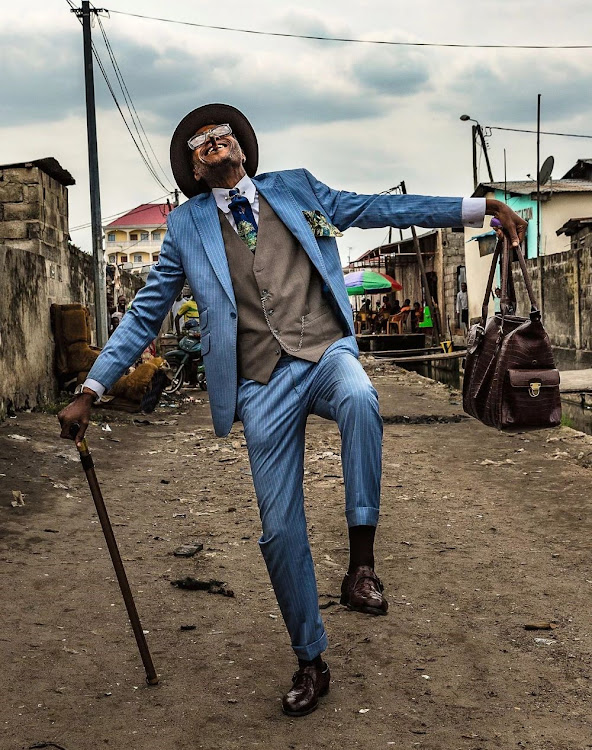
Elie Fontaine Nsassoni, 45-year-old taxi owner and sapeur for 35 years, in Brazzaville, 2017. As documented in Tariq Zaidi’s book, Sapeurs: Ladies and Gentlemen of the Congo Image: Tariq Zaidi
Here’s hoping the continent’s brightest stars make this clear at 2025’s Black Style-themed Met Gala
Last week, the Metropolitan Museum of Art announced the Costume Institute’s spring 2025 exhibition, “Superfine: Tailoring Black Style”. Known to most as the Met Gala, the theme piqued my interest and had me thinking about what inspiration might be taken from the continent. On closer inspection, however, I came to realise Africa’s contribution to global black style might not feature that prominently after all. At least not in the show itself, leaving such opportunities for the red carpet only.
According to the New York Times’s Vanessa Friedman, “the show, involving 12 different themes, including ‘ownership’, ‘caricature’ and ‘cosmopolitanism’, will concentrate on the Black dandy in Britain and the US from the 18th century through today (though there are nods to the history of African dandies).”
Here’s hoping some of our now prominent African stars on the world stage — the likes of Lupita Nyong’o, Nigerian superstars Burna Boy, Tems, Wizkid, SA’s Tyla and others — who may crack an invite will take the opportunity to give the continent more than just a nod at one of the most-watched red carpet events of the year.
Before looking into how they can do so, it’s perhaps worth investigating the Costume Institute’s choice to use Barnard College professor Monica L. Miller’s 2009 book, Slaves to Fashion: Black Dandyism and the Styling of Black Diasporic Identity, as a template.
An overview of the book over on Barnes & Noble reads: “Slaves to Fashion is a pioneering cultural history of the Black dandy, from his emergence in Enlightenment England to his contemporary incarnations in the cosmopolitan art worlds of London and New York.
“It is populated by sartorial impresarios such as Julius Soubise, a freed slave who sometimes wore diamond-buckled, red-heeled shoes as he circulated through the social scene of 18th-century London, and Yinka Shonibare, a prominent Afro-British artist who not only styles himself as a fop but also creates ironic commentaries on black dandyism in his work.”
At a time when social media has thrown “diaspora wars” into mainstream discourse, with “foundational Black” Americans often seeking to erase the continent’s connection to the diaspora, it seems to me like an oversight; or at the very least a missed opportunity on the part of the curators to look at the similarly rich histories that led to the emergence of the black dandy right here on the continent. Hence my hope that through our home-grown stars, someone — anyone — looks into the Black dandy’s rich African history.

A still from Solange’s Losing You video Image: Daniele Tamagni
I’m reminded of Solange Knowles’s pre-Seat at the Table era, with the music video to her hit song Losing You shot in KwaLanga in Cape Town back in 2013. The video takes inspiration from the “sapeurs” — members of the Society of Ambience-Makers and Elegant People, originating in the Congolese cities of Brazzaville and Kinshasa. Solange had become interested in the Sape culture having come across photographer Daniele Tamagni’s book Gentlemen Of Bacongo.
“This society … professes an almost religious devotion to fashion (and has its own rules of ethical behaviour) … The sapeurs, dressed in clothes that confront accepted standards (…) rise in stark contrast to their social environment. The way they choose and combine their outfits looks picturesque, but it acts as a creative expression of local tastes, attitudes, and aesthetics that favours the use of bold colours, cheerfully combined,” Tamagni writes on his website
Similarly, SA’s “swenkas” have been an enduring image of Zulu dandyism. Swenkas are Zulu migrant labourers who created a dandy culture in the hostels of Johannesburg. They re-enacted dandyism quite early in the apartheid era, where competitions would be held with performers expressing their identity through dress, attitude and a commitment to certain, clearly defined moral codes. A modern version of this, if only aesthetically, is perhaps what’s come to be known as “nkabi drip” — a style of dress popularised by artists such as Big Zulu, S’java and influencers like Bafana Mthembu.

Bafana Mthembu has perfected modern Zulu dandyism Image: Courtesy of eezynkabi and Puma / instagram
But there is much to dig into, going back into the history of British conquest on the continent. I’m specifically thinking of that famous image of Zulu King Cetshwayo ka Mpande during his visit to London in 1882, where he adopted Western dress in the form of a double-breasted suit, but still kept his traditional headdress – isicoco.
To me, it’s a marker of how black dandyism has evolved from necessity — as it has in other parts of the world. Cetshwayo had been defeated and arrested by the British before he went to London for that famous visit. This is, to me, a metaphor for how black style, and dandyism specifically, as we know it today, emerges from our subjugation, and subsequent cultural conformity.
This is even evident when you look at hip-hop and how Dapper Dan evolved from pariah to icon within fashion. To recap his briefly, Dapper Dan had a famous Harlem boutique in the 1980s where he made custom pieces that repurposed luxury brand logos. Said brands sought to shut down his operation, which had become popular with black sports, and music stars, due to his unauthorised use of their logos.
There are unmissable parallels between this and the sapeurs, swenkas and, to a far lesser extent, King Cetshwayo’s attempts at conforming in a white man’s world, while still trying to maintain a semblance of authenticity. That is black dandyism, and Africa has a rich history of it that risks going unnoticed come May 2025, at the Met Gala. 
Pepkor – trading statement
Pepkor’s performance during the six months ended 31 March 2025 (“H1FY25”) benefited from strong trading in the group’s core Traditional Retail operations while FinTech continued to deliver aggressive growth.
Shareholders and noteholders were advised that a reasonable degree of certainty exists that the group’s headline earnings per share (“HEPS”) and earnings per share (“EPS”) for H1FY25, when compared to the previous corresponding period, are expected to fall within the ranges reflected in the table below.
HEPS (Headline Earnings Per Share): Continuing Operations
-H1FY25 expected: 81.0 to 88.5 cents
-Expected change: +8% to +18%
–
H1FY24 actual: 75.0 cents
EPS (Earnings Per Share) :Total Operations
-H1FY25 expected: 79.4 to 86.1 cents
-Expected change: +18% to +28%
-H1FY24 actual: 67.4 cents
Pepkor’s interim results for the six months ended 31 March 2025 will be published on SENS on or about Tuesday, 27 May 2025.
A results presentation will be held at 10:00am (SAST) on Tuesday, 27 May 2025. The webcast registration link will be made available prior to publication of the results on the Pepkor website: www.pepkor.co.za.
Pick n Pay – board changes
The Board is confirmed that James Formby, currently serving as Lead Independent Director, will succeed Gareth as Chair of the Board, effective from the conclusion of the Annual General Meeting on 5 August 2025.
The Board is pleased to announce the appointment of Pooven Viranna as an independent non- executive director and a member of the Audit, Risk and Compliance Committee, with effect from 1 June 2025.
David Friedland will retire as an independent non-executive director and member of the Audit, Risk and Compliance and Finance and Investment Committees, with effect from the 2025 AGM. The Board extends its sincere appreciation to David for his ten years of dedicated service to the Group and, in particular, for his outstanding contribution to the Audit, Risk and Compliance Committee. David’s deep expertise in technical accounting standards, risk governance and compliance has been a significant asset to the Group.
In support of the Group’s efforts to strengthen the independence of Board committees, Suzanne Ackerman has elected to step down as Chair of the Social, Ethics and Transformation Committee (SETC). Suzanne will remain a valuable member of the SETC, with the role of Chair being assumed by independent non-executive director, Haroon Bhorat, effective 26 May 2025.
The Board announced that CEO Sean Summers has extended his contract with the Group and will continue in his role until May 2028. This extension ensures continuity and stability in the leadership team during a period of significant strategic transformation. It also allows for a considered and deliberate succession process, including a comprehensive handover period in due course.


Wardrobe Malfunctions

Ray Tamarra / GC Images / Via Getty
At the 2014 Met Gala, Hayden Panettiere tripped down the stairs in her Dennis Basso dress. According to Us Weeklly, when she got to the top of the steps, she said, “Hallelujah! I made it up the stairs!”

Editorial Submission:
Please remember to send me your news so that we can share it with all our readers in the weekly newsletter. Although editorial is neither guaranteed nor implied, suitable editorial for consideration may be submitted to:-
