
Newsletter No 16/9 May 2025

Click on any ad to go to the advertisers website
To agents, manufacturers, distributors & wholesalers. Please upgrade your 1 line listing to a business listing at least. The Sourcing Directory and Newsletter is dependent on industry support and your business listing offers potential clients more information about your company, products, branches, agents etc.
The cost of a business listing for the entire year is only R1400.
To add a logo is an additional R440. carla@newsbriefs.co.za


Sappi swings to a loss amid tariff wars
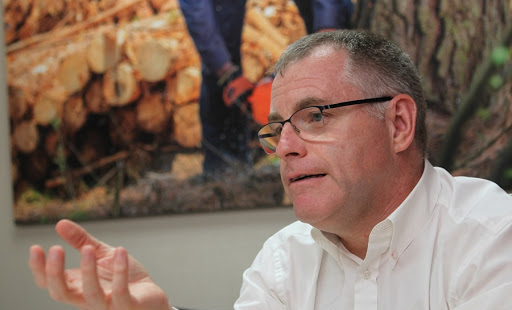
Sappi CEO Steve Binnie. Picture: Sunday Times
The group reported a $20m loss for the three months ended March
Global trade wars have dealt a blow to paper and pulp producer Sappi in recent months.
The group reported a $20m loss for the three months to end-March, compared with a o $29m profit in the previous second quarter.
With less than 7% of Sappi’s sales involving cross-border trade with the US, the concern is not tariffs’ direct effect, but rather the indirect effect on inflation, global growth and trade routes.
In particular, tariffs imposed by the US on textile and apparel manufacturers in China are a significant threat to the group’s clothing-related products, namely, viscose staple fibre (VSF) and dissolving wood pulp (DWP), of which China is a major buyer.
Against this backdrop, Sappi’s adjusted earnings before interest, taxation, depreciation and amortisation (ebitda) were down more than 40% to $107m in the second quarter.
Given the continued uncertainty in Sappi’s target markets, the group warned that its third-quarter adjusted ebitda was likely to be “at a similar level”, meaning more losses were on the horizon.
“The US imports 90% of its clothing, and our dissolving products largely go to China’s clothing sector. The trade war has meant significant uncertainty, and there’s not a lot of product flowing from China to the US,” Sappi CEO Steve Binnie said.
“I do firmly believe that things have to normalise. The US needs clothing, and eventually trade will return to normal,” he said.
On top of macroeconomic and trade challenges, the group’s second-quarter performance was negatively affected by scheduled maintenance shuts in SA, costing the group $60m.
An extended pause in operations and expansion of the group’s Somerset Mill PM2 in North America cost a further $20m.
“The disruption of trade flows related to tariff actions could contribute to global inflationary pressures, which may materially weaken consumer demand across all of our key markets.
“We continue to monitor these developments closely and remain focused on maintaining operational flexibility and cost discipline in the face of these external challenges,” Binnie said. 

Certieye
Staying Ahead of Counterfeiting with CertiEye
Protecting Brands in a Counterfeit World
In an age where counterfeit products pose a serious threat to industries and consumers alike, the need for a secure, reliable, and easy-to-use solution has never been more urgent.
Counterfeiting not only undermines brand integrity but also poses significant risks to consumer health, safety, and trust.
Trimtique together with their strategic partner has taken a bold step forward in this global battle by introducing a groundbreaking solution: CertiEye.
Introducing CertiEye – Trust, Secured in Seconds.
CertiEye is a custom-designed authentication technology that provides 100% guaranteed protection against counterfeit goods. Each code is unique, brand-specific, and impossible to replicate—giving brands the power to fight back with confidence.
With CertiEye, verification is instant. Anyone with a smartphone can simply download the free CertiEye app, scan the product code, and receive authentication results in just 2 seconds. No special equipment, no delay—just certainty.
Why CertiEye Matters – Key Benefits at a Glance:
✔ Powerful Anti-Counterfeit Solution – Deter counterfeiters with a secure and tamper-proof system.
✔ Instant Product Authentication – Ensure product legitimacy in real-time, at any point in the supply chain.
✔ Gray Market Tracking – Identify and monitor unauthorized product distribution.
✔ Online Brand Protection – Safeguard your products and reputation across digital platforms.
✔ Brand Security – Offers a layer of protection akin to insurance, especially critical if a product causes health concerns.
✔ Customs & Border Verification – Streamline authentication at import/export checkpoints for smoother logistics.
Certieye is designed for the garment industry with either wash care or woven sew in labels, price hang tags as well as the medical/pharmaceutical industry, food and consumable, jewelry, eyewear, and home wear industries.
Why Brand Security is More Important Than Ever
In today’s global marketplace, a brand is more than a logo—it’s a promise to the customer. When counterfeit goods infiltrate the market, they don’t just steal sales—they steal trust. A single counterfeit product can result in dissatisfied customers, health hazards, lawsuits, and long-term damage to a brand’s reputation.
For industries like pharmaceuticals, cosmetics, baby products, and electronics, where consumer safety is paramount, counterfeit items can have life-threatening consequences. Even luxury goods and lifestyle brands face reputational harm that may take years—and millions in marketing—to repair.
Brand security ensures that only authentic, quality-assured products reach the end user. It also empowers brands with data—visibility into where products are being sold, whether there’s leakage into unauthorized markets, and where potential vulnerabilities lie in the supply chain.
With technologies like CertiEye, brands can move from reactive damage control to proactive protection. In a competitive landscape, brand security is not just protection—it’s a strategic advantage.
Final Thoughts
In today’s fast-paced and increasingly complex global market, product authenticity is no longer optional—it’s essential. CertiEye is more than a solution; it’s peace of mind, delivered through innovation.
For more information about how CertiEye can protect your brand, feel free to reach out. Let’s work together to create a world where authenticity is never in question.
Please feel free to email glen@trimtique.com or call within SA on 021 773 0955 or 083 269 7277 (Outside SA + 27 21 773 0955/ +27 83 269 7277).
South Africans really do love their denim
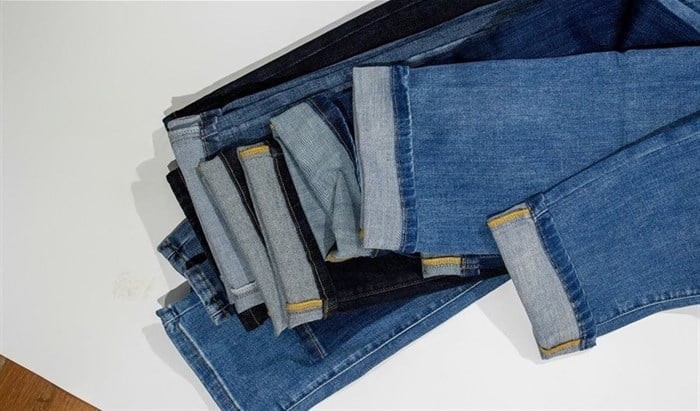
Image supplied
The Covid-19 pandemic and the subsequent work-from-home movement sparked a fashion trend in comfortable loungewear, leading to a decline in traditional clothing items like jeans.
However, popular TV shows such as the neo-Western Yellowstone and Netflix’s current number one show, Ransom Canyon have coincided with a return to office life, resulting in a renewed interest in denim as a versatile and fashionable choice for both workwear and stylish outfits.
Eighty20 explored denim that was once a symbol of rebellion, freedom and style, embraced by cultures around the world. They also partnered with MoyaApp to conduct primary research to understand the prevalence of denim in South Africa.
Approximately 30% (12 million) of South African adults have shopped for clothing in the past three months, with women’s outer items and children’s clothing being the most popular categories.
According to the MAPS dataset, a survey of 20,000 people released quarterly by the MRF, the top five clothing stores in terms of number of shoppers are Mr Price, Ackermans, Pep Stores, Sportscene and Markham, with nearly one in five people shopping at one of these stores in the past quarter.
Just like their large international counterparts (H&M, G-Star, Zara, Gap and others), it is impossible to imagine not finding some form of denim product on the shelves of any of these stores.
Globally, the world produced over 6 billion meters of denim fabric, with 60% coming from China, India and the United States. The global denim market was valued at $90 billion in 2024, thanks, in part, to the average American owning seven pairs of jeans.
To gain local insights, Eighty20 partnered with MoyaApp to delve into this popular category.
MoyaApp is a data-free super app that enables millions of South Africans to access digital services without using mobile data. With over 3 million daily active users, MoyaApp offers users free messaging and content services, and businesses research and engagement opportunities.
They sent out a survey on denim use to 20,000 registered research panellists and received responses from more than 2,000 people in just over 24 hours.
The sample was relatively balanced by gender, with a slight female bias (55%). Most respondents were between the ages of 25 and 44, with younger adults (18–24) making up nearly a fifth of the sample. Only a small portion (10%) was aged 45 and above.
It turns out that South Africans really do love their denim. A striking 96% of respondents reported wearing denim clothing daily, and 80% had purchased denim in the past six months.
When asked about their preferred fit, 58% chose ‘skinny’ — a noteworthy finding in a country where 43% of women and 18% of men are living with obesity. This strong preference appears to be driven largely by younger consumers, particularly those aged 25 to 34.
This age group, which made up 44% of the sample accounted for nearly half of all skinny-fit selections and shows a clear leaning toward fitted, fashion-forward styles, solidifying their role as denim trendsetters.
Preference for skinny jeans declines sharply with age, while looser fits like straight and relaxed styles gain modest traction among older adults. Meanwhile, bootcut — once a denim staple — has fallen almost entirely out of favour. In terms of style preference, 32% opted for a dark wash, followed by 26% who preferred a light wash, and 21% who favoured a ripped or distressed look.
Denim continues to resonate strongly with South African consumers across the board,” says Andrew Fulton, Director at Eighty20. “While premium brands like G-Star and Levi’s hold aspirational value, it’s the affordability and accessibility of retailers like Mr Price that truly drive volume and keep denim a staple in everyday wardrobes. Bizcommunity

Thebe Magugu couture debuts at the 2025 MET Gala

Aurora James in Thebe Magugu for the 2025 MET Gala Image: Jun Lu
Aurora James rules in a creation inspired by West and Central Africa’s legendary sartorial photographers
The 2025 New York Metropolitan Museum of Art Gala theme, “Superfine: Tailoring Black Style”, resonates with both the continent and the African diaspora as it puts Black dandyism on display.
With a keen eye on the looks being revealed, we’re excited by Thebe Magugu couture’s debut outing, with Canadian creative director and fashion designer Aurora James wearing a Thebe Magugu West and Central African-inspired creation, drawing on the cultural work and legacies of sartorial photographers such as Malick Sidibé.
The celebrated Malian photographer, who worked mainly in black-and-white images, documented the exuberant lives and culture of the youth of Bamako, Mali, in the 1960s and is credited for shaping fresh perspectives on how Africans were seen globally and how they see themselves. His work continues to inspire a new generation of fashion photographers and culture makers such as Trevor Stuurman.
Of his creation, Magugu says, “I was inspired by the female muses of the Central & West African sartorial photographers in the 1950s and 1960s. Photographers such as Seydou Keïta, Malick Sidibé, and Mama Casset — themselves style icons of the superfine — photographed women in a powerful blend of vintage elegance, cultural pride, and subtle sensuality. The self-assured gazes of these women ensured that they sit before the lens not as subjects but as co-authors of their image and likeness. Silhouette has always been so key in these images, with the women taking on an almost totemic and sculptural shape.
“While the suit has historically been a symbol of respectability and power (granted, with a difficult history), it is only one language in a much broader vocabulary of Black style. Across the diaspora, Black fashion draws on a tapestry of references: ancestral textiles, streetwear ingenuity, church elegance, Afrofuturist visions, diasporic remixing, and gender-fluid experimentation. From the flowing robes of West African royalty to the generous silhouette of Nigerian Obas [kings], Black African style is not just about formality — it’s about freedom, identity, and a continuation of generations of storytelling.”
The ensemble apparently took 120 hours to create and uses 12m chemically-crushed pleating, made from chiffon in a thorn-tree brown. The undergarment is created in a duchess satin with a boned waist and corseted back. The look was paired with an engineered tulle-and-mesh gele, an occasion-wear headpiece worn primarily by West and Central African women. 


Wardrobe Malfunctions

Steve Granitz / FilmMagic / Via Getty
At the 2023 Critics Choice Awards, Amanda Seyfrief wore an archival Dior gown, which was made from a single piece of chiffon. She told Access Hollywood, “It keeps breaking. I’m not kidding, it keeps ripping. It’s actually, like, breaking. I’m, like, tacked. I’m just gonna take off my dress. I’m just gonna take it off. It keeps ripping. It’s fine. It’s fine. It literally is. It’s fine. Honestly, it’s old! It’s beautiful!”

Editorial Submission:
Please remember to send me your news so that we can share it with all our readers in the weekly newsletter. Although editorial is neither guaranteed nor implied, suitable editorial for consideration may be submitted to:-
